

When a war ends, people often focus on the winners and losers, assessing military achievements. However, from an economic perspective, the true implications of war are not determined on the battlefield but emerge from the movement of tankers, ports, and supply chains once hostilities cease.
Recently, the United States and Iran reached a memorandum of understanding (MOU) regarding a ceasefire, marking a new turning point for the global economy. The international community is paying attention to nuclear negotiations, sanctions relief, and a 454 trillion won reconstruction fund for Iran. Yet, what South Korea should closely monitor is the resumption of Iranian oil sales and the potential normalization of the Strait of Hormuz.
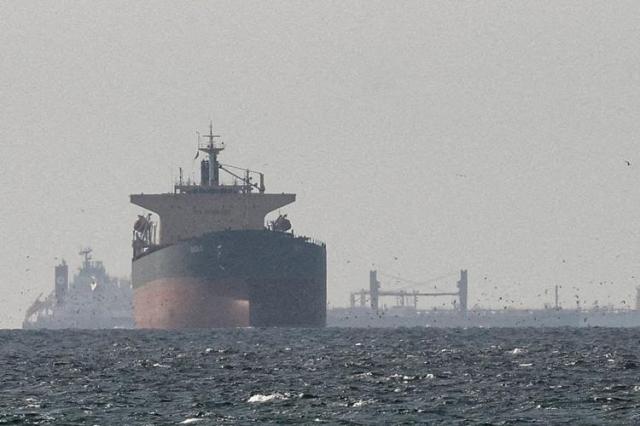
The Strait of Hormuz is a vital artery for global oil transport, with approximately 20% of the world's crude oil passing through it. Oil and LNG from Saudi Arabia, the UAE, Kuwait, Qatar, and Iran travel this route to the global market. For resource-importing countries like South Korea, it is essentially a lifeline.
Despite being the world's 10th largest economy, South Korea has a very low energy self-sufficiency rate. Most of the crude oil we use comes from the Middle East, with a significant portion transiting through the Strait of Hormuz. Therefore, tensions in this strait directly translate into economic instability for South Korea.
In fact, when military clashes between the U.S. and Iran escalated recently, international oil prices surged, and the won-dollar exchange rate fluctuated. The market's concern was not the war itself but the disruption of supply chains. Fears of reduced oil supply led to rising prices, which in turn affected inflation, exchange rates, and corporate costs.
The resumption of Iranian oil sales is significant in this context. It allows for additional supply to the international market and reduces uncertainty regarding crude oil availability. Particularly, if Iran's production capacity, previously constrained by sanctions, returns to the market, it could positively impact oil price stability.
More importantly, there is the aspect of supply chain diversification. South Korea has been increasing its imports of U.S. crude oil, but it still relies heavily on specific regions. A diverse supply chain is a stronger one. If the Iranian market reopens, South Korea will not only purchase more crude oil but also secure an additional source of supply.
Currently, the focus of the South Korean economy is on semiconductors and AI. However, advanced industries cannot exist without a stable energy supply. Semiconductor factories ultimately rely on electricity, logistics, and petrochemical products. If the supply chain falters, advanced industries will inevitably be affected.
This is why countries around the world are concentrating their national capabilities on supply chain stability. The U.S. is building a supply chain centered on itself, Europe emphasizes strategic autonomy, and China is tightening control over key raw materials. Energy has become a core element of national competitiveness, rather than just a raw material.
If the ceasefire agreement is successfully concluded, the greatest benefit for the South Korean economy may be supply chain stability rather than the 454 trillion won reconstruction market. Stability in oil prices, exchange rates, and logistics is likely to have a positive impact across South Korean industries.
Many people say that when a war ends, peace begins. From an economic perspective, the end of war marks the beginning of a new supply chain. The stability of that supply chain will determine a nation's competitiveness.
The reopening of the Strait of Hormuz signifies more than just the passage of tankers. It means that the South Korean economy will have a bit more breathing room, and the foundation for stable growth will be strengthened. The greatest gift South Korea should seek at the end of the war is the stability of its supply chain.
* This article has been translated by AI.
Copyright ⓒ Aju Press All rights reserved.