

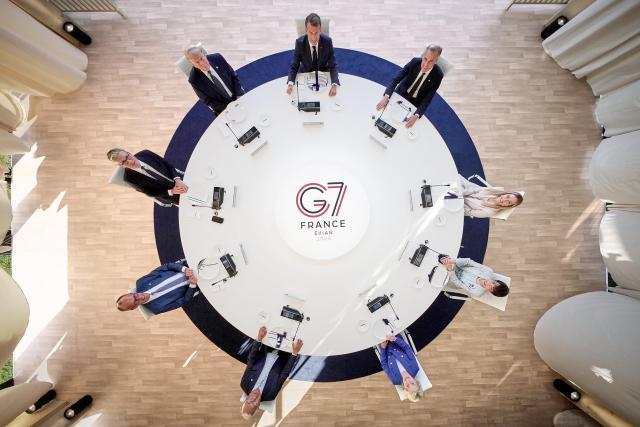
At the G7 summit, concerns over oversupply and increased exports from China emerged as key economic issues. Despite high tariffs imposed by the United States, Chinese exports have not declined; instead, they are redirecting to Europe and Asia, raising fears of a so-called 'China Shock 2.0.'
On June 16, Axios and the Associated Press reported that the G7 summit in Évian, France, focused on the imbalance in production and consumption among member countries. Although China was not explicitly mentioned in official documents, issues such as market-distorting policies, oversupply, and unfair trade practices were highlighted.
U.S. tariffs on Chinese goods have resulted in exports being redirected to Europe and Asia rather than reducing them. Last year, China recorded a record trade surplus of $1.2 trillion. As U.S. barriers increased, Chinese products shifted to markets with relatively lower tariffs, with AP reporting a 16.4% increase in exports to the EU from January to May compared to the previous year.
The 'China Shock 2.0' that Europe fears differs from the initial shock in the early 2000s. Back then, low-cost manufacturing products like textiles, furniture, toys, and electronics reduced factory jobs in the U.S. and Europe. Now, high-value industries where Europe has strengths, such as electric vehicles, batteries, solar energy, industrial machinery, chemicals, and robotics, are directly competing with Chinese companies and products.
Germany is a prime example of this pressure. German companies, which once relied heavily on the Chinese market for exports, are now competing with local firms in key sectors like machinery, construction equipment, automobiles, and chemicals. The German economy is projected to shrink in 2023 and 2024, with only a 0.2% growth expected in 2025, as intensified competition from China is cited as a contributing factor.
In response to these challenges, the European Union is raising its defensive measures. The EU has imposed additional tariffs of up to 35% on Chinese electric vehicles. Additionally, it is considering regulations that would allow for extra tariffs or import restrictions if subsidized Chinese products flood the European market. Discussions are also expanding on rules that would favor European products in strategic industries like batteries, wind energy, and clean technologies.
Europe's concerns are aligning more closely with those of the United States. Washington has long criticized Beijing's export-driven growth model, and now the EU is recognizing that oversupply could undermine its manufacturing base. As a result, there is potential for progress in discussions on joint responses to unfair trade practices and oversupply issues at this summit.
China has reacted strongly, with the state-run Global Times labeling the G7 a 'hypocritical club of wealthy nations' ahead of the meeting. It also claimed that the West is blaming China for its economic slowdown and declining industrial competitiveness.
This discussion illustrates that the issue of Chinese oversupply is evolving beyond mere trade friction to encompass broader concerns about industrial protection and the restructuring of production and supply chains among major countries. If the G7 takes collective action, the trade conflict between China and the West could extend beyond electric vehicles to encompass batteries, machinery, chemicals, and clean technologies.
* This article has been translated by AI.
Copyright ⓒ Aju Press All rights reserved.