

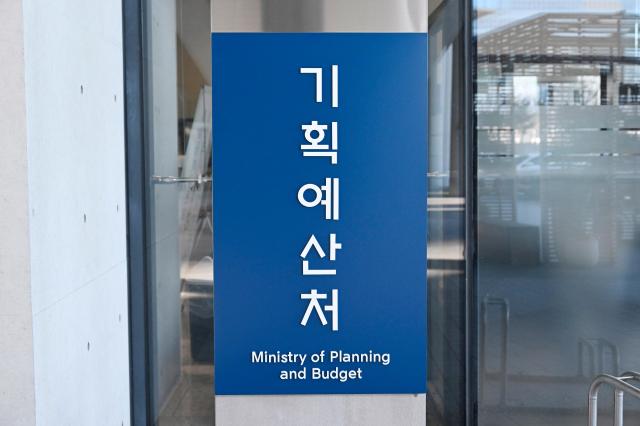
Ministry of Planning and Budget in Sejong Government Complex. [Photo=Ministry of Planning and Budget]
The South Korean government has resolved 827 billion won in unsettled and uncollected national subsidies over the past four months. The government plans to strengthen measures against subsidy fraud and is working on the next-generation e-Nara Doome system to enhance the management of national subsidies.
On June 17, the Ministry of Planning and Budget reported on the progress of the "Measures to Eradicate Subsidy Fraud" during the sixth meeting of the Subsidy Management Committee, chaired by Vice Minister Lim Ki-geun.
The ministry has been addressing a total of 27 trillion won in unsettled and uncollected national subsidies this year. Of this amount, 827 billion won (30.9%) was resolved between February and May. The actual amount recovered by the government was 5.205 trillion won, which represents additional resources secured beyond existing non-tax revenue.
The government is also taking further steps to eliminate subsidy fraud. Following the establishment of a fraud reporting center in April, a subcommittee for reviewing subsidy fraud was created under the Subsidy Management Committee in May, completing the revision of the integrated management guidelines for national subsidies to strengthen governance.
Currently, the ministry is conducting the largest-ever field inspections of 13,240 subsidy projects in collaboration with the Financial Information Service and relevant ministries. These inspections are set to continue until the end of October.
Once the field inspections are completed, the ministry's subcommittee on fraud review and each ministry's fraud review committee will take follow-up actions on identified fraudulent projects. Additionally, the government plans to amend the subsidy law to raise the cap on penalties for fraud from five times the current refund amount to eight times in the second half of the year.
To encourage reporting of subsidy fraud, the government intends to revise the enforcement decree of the subsidy law by the end of September to expand the criteria for reward payments for whistleblowers.
Furthermore, the government has begun a comprehensive overhaul of the e-Nara Doome subsidy management system. Launched in 2017, the system will be upgraded to a next-generation platform based on AI, cloud, and data to manage all national subsidies in an integrated manner.
The ministry aims to redesign work processes and establish a system by September, with plans to launch the new system by 2030.
Vice Minister Lim Ki-geun stated, "Subsidy fraud undermines the effectiveness of national policies and is a serious crime that wastes taxpayers' money. We will ensure thorough management of the entire process from detecting fraud to recovering fraudulent amounts and imposing penalties through the linkage of field inspections and related systems."
He added, "We will diligently pursue the construction of the next-generation e-Nara Doome to prevent unsettled and uncollected subsidy issues and eliminate blind spots in monitoring subsidy fraud, thereby preventing leaks in national finances."
On June 17, the Ministry of Planning and Budget reported on the progress of the "Measures to Eradicate Subsidy Fraud" during the sixth meeting of the Subsidy Management Committee, chaired by Vice Minister Lim Ki-geun.
The ministry has been addressing a total of 27 trillion won in unsettled and uncollected national subsidies this year. Of this amount, 827 billion won (30.9%) was resolved between February and May. The actual amount recovered by the government was 5.205 trillion won, which represents additional resources secured beyond existing non-tax revenue.
The government is also taking further steps to eliminate subsidy fraud. Following the establishment of a fraud reporting center in April, a subcommittee for reviewing subsidy fraud was created under the Subsidy Management Committee in May, completing the revision of the integrated management guidelines for national subsidies to strengthen governance.
Currently, the ministry is conducting the largest-ever field inspections of 13,240 subsidy projects in collaboration with the Financial Information Service and relevant ministries. These inspections are set to continue until the end of October.
Once the field inspections are completed, the ministry's subcommittee on fraud review and each ministry's fraud review committee will take follow-up actions on identified fraudulent projects. Additionally, the government plans to amend the subsidy law to raise the cap on penalties for fraud from five times the current refund amount to eight times in the second half of the year.
To encourage reporting of subsidy fraud, the government intends to revise the enforcement decree of the subsidy law by the end of September to expand the criteria for reward payments for whistleblowers.
Furthermore, the government has begun a comprehensive overhaul of the e-Nara Doome subsidy management system. Launched in 2017, the system will be upgraded to a next-generation platform based on AI, cloud, and data to manage all national subsidies in an integrated manner.
The ministry aims to redesign work processes and establish a system by September, with plans to launch the new system by 2030.
Vice Minister Lim Ki-geun stated, "Subsidy fraud undermines the effectiveness of national policies and is a serious crime that wastes taxpayers' money. We will ensure thorough management of the entire process from detecting fraud to recovering fraudulent amounts and imposing penalties through the linkage of field inspections and related systems."
He added, "We will diligently pursue the construction of the next-generation e-Nara Doome to prevent unsettled and uncollected subsidy issues and eliminate blind spots in monitoring subsidy fraud, thereby preventing leaks in national finances."
* This article has been translated by AI.
Copyright ⓒ Aju Press All rights reserved.