

Despite a peace agreement between the U.S. and Iran, inflationary pressures are expected to persist for an extended period. The surge in international oil prices following the Middle East conflict is likely to remain elevated, coupled with demand pressures from a recovering economy and potential wage increases, which could further stimulate inflation.
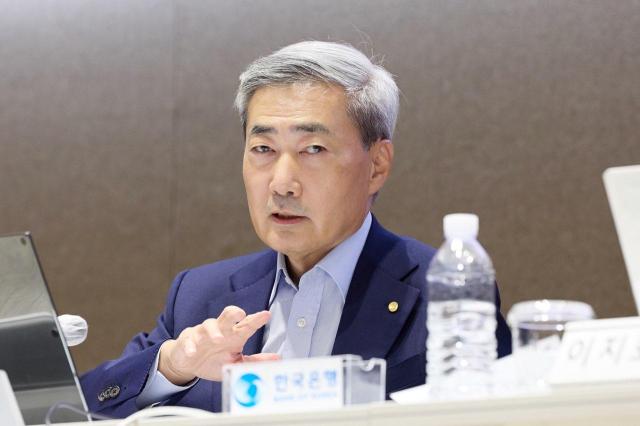
Shin Hyun-song, Governor of the Bank of Korea, stated on June 17 during a briefing on inflation target management, "While the peace agreement between the U.S. and Iran appears to reduce risks in the Middle East, there are still upward risks to the inflation trajectory. Considering both domestic and external conditions, consumer prices are expected to continue rising at a high level for a considerable time."
The Bank of Korea forecasts that the consumer price inflation rate will be around 3% in the second half of this year, with core inflation expected to be in the mid-to-late 2% range. It anticipates that both consumer and core inflation rates will exceed the stability target of 2% next year. Although cost pressures from rising oil prices are expected to gradually ease, demand-side inflation pressures from economic recovery are projected to increase.
Inflation in the first half of this year was significantly impacted by the oil price shock due to the Middle East conflict. The consumer price inflation rate exceeded target levels substantially, and the cost of living increased to the mid-3% range, placing a heavier burden on vulnerable groups, according to the Bank of Korea.
The primary factor driving inflation has been identified as international oil prices. Brent crude prices rose from the mid-$60 range in February to over $80 following the outbreak of the Middle East conflict, surpassing $100 in May. West Texas Intermediate (WTI) crude also climbed from the $60 range to briefly exceed $110 during the same period. Although the recent peace agreement between the U.S. and Iran has somewhat stabilized the situation in the Middle East, international oil prices remain elevated at around $80, higher than pre-war levels.
The Bank of Korea believes that even if the situation in the Middle East stabilizes, it will take time to restore damaged facilities and normalize supply chains, making it unlikely for international oil prices to quickly revert to pre-war levels. It also expects that starting in the second half of the year, the oil price shock will spread beyond petroleum products to core inflation items.
The rise in international oil prices does not only have a direct effect on petroleum product prices. It also leads to increased production costs and higher distribution and logistics expenses, affecting the prices of industrial goods and services. Additionally, rising inflation expectations contribute to a secondary ripple effect that amplifies inflationary pressures.
According to the Bank of Korea's analysis, if the oil price shock is short-lived, a 10% increase in oil prices would result in only a 0.06% rise in core inflation after five months. However, if the increase in oil prices persists, a 10% rise could lead to a core inflation increase of over 0.1% after five months.
The expanding demand due to economic recovery has also been identified as a factor contributing to inflation. The Bank of Korea has previously emphasized supply-side inflation pressures. However, recent improvements in the semiconductor industry have led to wage increases among some large companies, which could further stimulate inflation. Governor Shin stated, "In addition to cost pressures, we expect that demand pressures from the improving domestic economy will gradually increase."
* This article has been translated by AI.
Copyright ⓒ Aju Press All rights reserved.