

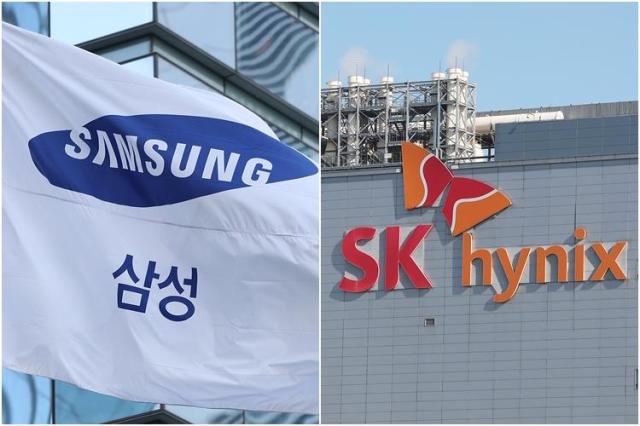
As Samsung Electronics and SK Hynix prepare for significant semiconductor investments in the Honam region, industry attention is focused on the specifics of location, timing, and scale. Ahead of a meeting between the president and business leaders scheduled for the end of this month, both companies are finalizing plans for large-scale investments that align with the government's regional balanced development goals.
According to sources from relevant ministries and the industry on June 17, Samsung and SK Hynix are conducting final internal reviews regarding semiconductor investments targeting the Honam area. The upcoming Semiconductor Special Act, which will take effect in August, specifies 'regional balanced development' as a criterion for cluster designation, prompting companies to accelerate their efforts to secure policy benefits such as infrastructure cost support and tax reductions.
The leading candidate sites have been narrowed down to Gwangju's Advanced 3 District, Saemangeum in North Jeolla Province, and the Muan and Haenam areas in South Jeolla Province. The Advanced 3 District in Gwangju is advantageous due to its AI-based industrial infrastructure and data centers, facilitating research and development (R&D) connections. It is also praised for its well-connected transportation network, including the Honam Expressway, National Route 13, and Bitgoeul Road, making it an optimal location for semiconductor logistics.
Samsung is particularly considering the Advanced 3 District in Gwangju. The company identified Gwangju as a potential site for domestic production lines during its acquisition of the European Flakt Group last November. By adding semiconductor investments, Samsung aims to maximize the clustering effect and integrate the core industrial ecosystem of the Honam region.
Saemangeum offers large, affordable land and a robust power grid, positioning it as a strong contender for semiconductor facilities following Hyundai Motor's establishment there. The area already has a reliable water supply system in place, and logistics networks, including new ports and airports, are being developed, enhancing its competitiveness as a global export base. Haenam and Muan are also seen as optimal locations due to their 5.4 GW solar power complex, meeting the RE100 (100% renewable energy) requirements sought by global tech giants.
The primary focus for investment will be on advanced packaging lines, which are crucial for next-generation memory performance, such as high-bandwidth memory (HBM). The importance of post-processing has increased, especially with global post-processing company Amkor Technology already established in Gwangju. This aligns with the government's plan to create an advanced packaging cluster within the 'Southern Innovation Belt,' which is expected to generate significant synergy.
The total investment from both companies is projected to exceed 19 trillion won each. Samsung has allocated several trillion won for the expansion of its advanced packaging facility in Onyang, while SK Hynix has set an initial budget of 19 trillion won for its new P&T7 facility in Cheongju, which began construction in April. Experts believe that the scale of investment needed for infrastructure development in the Honam region will far exceed these initial figures.
However, some concerns have been raised regarding these investment plans. A mega-cluster worth hundreds of trillions of won is already being established in the southern part of the Seoul metropolitan area, including Yongin and Pyeongtaek. Critics argue that if additional investments are directed toward the Honam region, it may disrupt the existing semiconductor ecosystem centered in the capital region, making organic collaboration more challenging.
Despite these concerns, this investment is seen as a beneficial opportunity for both companies and the region. For businesses, it allows them to align with the government's balanced development agenda without disrupting core production lines in the capital region. Additionally, they can receive substantial tax incentives and affordable land, minimizing investment risks while maximizing benefits.
Lee Jong-hwan, a professor at Sangmyung University’s Department of System Semiconductor, emphasized, "While anchor investments from large corporations are important, the simultaneous entry of material, parts, and equipment suppliers is essential. Tailored talent development centered around local universities and comprehensive infrastructure support from the government are crucial for realizing substantial investment benefits."
* This article has been translated by AI.
Copyright ⓒ Aju Press All rights reserved.