

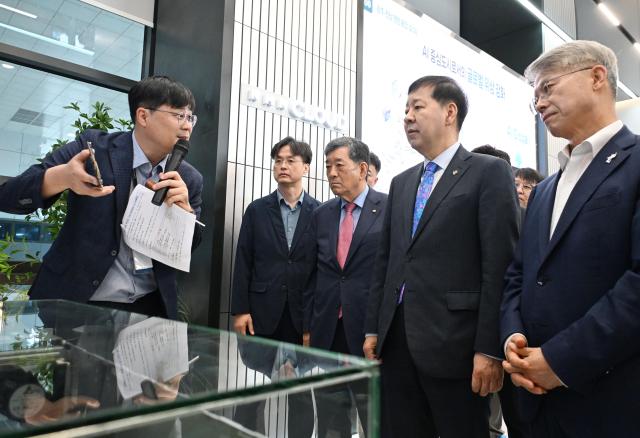
During his visit to the AI industrial convergence complex in Gwangju and LG Innotek's facility in Daegu, Koo convened a public-private council to support corporate innovation. He emphasized that the AI and autonomous vehicle industries represent high-value sectors that combine advanced technology and manufacturing. "These are key areas that will drive South Korea's future growth and enhance the regional industrial structure, so we must develop Gwangju into a global industrial hub," he said.
The autonomous vehicle sector is a core industry of Physical AI, with the global market expected to grow from $186.5 billion in 2024 to $6.8 trillion by 2035. In response, the government is promoting AI transformation projects, including Physical AI and public AX, supported by a budget, tax, and financial package.
The related budget has increased from 3.3 trillion won last year to 9.9 trillion won this year, with plans for significant investments in the AI sector next year. The government will also establish a national strategy for AI technologies and expand tax deductions for investments in data centers.
Additionally, Koo announced plans to support the verification and commercialization of key components such as LiDAR and radar by establishing a specialized testing and evaluation center for future mobility components, following Gwangju's designation as an autonomous vehicle demonstration city in April.
"We will continue our efforts to develop Gwangju into a top-three global leader in autonomous vehicles by advancing the autonomous vehicle demonstration city project without delay," Koo stated.
Before the meeting, Koo experienced a driving simulator from the AI Industry Convergence Business Group (AICA), which has created a testing environment for the development and safety evaluation of Level 4 autonomous vehicles.
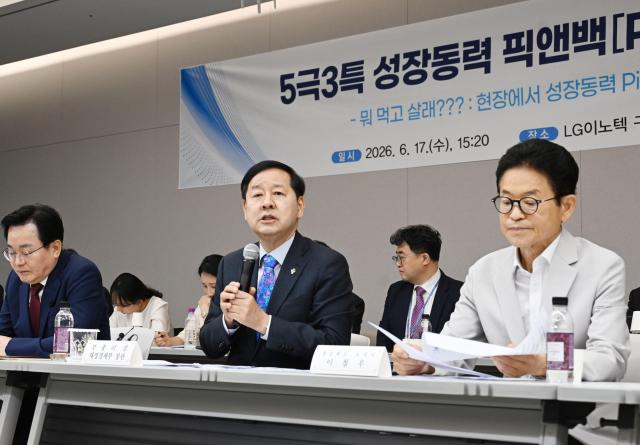
Koo also visited LG Innotek's Gumi plant, where he toured the production line and held discussions with experts from robotics, Physical AI, and materials and components companies.
"To strengthen the competitiveness of the domestic AI and robotics industries, we will aggressively implement Physical AI policies," Koo said. He emphasized the need to support research and development for the localization of ultra-precision sensors and actuators while focusing on creating initial demand.
Participants in the meeting highlighted the importance of establishing testing environments for robotics and Physical AI, as well as building data infrastructure, and called for government support.
The Ministry of Economy and Finance is enhancing various supports, including 15 billion won for leading technology development in Physical AI and 66.7 billion won for human-AI collaboration RAM development and global testing. Furthermore, plans are in place to develop a universal world model and a robot foundation model to support the pioneering verification of core technologies in regional manufacturing sites.
Koo reiterated the commitment to expand the semiconductor ecosystem concentrated in the capital region into a southern semiconductor innovation belt, stating, "We will focus on supporting the verification infrastructure for materials and components in Gumi to cultivate it as a key production base for semiconductor materials and components."
* This article has been translated by AI.
Copyright ⓒ Aju Press All rights reserved.