

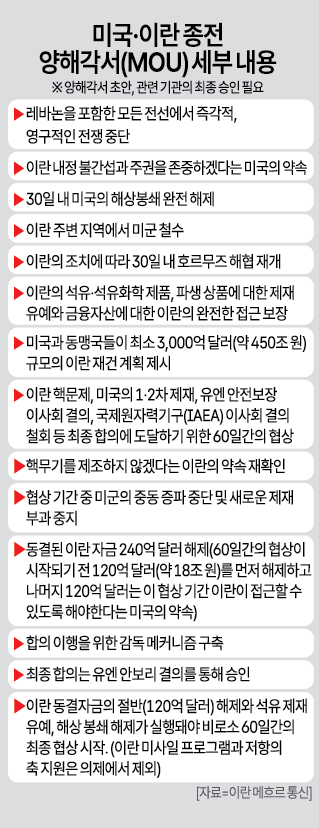
According to foreign media and industry sources, the U.S. and Iran completed the electronic signing of a ceasefire memorandum of understanding (MOU) on June 14, with an official signing ceremony scheduled for June 19 in Geneva, Switzerland. The agreement includes provisions to reopen the Strait of Hormuz, which had been closed since the war began on February 28, and to extend the ceasefire for an additional 60 days.
Following the declaration of the ceasefire, international oil prices have continued to decline. On June 16, the benchmark for international oil prices, the August futures contract for Brent crude, closed at $78.96 per barrel, a drop of 5.1% from the previous trading day. Meanwhile, the July futures contract for West Texas Intermediate (WTI) crude fell 5.8% to $76.05 per barrel. This marks the first time since March 2, at the onset of the Middle East war, that Brent crude has fallen below $80 per barrel, with WTI also reaching its lowest level since early March.
The small business sector is responding positively. There is growing optimism that trade, which had been halted due to the unexpected war, will resume and that management uncertainties will ease.
An exporter of automotive products, identified as Mr. A, stated, "Since the news of the ceasefire agreement broke, I have received inquiries from Iranian buyers, who were previously unreachable since the war began." He added, "We are also receiving requests for prompt shipment of previously ordered products from the United Arab Emirates and Kuwait, where export routes had been blocked."
Small manufacturers are particularly attentive to the reopening of the Strait of Hormuz, a critical passage connecting the Middle East to the rest of the world. If the decline in international oil prices is accompanied by stable shipping rates, it could lead to reduced costs for importing raw materials and components. This is expected to help alleviate the inventory shortages caused by supply chain disruptions.
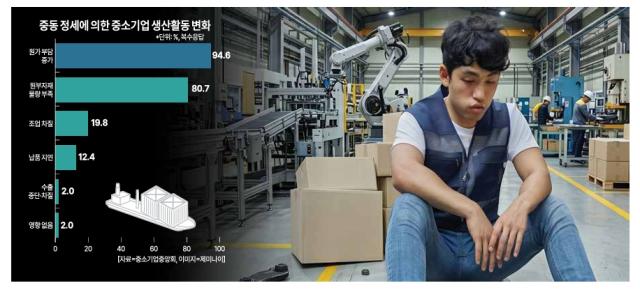
A survey conducted by the Korea Federation of Small and Medium Businesses from May 15 to 31 found that 94.6% of the 410 small businesses surveyed reported increased cost burdens due to the U.S.-Iran war. Additionally, 71.9% indicated that the average purchase price of key raw materials had risen by over 20% compared to late February, when the war began.
The shortage of raw materials due to supply chain disruptions has also been severe. Approximately 80.7% of the surveyed companies reported experiencing shortages of raw materials. One in three (36.1%) indicated that their current inventory would last less than a month.
Small businesses are also hopeful for a recovery in export growth. According to the Ministry of SMEs and Startups, the export value of four promising consumer goods categories—cosmetics, fashion and clothing, agricultural and seafood products, and baby products—reached $9.55 billion from January to May this year, a 16.4% increase compared to the same period last year. In contrast, exports to the Middle East fell by 12.6% during the same period, totaling $217 million, marking the only decline among the five major continents.
However, it is expected to take considerable time for raw material prices to stabilize at pre-war levels. As the recovery of supply chains and logistics networks is necessary, it may take time for exports to transition into a full recovery. Ongoing disagreements between the U.S. and Iran regarding free passage through the Strait of Hormuz and the fact that this agreement is more of a 60-day ceasefire extension rather than a complete end to hostilities are also variables to consider.
Kim Hee-jung, head of the Economic Policy Division at the Korea Federation of Small and Medium Businesses, stated, "Even if the U.S. and Iran sign the official ceasefire agreement this week, it will be difficult for raw material prices to normalize in the short term. Small businesses affected by the Middle East war will need an additional 2 to 3 months to truly feel the effects of the ceasefire."
* This article has been translated by AI.
Copyright ⓒ Aju Press All rights reserved.