

Iran's declaration of a reclosure of the Strait of Hormuz has raised concerns about the implementation of the U.S.-Iran memorandum of understanding (MOU) from the outset. However, both sides confirmed their participation in a working-level meeting in Switzerland on June 21, maintaining a dialogue.
On June 20, local time, Vice President JD Vance spoke to reporters at Andrews Joint Base in Maryland before departing for Switzerland to negotiate with Iran. He stated, "We will hold talks for several days to start this issue in the right direction," expressing hope for progress on nuclear issues and the Lebanon ceasefire.
Earlier, a U.S. delegation, including Middle East Special Envoy Steve Witkoff and Jared Kushner, President Trump's son-in-law, arrived in Switzerland ahead of Vice President Vance, accelerating follow-up negotiations.
The Swiss Foreign Ministry announced via social media platform X (formerly Twitter) that the Iranian negotiation team, led by Mohammad Bagher Ghalibaf, the Speaker of the Iranian Parliament, has arrived in Switzerland.
The U.S. and Iran were scheduled to hold their first working-level negotiations on June 19 in Switzerland to discuss nuclear issues and sanctions relief following the signing of the MOU. However, the meeting was postponed due to ongoing clashes between Israel and Hezbollah in Lebanon.
Pakistan's Foreign Ministry, acting as a mediator in the peace negotiations, issued a statement confirming that a face-to-face working-level meeting between the U.S. and Iran will take place in Switzerland on June 21. Pakistani Prime Minister Shehbaz Sharif and Army Chief Asim Munir are also heading to Switzerland for the talks.
However, tensions surrounding the Strait of Hormuz have escalated again ahead of the meeting. The Central Military Command of the Iranian Armed Forces announced a reclosure of the Strait, claiming that the U.S. and Israel violated the MOU in relation to the situation in Lebanon.
The U.S. quickly emphasized that there would be no disruption to actual shipping traffic. Team Hawkins, a spokesperson for the U.S. Central Command overseeing U.S. forces in the Middle East, told Reuters and The New York Times, "Iran does not control the Strait of Hormuz, and shipping traffic continues."
Nevertheless, as Iran maintains a hardline stance, claiming violations of the MOU by the U.S. and Israel, there remains the possibility of unexpected developments during the negotiation process. Uncertainties surrounding Israel's military actions in Lebanon also persist.
The Iranian Foreign Ministry clarified that this meeting is not the start of formal negotiations but rather a session to assess the violations of the MOU and to strongly demand compliance from the U.S.
As a result, the working-level meeting in Switzerland is expected to serve as a litmus test for whether both sides can resolve the MOU violation controversy and transition into substantive follow-up negotiations regarding Iran's nuclear issues and sanctions relief.
Ali Vaez, the Iran Project Director at the International Crisis Group, told The Washington Post, "They see this as a test of whether Trump is willing to control Netanyahu, as Netanyahu could bomb Iran again in two months."
He added, "This is why Iran argues that this MOU must serve as a proof of concept for the U.S. to negotiate a more comprehensive agreement."
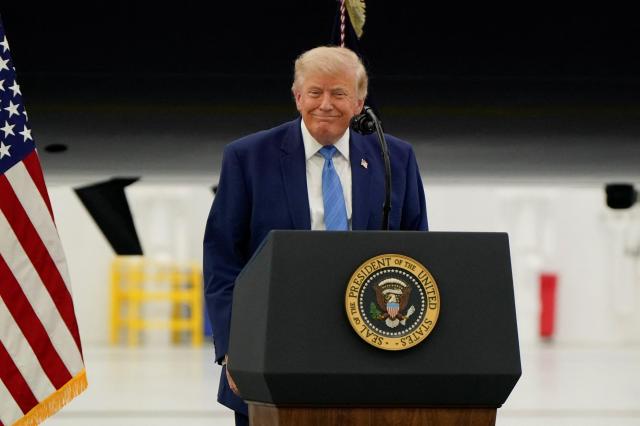
Meanwhile, President Trump stated on Truth Social that there would be no tolls for shipping in the Strait of Hormuz during the 60-day ceasefire period, and even after that period, there would still be no tolls.
He noted that if an agreement is not reached, the U.S., which has acted as a 'guardian angel' for Middle Eastern countries, may impose tolls to recover costs incurred in the past, present, and future, suggesting the possibility of tolls if a final agreement with Iran is not reached.
* This article has been translated by AI.
Copyright ⓒ Aju Press All rights reserved.