
The future is often discussed in intriguing ways. Sometimes it's a philosopher, other times an economist. Today, in 2026, a new voice in the conversation about the future is artificial intelligence (AI). Claude, Gemini, and ChatGPT—three major AIs from different developers—were asked, "Wall Street has set a target price of 850,000 won for Samsung Electronics; what do you think?"
Interestingly, despite their different approaches, all three AIs reached remarkably similar conclusions. This was not merely a question of whether Samsung's stock price would rise or fall; it was about the company's position in the AI era.
In early June, Mehdi Hosseini, a semiconductor analyst at the U.S. investment firm Susquehanna, drew global attention by setting Samsung's target price at 850,000 won, while the company's stock was around 340,000 won. This suggested a potential for more than a doubling of its value, especially shocking as domestic brokerages were predicting target prices between 500,000 and 600,000 won.
However, the logic behind that number was more significant than the number itself.
Claude focused on Samsung's overwhelming production capacity. While SK Hynix is currently seen as leading the HBM market, the consensus is that in the AI era, the company capable of reliably supplying vast amounts of memory will likely emerge as the winner. Technology can be caught up with, but production capacity cannot be created overnight. Samsung's semiconductor production infrastructure, the largest in the world, remains a formidable asset.
Gemini took a slightly different approach, viewing not just Samsung as a company but the entire industry cycle. It noted the global competition in building AI data centers, with the U.S., China, Europe, Japan, and the Middle East all investing in AI infrastructure simultaneously. Just as the steel industry grew with the expansion of railroads and the telecommunications industry flourished with the internet, the memory industry is likely to benefit explosively from the spread of AI.
ChatGPT offered another perspective, focusing on the competition for AI supremacy. Many today view Nvidia as the center of the AI revolution, which is not entirely incorrect. However, AI cannot function solely on Nvidia GPUs; it requires HBM, DRAM, and SSDs, most of which are supplied by Samsung. ChatGPT interpreted the 850,000 won target not as a reflection of current performance but as a price tied to future AI dominance.
Though the three AIs took different paths, they ultimately reached the same summit: the final victor in the AI revolution will not be merely the chip manufacturers but the companies supplying the AI infrastructure.
◆ The Significance of the 850,000 Won Figure
People often view stock prices as mere numbers. However, history shows that stock prices have always reflected the future first.
In the 1980s, many did not believe that Microsoft's software could surpass the automotive or steel industries. Yet, the stock market moved ahead of that belief.
Similarly, in the 1990s, when Amazon was still operating at a loss, its market capitalization surpassed that of established retail giants, prompting skepticism. Yet, the market was looking to the future.
In the 2000s, Apple faced a similar situation. The mobile phone market was dominated by Nokia and Motorola until the iPhone changed everything.
The stock market has always anticipated the future over the present.
The speculation of Samsung Electronics reaching 850,000 won follows this pattern. It does not reflect the current valuation of Samsung but rather an imagination of what Samsung might be in 2030 or 2035.
If Samsung can dominate the HBM4 market, regain its foundry competitiveness, and establish itself as a key supplier for AI data centers and physical AI, then 850,000 won may not be an impossible figure.
Conversely, if those prerequisites fail, 850,000 won could become a mirage.
Ultimately, numbers are just results. What matters is the power that generates those numbers.
◆ History Always Defies Common Sense
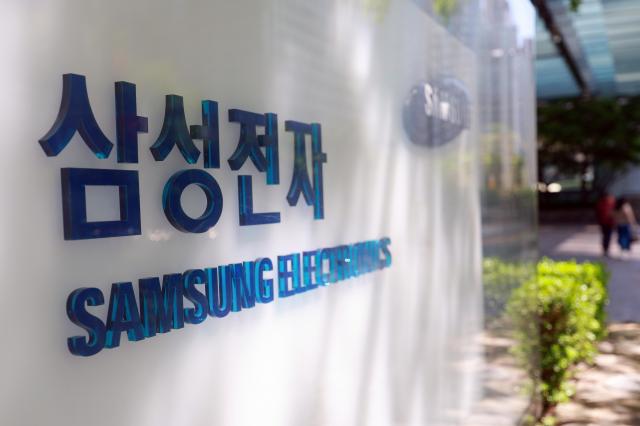
Today, many take for granted that Samsung Electronics is the world's largest memory company. However, just 40 years ago, the South Korean semiconductor industry was no match for Japanese firms.
In the 1980s, Japan's NEC, Toshiba, Hitachi, and Fujitsu dominated the global market, even pushing the U.S. to struggle against their semiconductor advances.
At that time, who could have imagined that a South Korean company would come to dominate the global memory market?
Yet, Samsung did it.
Lee Kun-hee, the late chairman, famously said, "Change everything except your wife and children." This was not just a management slogan; it was a commitment to technology and quality.
In the end, Samsung surpassed Japan and became number one in the world. History has always moved in this way, where what seems impossible becomes reality, and what appears certain crumbles.
Thus, Wall Street's talk of Samsung reaching 850,000 won is not mere optimism; it reflects a memory of Samsung's history of innovation.
◆ What Samsung Needs to Do
However, to be realistic, Samsung Electronics has many challenges to address.
First is HBM. In the AI era, data is the new oil, and HBM is the key device for processing that data. Currently, SK Hynix holds the advantage in the market. For Samsung to reach 850,000 won, it must prove its competitiveness in HBM4.
Second is foundry. TSMC is already the world leader. For Samsung to catch up, it needs to regain not only technological prowess but also customer trust. It must win back companies like Qualcomm, Nvidia, AMD, and Apple to choose Samsung's foundry.
Third is talent. The semiconductor war is ultimately a battle for talent. In the AI era, there is a need for hybrid talent that understands design, packaging, software, and algorithms.
Fourth is physical AI. Until now, AI has existed on screens. However, in the future, AI will manifest in robots, autonomous vehicles, and smart factories. As the era of physical AI opens, semiconductor demand will increase explosively.
For Samsung to become a true winner, it must evolve from a memory company to an AI hardware platform company.
◆ A Warning from John Templeton
However, risks always exist in the market. Legendary investor John Templeton left one of the greatest insights in investment history.
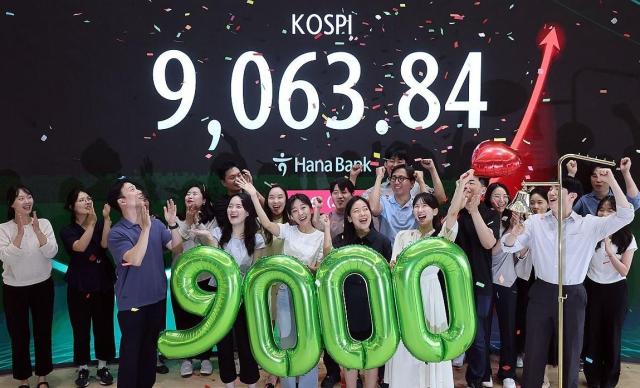
"Bull markets are born in pessimism, grow on skepticism, mature on optimism, and die in euphoria."
Before the Great Depression in 1929, people believed in eternal prosperity.
In 2000, during the dot-com bubble, many thought internet companies would grow indefinitely.
Even just before the 2008 financial crisis, people believed real estate prices would never fall.
Yet, history repeated itself. Templeton emphasized that one must remain calm when the market is at its hottest.
He invested during World War II when everyone was gripped by fear and reaped massive profits afterward.
What he saw was not stock prices but human psychology.
◆ Warren Buffett's Simple Truth
Warren Buffett echoes similar sentiments. He has always believed in simple principles over complex theories.
First, invest in companies you understand.
Second, invest in companies with a competitive advantage.
Third, invest in companies with excellent management.
Fourth, buy at a fair price.
Buffett advised, "Be fearful when others are greedy, and be greedy when others are fearful."
This is not just a simple investment adage; it means not to be swayed by crowd psychology. The same applies to investors considering the 850,000 won speculation for Samsung today.
What matters is not the number; it is whether Samsung is truly regaining its competitiveness in HBM, foundry, and AI infrastructure. That is the key.
The speculation of Samsung reaching 850,000 won is not merely a stock discussion; it is a question of where South Korea will stand in the era of the AI revolution.
The three AIs analyzed the future in their own ways. Wall Street presented the numbers, while investors spoke of dreams.
Ultimately, however, the market will be determined by the cold realities of technology, performance, and innovation. Technology creates hope, management realizes hope, and performance proves hope.
Stock prices follow suit. Therefore, the true significance of the 850,000 won speculation lies not in the target price but in whether South Korea's representative company can once again challenge the world from the center of the AI revolution.
That is the question.
And the answer will be determined not by Wall Street or AI, but by Samsung Electronics itself as it writes its own history of technology and innovation.
* This article has been translated by AI.
Copyright ⓒ Aju Press All rights reserved.