

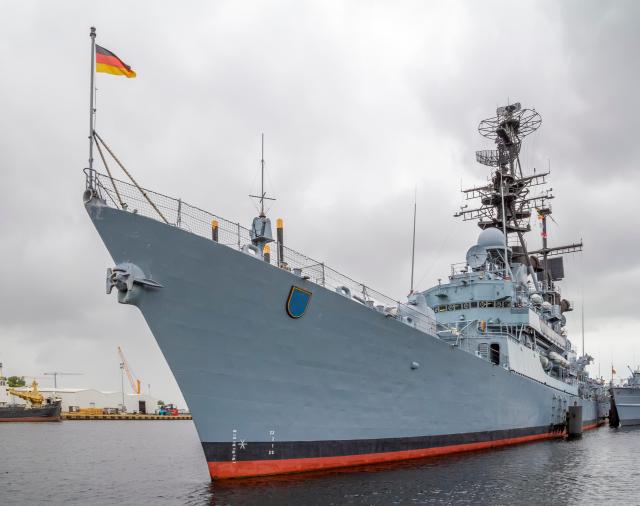
On June 23, the Financial Times cited two sources familiar with the matter, stating that Defense Minister Boris Pistorius and senior officials informed industry representatives and key members of the Bundestag that they would abandon the plan to build six F126 frigates.
Instead, the government plans to purchase eight smaller Meko A-200 frigates, a move first reported by the German weekly Spiegel.
The F126 project aimed to construct multi-purpose frigates measuring 166 meters in length and displacing 10,000 tons. Designed for long-term maritime operations and various missions, one of its key capabilities was anti-submarine warfare. The importance of this capability has grown amid NATO's efforts to bolster deterrence against Russia following its invasion of Ukraine.
Dutch shipbuilder Damen Naval signed a contract with the German government in 2020 to build four F126 frigates, which was later expanded to include two additional vessels. However, the project faced cost overruns and delays due to software issues and communication challenges between the German procurement agency and Damen.
As tensions escalated, the German government sought to remove Damen from its lead contractor position and transfer the project to Rheinmetall, a major German defense contractor. Rheinmetall proposed a €12.8 billion ($13.5 billion) bid to take over the F126 project, which was expected to receive approval from the Bundestag's budget committee before the summer recess.
However, concerns among lawmakers regarding project costs and delivery timelines appear to have led the German government to pivot toward cancellation. The Financial Times reported that approximately €2 billion of the costs already incurred for the F126 project may be written off.
This decision also impacts Rheinmetall, which has been expanding into the shipbuilding sector after acquiring Naval Yards Lürssen for €1.5 billion earlier this year. The F126 project was seen as a crucial part of Rheinmetall's strategy to integrate land, sea, air, and space weapon systems.
The German government faces significant political pressure as it plans to invest €780 billion in military modernization by the end of 2030, aiming to play a leading role in European defense and security. However, the cancellation of the largest procurement project for the German navy has now become a notable example of procurement failure in the country.
* This article has been translated by AI.
Copyright ⓒ Aju Press All rights reserved.