

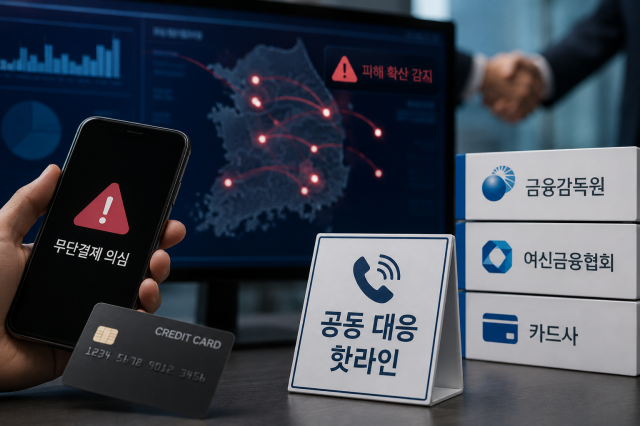
In response to over 800 suspected cases of unauthorized charges related to ChatGPT, the Financial Supervisory Service (FSS) has activated a hotline in collaboration with the Credit Finance Association and card companies. This initiative aims to consolidate consumer complaints and approval data from various card issuers to quickly identify the spread of similar fraudulent activities and discuss potential consumer remedies.
According to the financial sector on June 24, the FSS recently requested data from card companies regarding complaints and incidents related to unauthorized ChatGPT charges. The goal is to assess whether similar fraudulent activities have proliferated across the industry by examining the number of complaints and approval records from each card issuer.
This action follows numerous consumer complaints about receiving credit card notifications for ChatGPT Pro subscriptions, which were approved for 299,000 won (approximately $250). In June alone, there were a total of 1,368 transactions for the ChatGPT Pro subscription in South Korea, amounting to about 400 million won (approximately $335,000). Among these, 858 transactions, valued at around 250 million won (approximately $210,000), have been classified as suspicious.
The hotline will operate by allowing dispute resolution teams and fraud detection system (FDS) personnel at card companies to promptly share any identified suspicious cases of unauthorized charges with the Credit Finance Association and the FSS. This approach is designed to prevent the oversight of recurring payment patterns or large-scale fraud that could occur if each card issuer handles complaints independently.
Financial authorities are particularly concerned about the potential for similar unauthorized charges using leaked card information at other online merchants. The aim is to share identified suspicious transaction patterns across the industry to prevent further incidents of fraud using the same methods. They emphasize that this issue should not be viewed as an isolated incident limited to a specific service. For instance, in March, there were reports of unauthorized online transactions totaling 10 million won (approximately $8,400) without the physical loss of the card.
An FSS official stated, “If each card company or the FSS handles individual complaints separately, we may miss common characteristics of large-scale fraudulent transactions. If a significant number of similar unauthorized charges emerge, the entire industry should discuss initial responses and potential remedies.”
This situation is understood to involve the unauthorized use of leaked card information during transactions with overseas online merchants, rather than a system error at card companies. The transactions occurred through NICE Payments, an online payment service, to directly pay for OpenAI's ChatGPT. Both OpenAI and NICE Payments have reportedly completed cancellation and refund processes for the related suspicious transactions.
Industry insiders suggest that this incident highlights the need for additional authentication measures during transactions with overseas online merchants. A card industry representative noted, “As the online payment environment diversifies, unusual transactions occurring at specific merchants or payment pathways can simultaneously affect multiple card companies. It is essential to enhance information sharing among card companies and implement stricter authentication for high-value or suspicious transactions at the merchant level to prevent recurrence.”
* This article has been translated by AI.
Copyright ⓒ Aju Press All rights reserved.