

Chinese artificial intelligence (AI) technology is rapidly catching up to leading U.S. firms Anthropic and OpenAI.
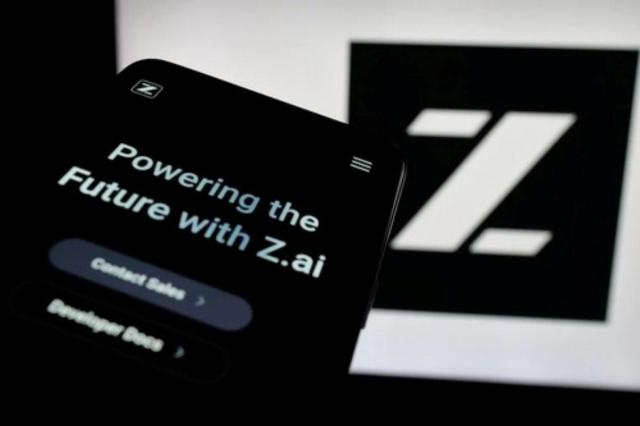
In particular, the latest model from Chinese AI company Z.ai, formerly known as Jiufu AI, called GLM-5.2, boasts performance comparable to top U.S. models while charging only one-sixth of the price, drawing significant industry attention.
According to a report by the New York Times on June 25, Chinese AI models are challenging the technological superiority of U.S. companies by leveraging their price competitiveness.
The GLM-5.2 is evaluated to have performance on par with Anthropic's latest models. This model was released shortly after the U.S. government restricted foreign access to Anthropic's latest models, 'Preamble 5' and 'Mythos 5,' citing security concerns.
Rehan Ahmad, co-founder of Silicon Valley startup AlphaSieve, stated after using GLM-5.2 for over a week, "With the regulation of Preamble 5, the technology gap between the U.S. and China has narrowed significantly."
Price competitiveness is considered the strongest weapon of Chinese AI. According to global AI analytics firm Artificial Analysis, six Chinese models are included in the top 20 AI models ranking, and GLM-5.2 has entered the top 10 globally due to its low usage fees and unrestricted availability in the U.S.
The AI model platform OpenRouter analyzed that the operational cost of GLM-5.2 is about one-eighth that of Anthropic's 'Opus 4.8.' GLM-5.2 is available as open-source, allowing anyone to use or modify it for free.
Venture capital investor Vivek Ramaswamy of Madrona Venture Group likened the price competitiveness of Chinese AI by saying, "People don’t need to drive a Ferrari everywhere they go." Notably, GLM-5.2 is recognized for its strengths in generating computer code and performing tasks using other software as AI agents.
Conversely, the U.S. AI industry is wary of the rapid growth of Chinese models. Anthropic has claimed that Chinese AI research institutions, including Alibaba's Qwen, have utilized thousands of fake accounts to bombard their AI model 'Claude' with millions of queries, employing a technique known as 'distillation' to gather data and mimic technology.
The U.S. Department of Commerce has also placed Z.ai on its export control blacklist due to national security concerns. However, it remains unverified whether Z.ai employed distillation techniques in the actual development of its new model.
Industry experts argue that developing top-tier AI solely through distillation technology is challenging. Charles O'Neill, head of model training at Baseten, which provides access to GLM-5.2, stated, "The claim that all features of the Chinese model originated from Anthropic is not true."
Jeffrey Ding, a professor at George Washington University, analyzed that while there were expectations that U.S. export controls would widen the AI technology gap between the two countries, GLM-5.2 demonstrates that the situation could unfold in the opposite direction.
* This article has been translated by AI.
Copyright ⓒ Aju Press All rights reserved.