

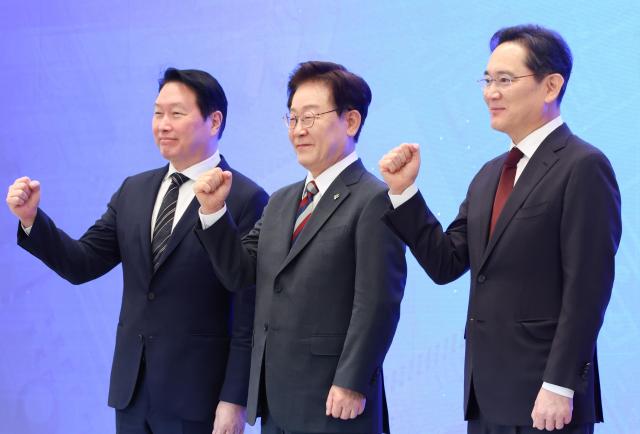
SEOUL, June 29 (AJP) - Pork-barrel projects are always political. The debate becomes even hotter when the prize is the world's most coveted commodity — AI memory chips — and nearly $1 trillion in investment.
A government-backed plan to steer hundreds of trillions of won in new semiconductor investment toward South Korea's southwestern Honam region has erupted into one of the first major political battles of President Lee Jae Myung's administration.
The conservative opposition accuses Lee of arm-twisting Samsung Electronics and SK hynix into politically motivated investment decisions, while the president argues the project is essential both to maintaining South Korea's semiconductor leadership in the AI era and correcting decades of regional economic imbalance.
The dispute has rapidly expanded beyond industrial policy into a broader debate over how far governments should influence corporate investment, whether balanced regional development can coexist with industrial efficiency, and where the country's next semiconductor frontier should be built.
Lee mounted an unusually direct public defense over the weekend after the main opposition People Power Party (PPP) alleged that the administration had improperly pressured Samsung Electronics and SK hynix to build major fabrication plants in Honam, the Democratic Party's traditional political stronghold encompassing Gwangju and the North and South Jeolla provinces.
Writing in a series of posts on X, Lee rejected accusations that the region was receiving political favoritism.
"Creating a semiconductor ecosystem in Honam is not preferential treatment for a particular region," Lee wrote, urging the opposition to debate the issue on its industrial merits rather than inflaming regional divisions.
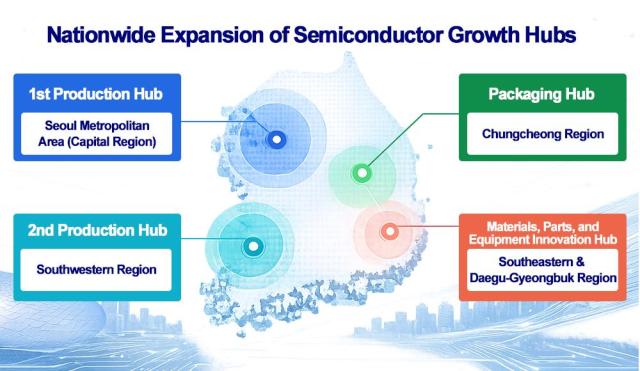
Lee argued that the country's southwest offers exactly the conditions semiconductor manufacturers increasingly require: abundant undeveloped land, plentiful industrial water, expanding renewable energy resources and relatively low seismic risk.
He said South Korea should continue accelerating expansion around the existing semiconductor clusters in Yongin and Pyeongtaek while simultaneously establishing a second large-scale manufacturing hub outside the Seoul metropolitan area.
The president framed the proposal as both an industrial necessity and a national development strategy.
Responding to criticism from PPP lawmaker Ahn Cheol-soo that presidential requests for regional investment could constitute an abuse of authority, Lee argued that the government's role was limited to industrial promotion and administrative support rather than coercion.
He also pointed to a 2023 government assessment conducted under former conservative President Yoon Suk Yeol, which ranked Gwangju and South Jeolla among the strongest candidates for future semiconductor industrial complexes.
When former PPP presidential candidate Yoo Seong-min questioned why Honam had been selected, Lee argued that renewable energy would become increasingly important as semiconductor manufacturers face tighter global carbon-reduction requirements.
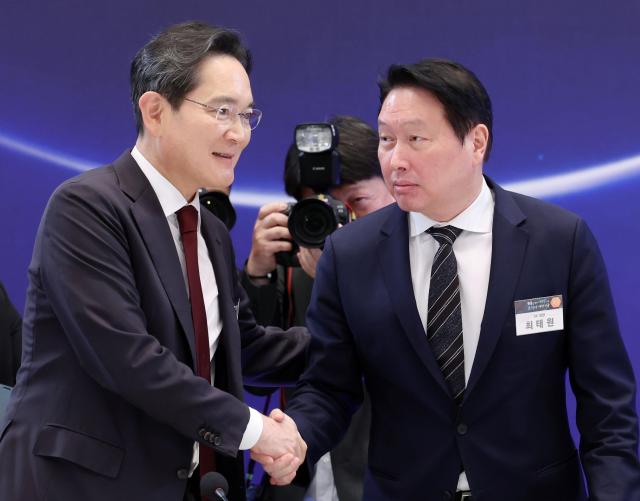
Lee also dismissed allegations by PPP floor leader Jung Jeom-sig that Samsung and SK hynix had acted under political pressure, saying critics were projecting their own past experiences onto others.
Kim Yong-beom, the presidential chief of staff for policy, described establishing a major semiconductor fabrication cluster outside the capital region as "a very powerful national strategy."
Industry Minister Kim Jung-kwan likewise defended the proposal, citing the southwest's strong electricity self-sufficiency, abundant water resources and concentration of research institutions, including Chonnam National University, the Gwangju Institute of Science and Technology and the Korea Institute of Energy Technology.
The opposition, however, intensified its criticism Monday.
PPP Rep. Ahn Sang-hoon told AJP that directing Samsung Electronics and SK hynix toward Honam represented "a major policy mistake" that risked weakening one of South Korea's most globally competitive industries while fueling fresh regional tensions.
The controversy comes as the Lee administration prepares to launch one of the largest industrial investment programs in South Korean history.
Under the proposal, Samsung Electronics and SK hynix would each build two semiconductor fabrication plants in the southwest as part of an 800 trillion won ($519 billion) semiconductor ecosystem forming one pillar of Lee's broader AI strategy.

Administration officials argue that expanding production beyond the Seoul metropolitan area has become unavoidable because existing manufacturing hubs around Yongin and Pyeongtaek are approaching practical limits in land availability, electricity capacity and industrial water.
Critics counter that dispersing production risks weakening the tightly integrated supplier networks, engineering talent and manufacturing efficiencies that have helped South Korea dominate the global memory-chip industry.
The political sensitivity extends well beyond semiconductors.
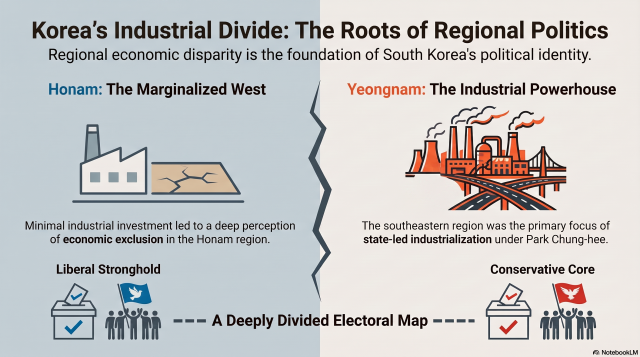
During South Korea's state-led industrialization under former President Park Chung-hee in the 1960s and 1970s, much of the country's heavy industry was concentrated in the southeastern Yeongnam region, while Honam increasingly came to regard itself as economically marginalized.
That perception of unequal development became deeply embedded in the region's political identity and has remained one of South Korea's most enduring political fault lines.
The electoral map still reflects that history.
Honam has long served as the country's most reliable liberal stronghold, while the conservative People Power Party continues to draw much of its support from the southeastern Yeongnam region.
Consequently, few large-scale investment decisions involving Honam are viewed solely through an economic lens.
The semiconductor initiative therefore represents more than a debate over where the next fabrication plants should be built.
It has become an early test of President Lee's industrial philosophy — whether the government can simultaneously pursue AI leadership, reshape the country's economic geography and convince voters that one of the largest industrial projects in Korean history is driven by national strategy rather than regional politics.
Copyright ⓒ Aju Press All rights reserved.
