

South Korea's stock market is once again drawing global attention. The KOSPI index surged toward record highs, with investors celebrating what they believed was the end of a long undervaluation period for the Korean market. However, the jubilation was short-lived. Just days later, the market plummeted, transforming the index from a symbol of triumph into one of fear. The past four days were marked by sharp rises and falls, a mix of cheers and cries, optimism and dread. This was not merely a fluctuation in stock prices; it revealed the inherent characteristics, limitations, and new possibilities of South Korea's capital markets.
The semiconductor sector was at the forefront of this volatility. Two major players, Samsung Electronics and SK Hynix, propelled the market upward and then shook it again. Semiconductors are crucial in the AI era, particularly high-bandwidth memory (HBM) and advanced memory, which form the backbone of global AI infrastructure. As data centers, generative AI, autonomous driving, robotics, and physical AI demand immense computational power, memory semiconductors have once again taken center stage in South Korea's economy. Analysts suggest that the semiconductor boom is driving June's export forecasts, with Reuters projecting that South Korea's export growth rate in June 2026 could reach its highest level in nearly 50 years, largely due to a surge in semiconductor exports.
The challenge lies in the fact that a strong industry does not necessarily equate to market stability. While a robust semiconductor sector can elevate stock prices, excessive reliance on it can lead to greater market volatility. Samsung Electronics and SK Hynix serve as two pillars of the South Korean stock market, which is both a blessing and a risk. When these stocks rise, the Korean market becomes one of the hottest in the world; when they falter, it quickly becomes one of the most unstable. This is the first structural aspect of the KOSPI rollercoaster.
The second structural aspect is leverage. In a bull market, leverage acts as a catalyst. Individual investors borrow money, believing that stock prices will continue to rise, seeking greater returns through leveraged ETFs, margin trading, and derivatives. When the market is up, this force accelerates the rise. However, when the market turns, the same force can exacerbate the decline. Leverage does not discriminate; it can be wings when prices rise and a lead weight when they fall.
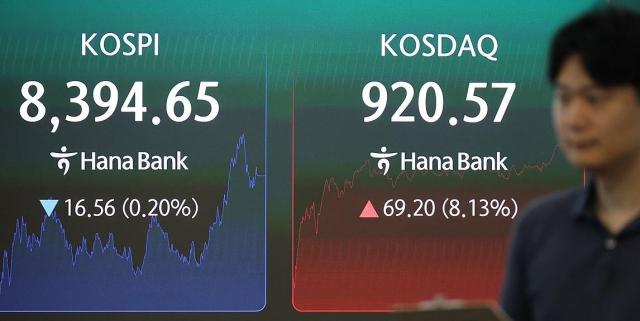
Another factor contributing to the recent decline was foreign selling. On June 26, the KOSPI closed down 5.81% at 8,411.21, with foreign and institutional investors recording significant net sell-offs. Although individual investors purchased over 8 trillion won, the market shock was too great to absorb the volume sold by foreigners and institutions. Analysts interpreted this not as a sign of structural collapse in the Korean economy or damage to semiconductor fundamentals, but rather as a mechanical sell-off related to portfolio rebalancing at the end of the quarter. Due to the T+2 settlement structure, June 26 was effectively a critical trading day for reflecting sell-offs in the end-of-month settlement balance.
Importantly, this decline is not the end of the South Korean stock market but rather an event that has revealed its structure. The South Korean stock market has now entered the heart of the global AI semiconductor landscape. In the past, the market was often characterized by undervaluation, low dividends, opaque governance, and geopolitical risks. However, that is no longer the case. The South Korean stock market has become a key player in the global AI supply chain, with Samsung Electronics and SK Hynix emerging as essential companies in the global AI industry. The Associated Press reported that Samsung Electronics and SK Hynix are pursuing significant semiconductor hub investments in the southwestern region to meet AI demand, emphasizing their roles as core players in global memory supply.
However, gaining global attention is both a blessing and a burden. Foreign capital can flow in quickly and exit just as rapidly. When the proportion of South Korean stocks in global funds suddenly increases, even strong performance can lead to a moment when selling becomes necessary. This is known as rebalancing. Some investors view this as betrayal, while others interpret it as a conspiracy, but the essence of capital markets is much colder. Money does not move based on emotions; it moves according to proportions, returns, risks, and regulations.
Thus, the first principle for interpreting the recent KOSPI fluctuations is to focus on structure rather than anger. Why did the market rise? Why did it fall? Who bought and who sold? Was the selling a judgment on corporate value or merely a portfolio adjustment? These questions must be answered. Markets always exaggerate. They anticipate the future when rising and sell risks prematurely when falling. Investors must find their balance amid this exaggeration.
The recent rollercoaster ride of the South Korean stock market has confirmed three facts. First, AI semiconductors are now the leading narrative of the South Korean stock market. Second, mechanical selling by foreigners and institutions can be powerful enough to destabilize the market in the short term. Third, while the purchasing power of individual investors has grown, it is still not strong enough to fully control the structural direction of the market.
So, is this decline a cause for fear or an opportunity? The answer is not simple. A surge unsupported by corporate performance is a bubble. However, adjustments occurring amid a changing global industrial order can represent new entry points for leading stocks. The South Korean market currently stands on this boundary. What is needed at this juncture is not excitement but calmness. While fear must be guarded against, so too must greed.
◆Foreign Selling, Individual Investors, and the Warning from the Buffett Indicator
The three main players driving the South Korean stock market are foreign investors, institutions, and individual investors. While these three entities operate in the same market, they do not move according to the same logic. Foreign investors view South Korea from a global portfolio perspective. Institutions look at the market from the standpoint of indices, risk management, and operational regulations. Individual investors navigate the market between expectations and fears, confidence and anxiety. The recent fluctuations were a clash of these differing behaviors.
Foreign selling always carries significant weight in the South Korean market. The market is heavily influenced by large export-oriented companies, and its high concentration in large-cap stocks makes it sensitive to global capital flows. When foreigners buy, the market strengthens; when they sell, the market shakes. However, not all foreign selling carries the same implications. Some sales are based on anticipated declines in corporate performance, others aim to avoid currency risks, and some are simply adjustments due to increased portfolio weight. Much of the recent decline can be interpreted as related to the third type, linked to end-of-quarter rebalancing.
Rebalancing is a fundamental principle in the investment world. For instance, if a global fund has set a 5% allocation to South Korean stocks, but due to a semiconductor boom, that allocation rises to 7% or 8%, the fund must sell South Korean stocks not out of dislike for the country, but to comply with regulations and risk management. In this case, the selling is not a sign of distrust in the companies but a matter of adjusting proportions. The market often fails to distinguish this difference, leading to mechanical selling being interpreted as fear, which in turn triggers panic selling.
The role of individual investors has also changed. In the past, individuals were seen as weaker players who lagged behind foreign and institutional volumes. However, they have grown significantly. Mobile trading, real-time information, social media, investment communities, and the proliferation of margin trading and ETFs have transformed individuals into a formidable market force. During the recent downturn, individual investors supported the market with substantial net purchases. The issue, however, is that individual investors' firepower is not limitless. Their funds come from savings, deposits, and sometimes debt. As bull markets extend, their remaining ammunition diminishes. While leveraging can lift the market, it weakens afterward.
Here, we must consider the Buffett Indicator, which compares a country's stock market capitalization to its gross domestic product (GDP). Warren Buffett has emphasized this metric as important for assessing overall market overheating. While this indicator alone cannot definitively indicate a bubble, it serves as a warning light. When stock prices rise significantly faster than the economy's ability to generate profits, the market may be overly optimistic about the future. This is especially true when specific sectors and stocks lead the overall market capitalization increase. The essence of the Buffett Indicator is not the number itself but the questions it raises: How far ahead is the market compared to actual profits? Can profits catch up with expectations? Can interest rates, exchange rates, global economic conditions, and semiconductor prices continue to support those expectations? These are the questions the Buffett Indicator prompts.
Similarly, target prices for Samsung Electronics and SK Hynix are the result of analysis but also products of assumptions. How much will HBM supply increase? How sustainable will AI data center investments be? How strong will demand from Nvidia and global tech giants be? What is the level of competition from rivals like Micron and Chinese firms? How will exchange rates fluctuate? Changes in these assumptions will alter target prices. Therefore, target prices should be seen as subjects for verification rather than objects of faith.
Nonetheless, dismissing Samsung Electronics and SK Hynix based solely on short-term declines would be shortsighted. The global AI industry has only just begun its significant investment phase. Generative AI demands larger models, which in turn require more memory and faster data processing capabilities. HBM has become an essential component in the AI era, and South Korean companies possess global competitiveness in this field. Barron’s reported that South Korea's large-scale memory investment plans could pose a threat to Micron, although actual supply expansion will take time. This indicates the need to distinguish between short-term supply and long-term industrial competitiveness.
The greatest risk in the market is not price but misconception. Buying good companies at excessively high prices can lead to poor investments, while purchasing strong companies at reasonable prices in a volatile market can yield excellent returns. The challenge lies in discerning the difference between price and value. In bull markets, all investors consider themselves geniuses. In bear markets, all investors view the market as a conspiracy. However, the market is neither genius nor conspiracy; it is a place where human greed and fear manifest in numbers.
For South Korea's stock market to evolve into a developed market, the investment culture among individual investors must mature. Relying solely on short-term fluctuations for decision-making is not sustainable. Investing by borrowing money, chasing target prices, and blaming the government and foreigners during downturns will hinder the advancement of capital markets. While investment offers freedom, that freedom comes with responsibility. The notion that profits belong to individuals while losses are societal is inconsistent with the fundamental principles of capitalism.
At the same time, the government, exchanges, and financial authorities share responsibility. When the market experiences sharp fluctuations, what is needed is not artificial stimulus but transparent information and stable systems. Accurate data must be provided regarding factors that increase market volatility, such as short selling, derivatives, leveraged ETFs, margin trading, program trading, and foreign basket selling. Fear grows from ignorance; it thrives in the gaps of information.
This recent decline was a clash between foreign selling and individual buying. However, more deeply, it reflects the growing pains of the South Korean stock market as it transitions from a historically undervalued market to a future growth market. As the market expands, global interest increases, and individual participation grows, volatility will also rise. While volatility poses risks, it also presents opportunities. The key is not to eliminate volatility but to build the capacity to manage it.
◆The Future of Samsung Electronics, SK Hynix, and the South Korean Stock Market
The future of the South Korean stock market is ultimately intertwined with the future of its industries. While short-term supply and demand can shake indices, long-term direction is determined by corporate profits and industrial competitiveness. The core question for the South Korean stock market is clear: Is the AI semiconductor era a temporary trend or a new industrial order? Is the performance improvement of Samsung Electronics and SK Hynix a short-term cycle or a long-term structural change? Can the South Korean stock market leap beyond the past stagnation into a new capital market?
The AI semiconductor era is not merely a phase of rising semiconductor prices; it signifies a shift in the operational framework of industrial civilization. In the past, semiconductors were components for PCs, smartphones, and servers. Now, they serve as the brains of AI, the hearts of data centers, and the foundational infrastructure driving robots, cars, factories, and cities. As AI grows, semiconductor demand will increase. With the rise of physical AI, demand for semiconductors will explode across robotics, autonomous driving, smart factories, defense, healthcare, logistics, and agriculture.
In this context, Samsung Electronics and SK Hynix are not just manufacturing companies; they are key players in South Korea's economic security. When these two companies falter, South Korea's exports are affected; when they thrive, the entire stock market and economy benefit. However, this is precisely why the South Korean stock market must broaden. A market that rises solely on two semiconductor stocks is strong but unstable. A true bull market should start with semiconductors and expand into equipment, materials, components, energy, data centers, software, robotics, finance, consumption, and biotechnology. Leading stocks are necessary, but a market reliant solely on leading stocks is risky.
For the South Korean stock market to evolve into a true developed market, three changes are necessary. First, corporate profits must be shared more with shareholders. Dividends, stock buybacks, improved governance, and protection for minority shareholders are not optional; they are essential. The long-standing undervaluation of the South Korean stock market is not solely due to companies failing to generate profits but also due to a lack of trust that earnings are adequately returned to shareholders. The boom in the AI semiconductor era must translate into cash flow for companies and shareholder value.
Second, the depth of the capital market must be enhanced. A market that collapses when foreigners sell and relies on individuals to absorb the volume is not sustainable. A structure is needed where pension funds, long-term investment capital, retirement funds, and individual pensions invest steadily in quality domestic companies. The strength of the U.S. stock market is not only due to strong companies but also because long-term capital supports the market, innovative companies grow through capital markets, and citizens share in that growth through pensions and funds. South Korea must now shift from a real estate-centric asset structure to a capital market-centric asset structure.
Third, industrial policy and capital market policy must move in tandem. If the government promotes semiconductor clusters, AI data centers, physical AI, and advanced manufacturing innovation, the results must be reflected in the capital markets. National strategic industries cannot be nurtured solely through taxes. Private capital, pension funds, venture capital, public markets, bond markets, and policy finance must work together. Countries that separate industry and finance cannot cultivate future industries.
This recent KOSPI fluctuation has imparted a sobering lesson to investors. First, no matter how promising an industry may be, it will not rise continuously. Second, foreign supply and demand can significantly destabilize the market in the short term. Third, leverage is a double-edged sword. Fourth, target prices are merely reference points and not the entirety of investment decisions. Fifth, the long-term direction of the South Korean stock market ultimately hinges on AI semiconductors, corporate governance, and capital market reforms.
So, what should investors do now? First, they should reduce debt. The moment of greatest confidence in a bull market can also signal the beginning of risk. Second, they should focus on companies. They must look at profits, technology, market share, cash flow, and competitiveness, rather than just stock prices. Third, they should adopt a long-term perspective. The AI semiconductor cycle is not a one-day news story; it represents years of industrial change. Fourth, they should diversify. No matter how important Samsung Electronics and SK Hynix are, one cannot place all assets in just two stocks. Fifth, they should abandon the habit of selling in fear and buying in greed.
The South Korean stock market stands at a crossroads. One path leads to repetition of the past: chasing stocks during surges, panic selling during declines, blaming foreigners, waiting for government measures, and returning to stagnation. The other path leads to a mature capital market: connecting industrial competitiveness to stock prices, returning corporate profits to shareholder value, linking citizens' long-term capital to innovative companies, and transforming market volatility into energy for growth.
A true stock market powerhouse is not merely a country where indices rise significantly. It is a nation where good companies receive fair valuations, investors participate in corporate growth, and the market nurtures the nation's future industries. The strength of the U.S. stock market lies not only in companies like Apple, Microsoft, and Nvidia but also in the capital market ecosystem that nurtured them. South Korea must move beyond a market focused solely on Samsung Electronics and SK Hynix to one where numerous AI, semiconductor, robotics, software, biotechnology, and energy companies grow together.
In light of this recent decline, some may view it as a precursor to a bubble burst, while others may see it as an excellent buying opportunity. Both perspectives could be correct, or both could be wrong. The market always punishes those who make definitive statements and rewards those who ask questions. The questions we should be asking now are: Will South Korean corporate profits continue to grow? Will the AI semiconductor industry endure? Will the Korean capital market mature enough to accurately reflect corporate value? Will the government and companies build a market that earns the trust of shareholders and citizens?
The answers are still unfolding. However, the direction is clear. South Korea stands at the center of the AI semiconductor era. Samsung Electronics and SK Hynix are core companies in the global industry, and the South Korean stock market has become the most direct reflection of this trend. What is now required is not excitement but dignity, not speculation but investment, and not short-term victories but long-term strategies.
The four days from record highs to historic lows in the KOSPI serve as both a warning and an opportunity. The warning is clear: the market can shake at any moment. The opportunity is equally clear: the South Korean stock market is no longer a peripheral player. If AI semiconductors, manufacturing innovation, and capital market reforms align, the Korean stock market can open the door to a new leap forward.
The stock market is a mirror of the nation. In that mirror, the capabilities of companies, government policies, the level of investors, and the future of the national economy are all reflected. As the South Korean stock market experiences significant fluctuations once again, we must remain composed in front of this mirror. We must discard bubbles and protect value. We must guard against greed and support innovation. We should not be swayed by short-term fluctuations but instead observe the larger trends in South Korea's industries.
From the perspectives of truth, justice, and freedom, the capital market is not merely a market for money. Truth is the performance of companies and the competitiveness of industries. Justice is providing investors with fair information and returning rightful shareholder value. Freedom is allowing citizens to participate in future growth based on their own judgments and responsibilities. When these three elements coexist, the South Korean stock market can transcend speculation and become a growth engine for the national economy.
The rollercoaster ride of the South Korean stock market is not over. It will continue to rise and fall. However, what matters is not the fluctuations themselves but the direction that follows them. If South Korea can turn the AI semiconductor era into an industrial leap, connect capital market reforms to the wealth of its citizens, and transform the passion of individual investors into mature long-term investments, this recent surge and decline will be recorded not as a crisis but as a new starting point.
The KOSPI numbers change daily. However, the larger path of South Korea's industries does not change overnight. On that path, Samsung Electronics and SK Hynix lead the way, followed by numerous companies, investors, and citizens. Now, the South Korean stock market is asking: Will we return to stagnation, or will we leap into a global capital market in the AI semiconductor era?
The answer lies not in the market but in us.
* This article has been translated by AI.
Copyright ⓒ Aju Press All rights reserved.