

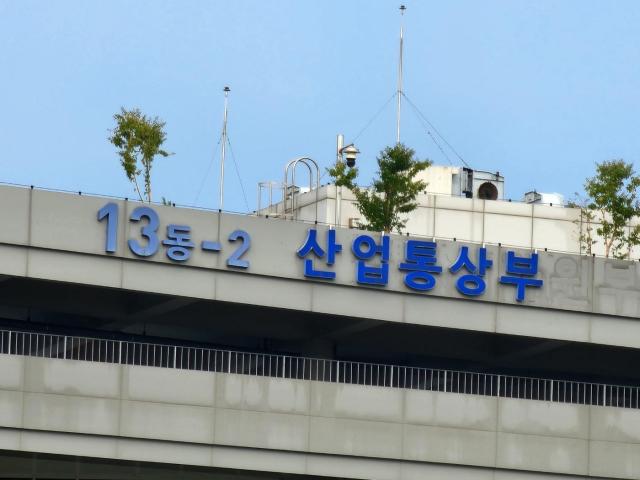
Moon Shin-hak, Deputy Minister of Trade, Industry and Energy, reported this decision during a cabinet meeting and emergency economic policy meeting held at the Blue House on June 30. He stated, "Considering the stability of supply and demand, the inconvenience to the public, and the economic ripple effects, we will lower the resource security alert level."
The resource security alert operates on a four-tier system: 'Interest', 'Attention', 'Caution', and 'Serious'. It is issued based on the severity of the crisis, the impact on the public's daily life, and the national economy, as stipulated by the Special Act on National Resource Security.
The government issued an 'Interest' alert for oil and natural gas on March 5, following the outbreak of war in the Middle East. As supply conditions worsened, the alert was raised to 'Attention' on March 18 and then to 'Caution' on April 2. The 'Attention' level for natural gas has been maintained since April 2.
This downgrade in the alert level is a response to significant improvements in energy supply conditions. For July, oil supplies have already exceeded 100% of the average for previous years, and naphtha supplies are over 95%. Additionally, over 90% of the oil scheduled for import in August has been secured.
Deputy Minister Moon noted, "Oil supplies through Saudi Arabia's Yanbu Port and the UAE's Fujairah Port, which do not pass through the Strait of Hormuz, have significantly increased," adding, "Imports of non-Middle Eastern oil, particularly from the United States, have been clearly expanded in conjunction with the strategic oil swap system."
Concerns regarding natural gas arose after Qatar declared a force majeure on liquefied natural gas (LNG) supplies in March. However, the government has secured alternative supplies to be used until the end of this year through proactive measures.
With the stabilization of oil and LNG supplies and the easing of tensions in the Middle East, the government plans to gradually normalize the emergency measures that have been in place.
As a result, support for diversifying oil freight differentials, strategic oil swaps, and naphtha alternative import differentials will end as of today.
However, to address the potential for intermittent supply chain bottlenecks for specific items, measures regarding naphtha and petrochemical product supplies will continue beyond July.
With this downgrade in the alert level, energy demand management measures for the public sector will also be fully lifted.
Initially, the government considered relaxing vehicle operation restrictions for public institutions from a 2-part system to a 5-part system and lifting the 5-part system for public parking lots.
However, President Lee Jae-myung pointed out that these measures were "ineffective," leading to the decision to completely lift restrictions on public sector vehicle operations.
* This article has been translated by AI.
Copyright ⓒ Aju Press All rights reserved.