
In the 21st century, many would cite Apple, NVIDIA, and Microsoft as the greatest success stories in corporate history. However, a closer examination of their growth reveals a common philosophy: they prioritized people over technology and culture over individuals. This philosophy is systematically outlined in the book How Google Works.
This book is not just a success story; it serves as a management textbook documenting how the internet revolution transformed the world and the principles that guided a company at the forefront of that revolution in hiring, organization, and sustained innovation. Co-author Eric Schmidt led Google as CEO from 2001 to 2011, transforming a small search company into a global tech giant. Jonathan Rosenberg oversaw product strategy, leading search, advertising, mobile, and platform businesses, while Alan Eagle summarized their management philosophy. The trio focused on explaining the principles behind innovation rather than merely recounting their successes.
The core concept of the book is encapsulated in a single term: Smart Creative. During the Industrial Revolution, labor was the competitive advantage; in the Information Age, knowledge took precedence. However, in the AI era, the most competitive individuals possess a blend of technology, creativity, execution skills, business acumen, collaboration abilities, and learning capacity. Google referred to these individuals as 'Smart Creatives.'
Smart Creatives do not wait for instructions. They define problems, analyze data, embrace failure, and collaborate with peers to find better solutions. Skills take precedence over titles, and logic outweighs authority. Companies should not be organizations that issue commands but platforms that enable individuals to unleash their full potential. This is why Google has been able to attract the world's top talent.
Google has made hiring a central management strategy. No single manager makes unilateral hiring decisions. Future colleagues participate in interviews, assessing candidates' potential from diverse perspectives. The company values learning ability, problem-solving skills, collaborative attitudes, and curiosity over current experience. The principle that 'A-level talent hires A-level talent, while B-level talent hires C-level talent' remains widely cited today.
Google's organizational culture is equally distinctive. Information is made as transparent as possible, allowing anyone to voice their opinions. In meetings, data speaks louder than titles, and dissenting views are welcomed. Once decisions are made, everyone moves in the same direction. Discussions may be intense, but execution is swift. This culture reduces bureaucracy and accelerates innovation.
Another principle emphasized in How Google Works is product-centricity. Many companies begin with market research and competitor analysis, but Google starts with technological insights. Rather than settling for minor improvements to existing products, it seeks technologies that fundamentally change user experiences. The belief that creating the best products will naturally attract the market underpins Google's growth.
In this process, failure is not something to be avoided; it is an essential part of innovation. Failed projects do not disappear; they leave valuable data about technology, markets, and users. In organizations that punish failure, no one dares to take new risks. Conversely, organizations that accumulate failures as learning assets become stronger over time. Google applied this philosophy in practice, resulting in the discovery of new growth drivers through numerous experiments.
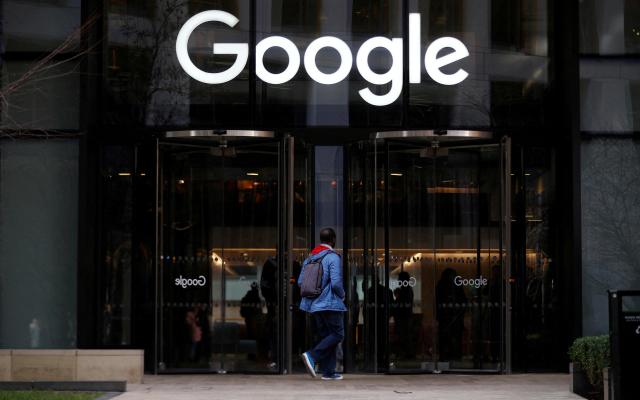
Google's frequent reference to '10X Thinking' aligns with this mindset. The goal is not to create products that are just 10% better than competitors but to aim for breakthroughs that can change the world. This way of thinking explains Google's growth trajectory through search, maps, email, mobile operating systems, cloud services, and artificial intelligence.
Ultimately, the message conveyed by How Google Works is clear: innovation does not happen by chance. It flourishes when exceptional individuals are gathered, allowed to discuss freely, execute quickly based on data, and work in a culture that does not fear failure. While technology can be replicated, culture cannot be easily duplicated. Therefore, a company's true competitive advantage lies in its people and organizational culture rather than patents or facilities.
As generative AI reshapes industries today, this book reads not just as a management guide from over a decade ago but as a prophetic roadmap for the future. The performance of AI may level out over time, but the skill level of those utilizing AI and the quality of organizational culture will not be easily matched. Ultimately, the future winners will not be the companies with the best algorithms but those with cultures that allow the most talented individuals to work freely. This is the most important message How Google Works imparts to us today.
What should Korean AI companies learn? The management philosophies of the Tao Te Ching, I Ching, and The Art of War in the AI era.
After reading How Google Works, one naturally arrives at the question: 'What should South Korea's AI companies learn?' The answer is surprisingly simple: it is not about mimicking Google. Instead, it is about reinterpreting the principles and philosophies that led to Google's success in the context of South Korea's realities. The world's top companies should be seen as sources of insight rather than mere templates for replication.
Above all, our companies must shift to a management approach that prioritizes people over technology. With the advent of generative AI, algorithms and large language models are rapidly proliferating. The technology gap is likely to narrow over time. However, human creativity and organizational culture cannot be caught up with in the short term. Ultimately, future competitiveness will be determined more by the level of people than by the number of GPUs.
South Korea possesses world-class semiconductor technology. Samsung Electronics and SK Hynix lead the AI memory market, while Naver has accumulated expertise in super-large AI, search, and cloud technologies. LG AI Research is expanding industrial AI, and startups like Rebellion and Furiosa AI are pioneering the new realm of AI semiconductors. However, it is now essential to build an AI ecosystem at the national level that transcends individual company competition. Only when semiconductors, cloud services, data centers, software, robotics, and physical AI are interconnected as a single strategy can South Korea leap forward as an AI powerhouse.
To achieve this, first, hiring philosophies must change. We need to move away from evaluations centered on academic background and experience to focus on learning ability, problem-solving skills, and collaboration capabilities. Second, we must innovate the culture that punishes failure. Organizations that hide failures cannot foster innovation. Only companies that share failures and accumulate those experiences as assets for future challenges can grow sustainably. Third, CEOs must understand technology. In the AI era, it is difficult for leaders who do not grasp technology to design the future of their companies. Fourth, data must be opened up, and communication within organizations must be activated. Innovation slows down the moment information is confined to specific departments. Finally, research and development and long-term investments must continue unwaveringly. The AI industry is not a sprint but a marathon.
Particularly, South Korea must now transition from a 'follower strategy' to a 'leader strategy.' In the past, we could catch up with the global market by rapidly absorbing and improving foreign technologies. However, in the AI era, the companies that create the first standards will dominate the market. The world has already moved on to platform competition, ecosystem competition, and data competition. Following strategies have their limitations. Like Google, we need the courage to forge new paths.
Interestingly, this philosophy of innovation has long been emphasized in Eastern classics. In the Tao Te Ching, Laozi said, 'The highest good is like water.' This means that the best virtue is like water, which flows to the lowest places but ultimately carves through rocks to create rivers and seas. Organizations in the AI era should be similar. Flexible organizations that flow rather than those that impose authority will survive longer. Free discussions and autonomous collaboration unleash the greatest power when they flow like water.
Laozi also stated, 'Without action, nothing is left undone.' This means that without forced control, everything will be accomplished. This does not imply neglect but rather leadership that respects the autonomy and responsibility of members. Google's Smart Creative culture is also built on this philosophy. The less interference there is, the more creativity flourishes.
The I Ching is a philosophy of change. 'When one is at an impasse, change is necessary; when change occurs, there is communication; when there is communication, there is longevity.' AI evolves daily. Yesterday's success formula can become today's failure. Only companies that continuously change and innovate themselves can secure sustainable competitiveness. Organizations that fear change will inevitably fall behind the times.
The Art of War enlightens us about the essence of strategy. Sun Tzu said, 'The victorious army wins first and then seeks battle.' This means that a winning army prepares the conditions for victory before engaging in battle. Google did not rush into the market; it first adequately prepared the winning conditions of technology, talent, data, and platforms before opening the market. Additionally, as the saying goes, 'Know your enemy and know yourself, and you can fight a hundred battles without danger.' Companies that only study competitors will not succeed. The winners in the AI era will be those who understand their customers, comprehend data, and accurately know their own strengths and weaknesses.
These three classics convey common teachings despite differences in time and geography: flow flexibly, adapt to change, and execute boldly after thorough preparation. Remarkably, Google can be seen as a representative company that has implemented these philosophies in modern technological management.
South Korea stands at a critical crossroads. Will we view AI merely as an industry, or will we seize it as an opportunity to redesign national civilization? Google was not just a company that created a search engine; it built a system where innovation continuously occurs. This is why it remains one of the world's top companies today.
What South Korean AI companies truly need to learn is not specific technologies or algorithms. It is a culture that respects people, an organization that transforms failure into assets, decision-making based on data-driven discussions, and a spirit of challenge that does not fear the future. Technology may level out over time, but philosophy determines a company's destiny.
The true competition in the AI era does not end with semiconductors and software. National competitiveness is only realized when people, culture, strategy, and philosophy come together. The essence of Google's success lies precisely here. Now, South Korea must leap from being a 'fast-following nation' to a 'nation that opens new paths first.' This is the new historical task assigned to us as we enter the AI era and the most valuable legacy we can pass on to the next generation.
※ This article was written using generative AI and has undergone editorial review.
* This article has been translated by AI.
Copyright ⓒ Aju Press All rights reserved.