
South Korea is a global leader in shipbuilding and shipping, but the maritime competition in the AI era is entering a new phase. The future will depend less on the number of ships built and more on how intelligently ports and logistics are operated, as well as how effectively autonomous vessels and marine data are utilized.
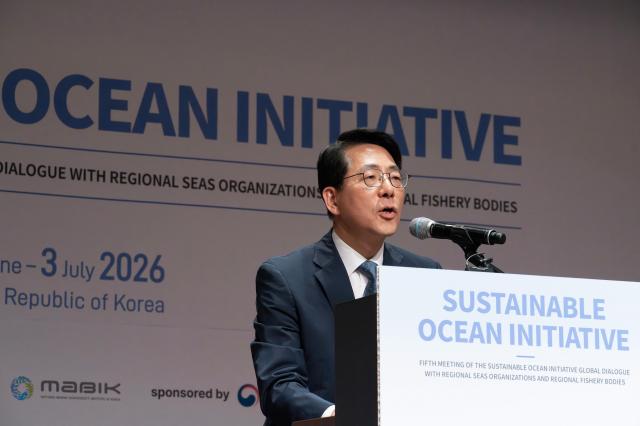
Minister of Oceans and Fisheries Hwang Jong-woo is a seasoned maritime bureaucrat with extensive experience in maritime and port policy. Having served as the head of the Port Logistics Planning Division, the Marine Policy Division, and the Maritime Safety Agency, he has been appointed as the first minister following the relocation of the Ministry to Busan, making him well-suited to lead strategies for the Arctic shipping route era and the smart maritime nation initiative.
The tasks for the Ministry of Oceans and Fisheries in the AI era are clear.
The goal is to innovate ports, shipping, fisheries, maritime safety, and marine environments simultaneously through AI.
The question is straightforward.
Can South Korea truly leap to become the world's leading smart maritime nation through AI?
AI smart ports will transform national logistics competitiveness
Most of South Korea's import and export cargo moves through its ports.
AI is fundamentally changing how ports operate.
It predicts ship arrival and departure times, optimizes container movement routes, and automates cargo handling equipment.
Digital twin technology allows for real-time virtual management of the entire port and enables preemptive analysis of risk factors.
Minister Hwang's extensive experience in port logistics policy is expected to accelerate the establishment of AI-based smart ports.
Port competitiveness is now determined not by the size of the dock but by the level of AI technology.
Autonomous vessels are revolutionizing the shipping industry
AI is also sparking a revolution at sea.
Autonomous vessels calculate their own routes, analyze weather and currents, and minimize fuel consumption.
AI also plays a role in predicting collision risks and enhancing navigational safety.
South Korea possesses world-class shipbuilding technology.
By integrating AI, there is a significant potential to lead the autonomous vessel market globally.
Minister Hwang is expected to connect shipbuilding, shipping, and ports into a cohesive AI ecosystem.
AI enhances productivity in the fisheries sector
The fisheries industry is transitioning from an experience-based to a data-driven sector.
AI analyzes water temperature, salinity, and oxygen levels to provide optimal aquaculture environments and predict disease outbreaks.
AI-driven analysis of fishing grounds using drones, satellites, and marine sensors will improve catch efficiency and contribute to the protection of marine resources.
Digital seafood distribution and smart aquaculture will become key factors determining the competitiveness of South Korea's fisheries industry.
AI does not replace the experience of fishermen; rather, it supports them with greater accuracy.
AI ensures maritime safety
Maritime accidents can cause significant loss of life and economic damage.
AI can analyze ship operation data in real-time to predict collision risks and detect abnormal navigation patterns.
By combining weather information with wave and current data, maritime disasters can be predicted more accurately.
Minister Hwang's experience as the head of the Maritime Safety Agency is expected to enhance the maritime safety system.
AI is not a technology for post-accident rescue; it is a technology for preventing accidents before they occur.
Marine data becomes a new national asset
In the AI era, data is the new oil.
This holds true for the oceans as well.
Data on ports, ships, marine weather, marine environments, and fishery resources are all core assets for the AI industry.
By integrating marine data held by public and private sectors and utilizing AI for analysis, the levels of logistics, maritime safety, and marine environmental policies can be significantly improved.
With its world-class shipbuilding and shipping infrastructure, South Korea has ample potential to secure international competitiveness in the marine AI data sector.
In the era of the Arctic shipping route, AI opens new paths
Climate change is also opening new possibilities for the development of the Arctic shipping route.
The Arctic route can significantly reduce travel distances compared to traditional routes, but analyzing weather changes and ice conditions is essential.
AI can analyze satellite data and marine information to suggest safe navigation routes and enhance operational efficiency.
Minister Hwang has been tasked with preparing for the era of the Arctic shipping route and completing Busan as a maritime capital. AI could be the key technology to realize this strategy.
The challenge presented to Minister Hwang is not merely to manage maritime and fisheries policy.
It is to lead a national maritime innovation that connects ports, shipping, fisheries, maritime safety, and marine environments through AI.
AI smart ports, autonomous vessels, and digital fisheries all aim toward a single goal.
That goal is to make South Korea the world's leading AI maritime nation.
Transitioning from a shipbuilding powerhouse to an AI maritime powerhouse is the path forward.
This will be the most significant national task for the Ministry of Oceans and Fisheries during Minister Hwang's tenure.
: Minister Hwang Jong-woo:
Minister Hwang Jong-woo is a prominent expert in maritime and port policy, having served in various roles including head of the Port Logistics Planning Division, Marine Policy Division, spokesperson, Maritime Safety Agency head, and Planning Coordination Office head. He has also worked in the Presidential Office and served as a director at the Korea Maritime Foundation before being appointed Minister of Oceans and Fisheries in 2026.
Hailing from Busan, he holds symbolic significance as the first minister following the Ministry's relocation to Busan and is recognized as the right person to lead the preparation for the Arctic shipping route era, the establishment of smart ports, the enhancement of maritime logistics competitiveness, and the digital transformation of the marine sector.
* This article has been translated by AI.
Copyright ⓒ Aju Press All rights reserved.