


Yoo Na-hyun
Photojournalist, AJU PRESS (AJP) Covering news, culture and society in South Korea through an Asian perspective.
Copyright ⓒ Aju Press All rights reserved.
Related News
-
 South Korea presses with AI build-out despite jitters
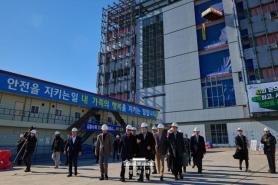
President Lee Jae Myung inspects SK AI data center under construction in Ulsan, south of Korea on Nov. 21, 2026 (Cheong Wa Dae) SEOUL, November 21 (AJP) -South Korea is pressing ahead with its data center and chip buildout despite growing talk of a slowdown in the United States and fears of an artificial intelligence (AI) bubble, with President Lee Jae Myung visiting a $5.2 billion SK data center construction site after his trip to Samsung Electronics' $34 billion advanced chip packaging project. Fresh from his overseas trip to the Philippines and Shenzhen, China, Lee toured SK Group's AI data center under construction in the southeastern industrial city of Ulsan on Saturday, nine days after attending the groundbreaking ceremony for Samsung Electronics' high-bandwidth memory (HBM) packaging complex in Asan, South Chungcheong Province. The back-to-back visits underscored Seoul's determination to push ahead with its AI infrastructure ambitions even as investors question the sustainability of massive technology spending and growing resistance to new data centers in the United States adds uncertainty to the industry's expansion. SK Group is developing the Ulsan facility jointly with Amazon Web Services (AWS), with an estimated investment of 7 trillion won ($5.2 billion) through 2029. The 100-megawatt facility, now 71 percent complete, is scheduled to begin operations in late 2027. It is the starting point for SK's far more ambitious plan to build 15 gigawatts of AI data center capacity across five regions of South Korea by 2035. SK aims to expand Ulsan's capacity tenfold to 1 gigawatt and establish an initial 5 gigawatts of capacity nationwide, beginning phased operations in 2029. A further 10 gigawatts is envisioned by 2035. South Korean President Lee Jae Myung visits SK AI datacenter construction site in Ulsan, south of Korea, on Nov. 21, 2026. (Courtesy of Cheong Wa Dae) The investment is part of the government's broader megaproject initiative covering semiconductors, physical AI and data centers, aimed at strengthening Korea's position in the global AI supply chain while spreading industrial investment beyond the Seoul metropolitan area. Tie-less and with a safety helmet on, Lee praised SK for its aggressive investment and rapid execution. He recalled attending the project's launch in June last year during his first regional visit after taking office. "AI data centers are major sources of demand for semiconductors and essential infrastructure supporting physical AI, including robots and autonomous vehicles," Lee said. "Just as the Gyeongbu Expressway opened the way for Korea's industrialization, the AI highway will open the way for Korea's AI transformation." Lee expressed hope that the Ulsan project would attract further investment from global AI companies and demonstrate that large-scale technology infrastructure could generate new growth opportunities outside the capital region. The ambitious expansion, however, faces formidable challenges, particularly in securing enough electricity, land, skilled construction workers and long-term customers to support investments on such a scale. SK is in discussions with several global technology companies over potential data center contracts and plans to secure customer commitments before committing to further investments. The group is also seeking external investors and project financing to share the financial burden. Lee acknowledged the growing shortage of skilled workers needed to construct advanced semiconductor fabrication plants and AI data centers. "Speed is everything in today's global competition," he said, promising government efforts to address shortages of specialized workers. During a closed-door meeting with SK executives, Lee discussed the outlook for AI infrastructure, the competitiveness of Korean data center locations and the importance of securing sufficient electricity at competitive prices. According to presidential deputy spokesperson An Gui-ryeong, a project official predicted that recent market turmoil would subside and semiconductor demand would grow substantially as physical AI advanced. Lee agreed that technological progress was likely to increase demand for AI data centers and memory chips. He also emphasized that a stable supply of affordable renewable electricity would become a major determinant of industrial competitiveness over the longer term. President Lee Jae Myung (center) joins a groundbreaking ceremony for the Chungcheong regional megaproject at Samsung Electronics' Onyang campus in Asan, South Chungcheong Province, on November 12, 2026. The visit followed Lee's November 12 trip to Samsung Electronics' Onyang campus in Asan, where the company is developing an advanced packaging hub for HBM, a critical component in AI computing. Samsung plans to invest 46 trillion won in the project, including 6 trillion won in construction and 40 trillion won in advanced equipment, to establish five HBM packaging lines. Together, the two investments highlight Korea's strategy of building out both sides of the AI infrastructure chain: the memory chips powering advanced computing systems and the data centers needed to run them. The investment push comes as Wall Street reassesses the AI boom amid concerns over stretched valuations, uncertain returns on enormous capital spending and the pace of future infrastructure demand. Tags: SK Telecom, SK hynix, SK horizon, AI data center, South Korea, Samsung Electronics, semiconductors, packaging, HBM
-
 Universities toughen anti-cheating measures amid growing AI concerns
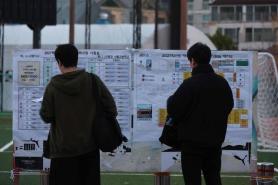
Students arrive at a test site in southern Seoul on Nov. 19, 2026. AJP Han Jun-gu SEOUL, November 21 (AJP) - Universities are stepping up security measures for upcoming essay tests and admissions interviews after more than 100 cases of cheating were discovered in this year's university entrance exam earlier this week. The incidents have raised concerns about the possible use of artificial intelligence (AI) and concealed smart devices. As separate essay tests and oral interviews for admission to the next academic year begin this weekend, they are introducing various measures to monitor applicants, restrict what they can bring into test sites, and implement additional security checks to prevent cheating. According to education authorities on Saturday, major universities across the country have provided applicants with new guidelines for their respective admission tests following last Thursday's annual nationwide exam, placing particular emphasis on banning electronic devices that could be used to receive information or secretly transmit exam questions. The country's most prestigious university Seoul National University (SNU) and other schools plan to provide applicants with writing materials rather than allow them to bring their own pens and other stationery from home. The measure is intended to prevent applicants from using writing instruments containing hidden electronic devices or other AI-powered tools. Sogang University in western Seoul has also warned applicants against bringing devices that could be disguised as ordinary personal belongings and advised them to avoid clothing with buttons on the upper body or sleeves. Sungkyunkwan University, meanwhile, has restricted the wearing of hats and hooded sweaters. Many universities are also banning personal accessories such as analog watches, earrings, necklaces, badges and earplugs, while increasing the number of staff and proctors to inspect applicants' belongings and detect concealed devices such as smart glasses and miniature cameras. The developments followed a series of measures announced by the Korean Council for University Education earlier in the week to crack down on cheating in university admissions. Under the new rules, applicants caught cheating will have their exams invalidated and their admission revoked, while enrolled students found to have cheated could be expelled. Offenders will also be barred from applying to any of the council's 197 member universities for 10 years and could face legal action. The tighter restrictions and tougher penalties come after a recent cheating scandal in which a top scorer on the state-administered certified public accountant exam admitted to using AI-powered devices. The case also immediately turned attention to another top scorer who was accused of cheating on a law school entrance exam in an attempt to gain admission to Seoul National University (SNU), which ended up with his death as he was found dead in an apparent suicide amid growing pressure to prove his innocence on the day of the exam on Thursday. The case also brought attention to another top scorer who was accused of cheating on a law school entrance exam in an attempt to gain admission to Seoul National University (SNU). He was found dead in an apparent suicide on Thursday, the day of the nationwide exam, amid what appeared to be growing pressure to prove his innocence. Artificial intelligence (AI)-generated image Meanwhile, a recent assessment using a program developed by Gu Yu-gyeom, a computer software engineering student at Soonchunhyang University, has further highlighted how capable AI technologies have become at solving the country's notoriously difficult university entrance exam in a highly competitive, education-conscious society. After testing various AI models on this year's exam questions, Gu released the results on Friday, with OpenAI's GPT-6.2 Astra and Google's Gemini 4 Neon tying for first place with perfect scores of 450 out of 450. Among South Korean models, LG AI Research's K-EXAONE 2.5 earned the highest score with 414.7 points, ranking 12th. Chinese models also performed strongly with one from Moonshot AI scoring 438 points and another from Alibaba scoring 434.5, ranking 8th and 9th respectively. Gu, who has been comparing AI performance on the exam since last year, used each model's application programming interface (API) rather than public chatbot services to exclude outside assistance such as internet searches and calculators. He said testing began almost immediately after this year's exam questions were released to reduce the possibility that the models had already memorized the answers. Although differences in models and testing conditions mean that these scores do not provide a comprehensive measure of overall capabilities, the latest results underscore the rapid progress AI has made in solving complex academic problems, while raising broader concerns about its implications for society, the need for fundamental reforms in education, and various challenges in other areas.
-
 President Lee Jae-myung: AI Data Centers are Key Infrastructure for Future Industries
President Lee Jae-myung emphasized the importance of artificial intelligence (AI) data centers as crucial infrastructure supporting future industries such as robotics and autonomous vehicles. He made these remarks during a visit to the construction site of the SK AI Data Center (AIDC) in the Mipo National Industrial Complex in Ulsan on the morning of November 21."In the past, highways opened the path to industrialization in South Korea, and now I believe many AI highways will be designed for the future of AI in South Korea," he stated.This visit was organized to assess the actual progress of the project following his attendance at the launch ceremony of the Ulsan AI Data Center last June, marking his first regional schedule since taking office. It follows his participation in the groundbreaking ceremony and the fourth inspection meeting for the Chungcheong mega project on November 12, expanding his site inspections to the Yeongnam region.The Ulsan SK AI Data Center is set to be the first among the government-promoted mega project AI data centers to begin operations by the end of 2027. It is expected to serve as the starting point for SK Group's construction of a 5-gigawatt (GW) AI data center.President Lee expressed gratitude to SK officials for their bold investments and swift progress, stating, "Last week I visited the Chungcheong region, and today I am visiting the Yeongnam region's mega project site."He added, "I expect the successful advancement of the Ulsan AI data center project will serve as a catalyst for attracting additional investments from global AI companies."He particularly stressed that expanding investments in advanced industries centered in local areas should be a catalyst for regional balanced development."What is important is that investments in AI infrastructure are being conducted with a focus on local areas," he noted, adding that this could serve as a real example of creating new growth momentum.He stated, "The main national task for South Korea is balanced development. Due to the concentration in the metropolitan area, various problems arise, and we need to create new opportunities in local areas, with mega projects serving as a crucial mechanism."President Lee also pointed out the issue of a shortage of skilled workers needed for constructing advanced industrial facilities."Overall, reports indicate that there is a significant shortage of personnel for advanced facility construction," he said, noting that there is a considerable lack of workforce for semiconductor facilities currently being developed, which could pose challenges for construction.He emphasized, "In a world where competition is fierce, speed is essential. The key to national competitiveness is speed. We will consider how to prepare the workforce more effectively."He also praised the role of local governments, stating, "Local governments play a significant role in permits and approvals, which has greatly helped increase speed."In response, Ulsan Mayor Kim Sang-wook said, "We will work hard, and it seems there will be much to do in the future."According to a written briefing by Deputy Spokesperson Ahn Gwi-ryeong, President Lee arrived at the SK AI Data Center construction site around 11 a.m., wearing a white safety helmet to inspect the progress of the construction. He received explanations from Kim Jong-yeon, the site manager of SK Eco Plant, regarding the construction progress, floor composition, and data hall facilities.The site manager reported that the current construction progress is at 71% and that the work is proceeding smoothly. President Lee inquired about the differences in construction costs and timelines compared to the metropolitan area while confirming the pace of the project.He also checked how power needed for the data center would be supplied and whether sufficient skilled workers for plumbing and equipment were available. After hearing that there was a shortage of construction personnel on-site, he expressed concern about the workforce supply issue.President Lee showed particular interest in ensuring a stable power supply system, noting that the AI data center must operate 24 hours without interruption.He specifically asked whether there would be any gaps in power supply during a power outage until emergency generators are activated. The site manager explained that power could be supplied through an uninterruptible power supply (UPS) for about three seconds during the switch to emergency generators.To ensure the stable operation of the AI data center, it is essential not only to secure sufficient power but also to have facilities in place that prevent power supply interruptions during emergencies such as outages.After completing the site inspection, President Lee moved to the nearby SK Chemical Ulsan plant to receive a report on the progress of the AI data center project and cooperative measures to revitalize the Ulsan regional economy.In a subsequent closed-door report, discussions were held with SK officials regarding the future outlook for the AI data center industry, South Korea's competitiveness in data center locations, and the proportion of power supply in overall project costs. Recent market turmoil related to AI and future demand forecasts were key topics of discussion.An SK official stated that the recent market turmoil is expected to stabilize, and demand for AI data centers is projected to increase explosively as we move toward a physical AI era that operates in the real world, including robotics and autonomous vehicles.President Lee expressed agreement with the notion that as technology advances, the demand for AI data centers and memory is likely to increase.He shared the outlook that the growing demand for data processing due to the advancement of AI technology could lead to continuous growth in the data center and semiconductor industries.The closed-door report also focused on the issue of power supply, which is crucial for the competitiveness of AI data centers.President Lee emphasized that utilizing eco-friendly renewable energy for stable and affordable power supply will be a key factor determining overall industrial competitiveness in the long term.He also showed interest in the job creation effects resulting from the construction and operation of AI data centers, particularly noting the need to address the shortage of skilled workers required for constructing advanced facilities to ensure it does not become a hindrance in the project advancement.The Ulsan AI data center project is significant as it represents large-scale advanced industrial investments being pursued outside the metropolitan area. President Lee stressed that it should serve as an opportunity to attract additional investments from related companies while securing new growth engines for the region.Attending the site visit were SK Group officials, including CEO Jeong Jae-hun of SK Telecom and CEO Jeong Seok-geun of SK Hynix, as well as Deputy Prime Minister and Minister of Science and ICT Baek Kyung-hun, Ulsan Mayor Kim Sang-wook, Ulsan Nam-gu Chief Im Hyun-cheol, Presidential Chief of Staff Im Kwang-hyun, and Chief of AI Future Planning Lee Hae-min.* This article has been translated by AI.