

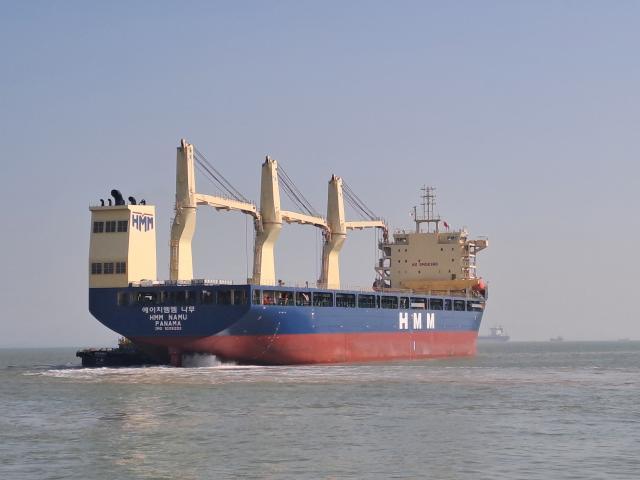
With shipping demand ahead of the expiration of the U.S. tariff suspension and the peak season effect, domestic shipping companies like HMM are expected to see significant improvements in their second-quarter results.
According to the Shanghai Shipping Exchange (SSE) on June 26, the SCFI reached 3326.87 this week, an increase of 87.23 points or 2.69% from the previous week. This marks a nearly 2.5-fold increase compared to February 27, just before the outbreak of the Middle Eastern conflict, when it stood at 1333.11.
The rise in freight rates is attributed to a front-loading demand from shippers securing cargo ahead of the end of the U.S. tariff suspension, coinciding with the peak season for North American routes. Additionally, the prolonged Red Sea situation has led to detours and a shortage of shipping capacity, further supporting the increase in rates.
The strong performance of the SCFI has raised expectations for improved results in the shipping industry for the second half of the year. The SCFI is a key indicator of global container shipping trends, reflecting freight rates for containers departing from Shanghai and quickly mirroring global trade flows and shipping supply and demand. Industry analysts typically gauge future shipping company performance based on SCFI trends.
If the SCFI maintains a solid trajectory through the second half of the year, analysts predict that operating profits could grow by more than double digits compared to the previous year.
According to FnGuide, HMM's consensus forecast anticipates revenues of 3.0442 trillion won and operating profits of 299 billion won, representing increases of 16.1% and 28.2%, respectively, from the previous year.
This growth is attributed to strong freight rates on key routes to the Americas and Europe. Freight rates on the North American route have risen by $912 to $8,296 per 40-foot container (1 FEU), marking the first time rates have surpassed $8,000 since August 2024. European route rates also increased by $76 to $3,418 per twenty-foot container (1 TEU).
Pan Ocean, which operates bulk carriers, is also expected to report strong second-quarter results due to a recovery in bulk shipping rates. The Baltic Dry Index (BDI), which influences revenue and operating profit in the bulk sector, has surged from 1,882 points at the beginning of the year to around 3,000 in June.
Pan Ocean's second-quarter consensus forecast estimates revenues of 1.4673 trillion won and operating profits of 142.3 billion won, reflecting increases of 13.4% and 15.7%, respectively, from the previous year.
A shipping industry official stated, "As shipping demand concentrates ahead of the expiration of the U.S. tariff suspension, freight rates have risen more significantly than expected. While we anticipate improved results for shipping companies in the short term, freight rate volatility may increase in the second half of the year depending on U.S. trade policy and supply expansion."
* This article has been translated by AI.
Copyright ⓒ Aju Press All rights reserved.