

Osteoarthritis treatments are evolving from pain relief-focused therapies to approaches that aim to slow disease progression. The development of disease-modifying osteoarthritis drugs (DMOADs), which promote cartilage regeneration and improve joint structure, is gaining momentum, raising hopes for a shift in the treatment paradigm for osteoarthritis.
As of now, there are no osteoarthritis treatments globally recognized as DMOADs. This is due to the need to demonstrate structural improvements in joint tissue beyond just pain reduction and functional enhancement.
Market growth potential is also noteworthy. According to market research firm Grand View Research, the global osteoarthritis treatment market is projected to grow from $5.49 billion in 2025 to $10.89 billion by 2033. Notably, knee osteoarthritis accounts for 42% of the total market, highlighting a significant unmet demand traditionally addressed by pain relievers and hyaluronic acid injections.
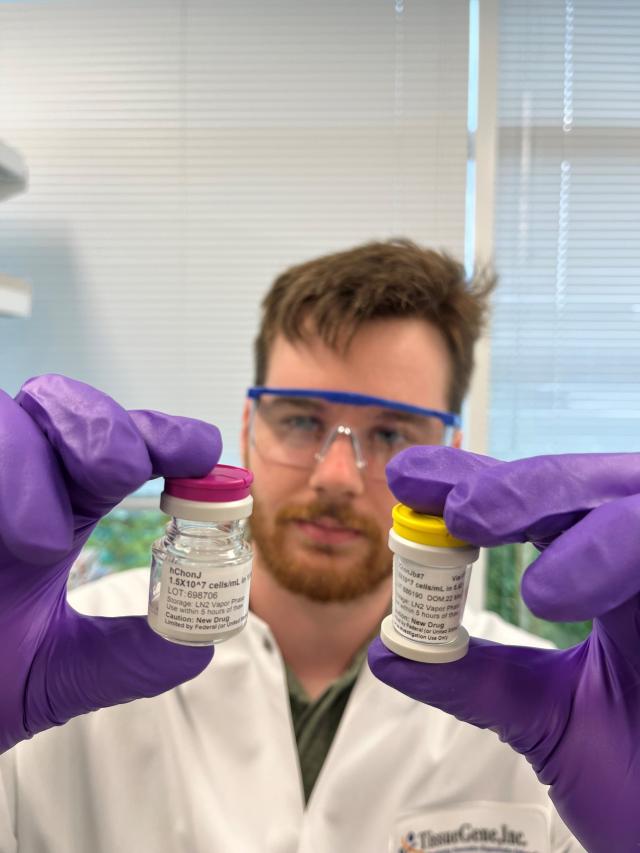
Kolon TissueGene is a leading domestic company in DMOAD development. Its osteoarthritis cell gene therapy, TG-C, combines normal cartilage cells with cells genetically modified to express TGF-β1. The company is expected to announce top-line results from a Phase 3 clinical trial for knee osteoarthritis this month.
Industry experts view TG-C as one of the most promising candidates for DMOAD validation. If proven effective with a single injection, it could quickly replace existing treatments that require repeated prescriptions.
Based on the upcoming results, the company plans to apply for a Biologics License Application (BLA) with the U.S. Food and Drug Administration (FDA) in the first quarter of next year. If approved, it would secure exclusive marketing rights for 12 years in the U.S. and 10 years in Europe after launch.
Kolon TissueGene is also accelerating its expansion into other indications. Recently, it obtained patents in the U.S. and Australia to apply TG-C for degenerative spinal disease. Clinical dosing procedures for spinal patients are set to begin in the second half of this year, with plans for commercialization through joint development and licensing agreements.
Medipost is also targeting the global market with its knee osteoarthritis treatment, Cartistem. Since its approval in South Korea in 2012, over 36,000 procedures have been performed with this leading treatment option.
Recently, Cartistem secured statistical significance in both primary and secondary efficacy endpoints in a Phase 3 trial in Japan, enhancing its commercialization prospects. The company plans to apply for product approval in Japan by the end of this year, aiming for approval in the following year. It also intends to implement changes to domestic media to enhance cost competitiveness and supply chain stability, as these account for 10-15% of treatment costs.
The company has also received final approval to conduct a pivotal Phase 3 clinical trial for Cartistem with the FDA.
Industry analysts believe that the introduction of the first approved DMOAD could fundamentally change the structure of the osteoarthritis treatment market. Jeong Yoon-taek, a researcher at the Pharmaceutical Industry Strategy Research Institute, stated, "Joint cartilage regeneration is a challenging area with no clear treatments available worldwide. The Phase 3 results from Kolon TissueGene and the advancement of Medipost's U.S. Phase 3 trial signify a closer step toward fundamental treatments." He added, "The treatment paradigm for osteoarthritis is likely to shift from symptom relief and joint replacement to addressing the disease itself."
* This article has been translated by AI.
Copyright ⓒ Aju Press All rights reserved.