

South Korean football is facing its worst crisis in history following its elimination from the 2026 North and Central America World Cup. The BBC reported that this failure is not merely a result of poor performance on the field but reveals structural issues within the Korea Football Association (KFA). The analysis points to a lack of transparency in the coach selection process, localism, and the absence of long-term strategy as contributing factors to the World Cup disaster.
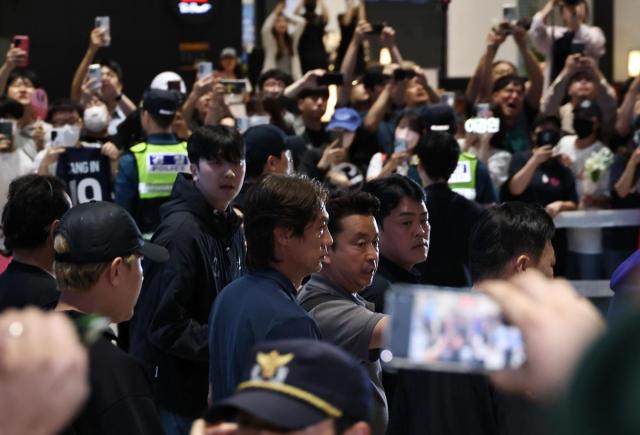
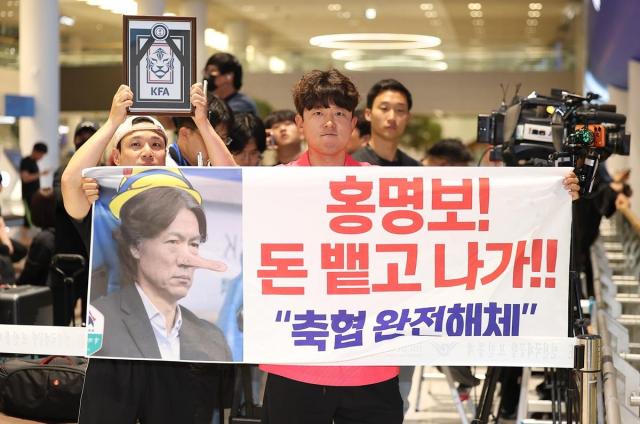
In an article titled "South Korean Football is Dead," published on July 3, the BBC detailed the anger of fans who gathered at Incheon International Airport after the team's exit from the tournament.
Fans shouted, "Hong Myung-bo out!" as they protested against the returning coach, with some even following his vehicle to express their discontent. However, the BBC noted that the fans' anger was directed not solely at Hong but stemmed from a broader distrust of the KFA's overall management.
The report highlighted that controversy surrounding Hong's appointment as head coach in 2024 had persisted due to questions of fairness and transparency. Critics within and outside the football community argued that coaching positions and key roles were determined more by connections than by merit, and Hong's selection was not exempt from such suspicions.
Notably, former national team player and commentator Park Joo-ho publicly raised concerns about the lack of proper procedures in the coach selection process. As a member of the Strengthening Committee at the time, he stated, "Nothing was conducted within the proper procedures," asserting that candidates were not guaranteed a fair opportunity to compete.
The BBC also reported that South Korean football legend Park Ji-sung criticized the association, stating in an interview with local media, "People have lost trust in the KFA," and added, "It will take a long time to regain that trust."
The results of a government audit conducted in 2024 also drew the BBC's attention. The audit concluded that both the dismissal of coach Jurgen Klinsmann and the selection process for Hong lacked fairness and transparency. The report indicated that a technical director without authority had interviewed Hong under the direction of KFA President Chung Mong-kyu, and that the coach's appointment was effectively decided before the board's vote.
President Lee Jae-myung also called for an investigation into the KFA's operations immediately after the World Cup exit. The BBC reported that President Lee stated, "If favoritism and localism take precedence over ability in selecting a commander, the outcome is predictable," adding that it appears to be a failure of organization and personnel.
The BBC assessed that this situation highlights the long-term absence of a systematic approach in South Korean football. Sports commentator Choi Dong-ho told the BBC, "Japan has found a clear answer to what its national team should aim for, while Korea seems to start from scratch every four years," asserting that the KFA has failed to establish a football identity based on long-term philosophy.
Furthermore, the BBC compared the situation, noting that since the 2002 Korea-Japan World Cup, South Korea has changed its national team coach more than ten times, while Japan has consistently operated its team under a long-term philosophy, enhancing its international competitiveness. Ultimately, the analysis concluded that despite having world-class players like Son Heung-min, Lee Kang-in, and Kim Min-jae, South Korean football has been unable to overcome the limitations of its organizational system.
Amid this criticism, the government has begun to take serious steps toward reforming South Korean football.
The Ministry of Culture, Sports and Tourism announced that it will hold the launch ceremony for the "K-Football Innovation Committee" on July 6 at the Olympic Parktel in Seoul. The committee will be co-chaired by Minister of Culture, Sports and Tourism Choi Hwi-young and FIFA committee member Park Ji-sung, with participation from football figures including Lee Young-pyo, Park Joo-ho, KFA officials, the Korean Sports Council, the Korea Professional Football League, and sports experts.
The committee aims to address the calls for football reform that arose from the World Cup, discussing comprehensive measures to improve football governance, youth development systems, and the introduction of advanced technologies to enhance South Korean football's competitiveness.
Co-chair Park Ji-sung stated, "We will design the direction in which South Korean football should move, incorporating various concerns discussed on the ground, and create a sustainable future for K-football."
Minister Choi also emphasized, "We will actively support the vision of South Korean football to be implemented on the ground, centered around football figures trusted by the public."
* This article has been translated by AI.
Copyright ⓒ Aju Press All rights reserved.