

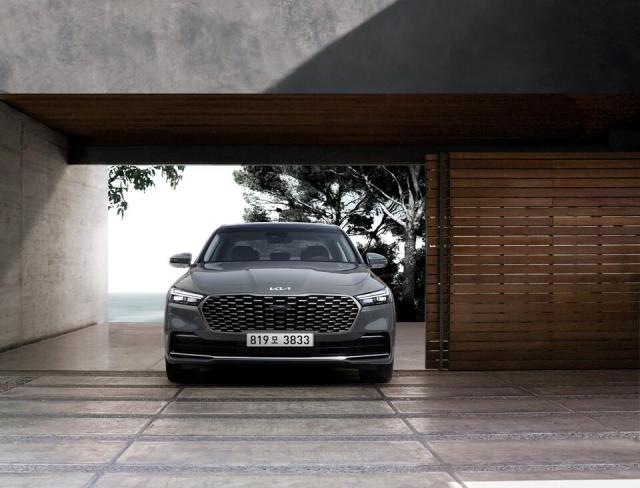
SEOUL, July 07 (AJP) -Kia will retire its flagship K9 luxury sedan by the end of this year, industry officials and union sources said Monday, ending a 14-year production run as the automaker shifts investment toward electric vehicles, purpose-built vehicles and software-defined cars amid dwindling demand for large gasoline-powered sedans.
The company has ruled out a facelift, a full redesign or even an annual model-year update, according to the sources, signaling that no successor is planned. Production is expected to end at Kia's Autoland Gwangmyeong plant.
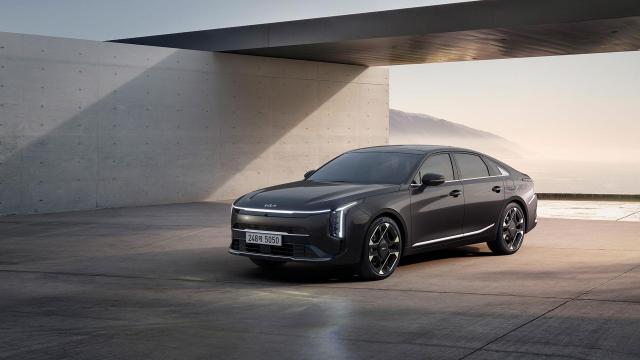
The move will also bring an end to Kia's rear-wheel-drive flagship sedan lineage. The front-wheel-drive K8 is expected to become the brand's flagship passenger car, marking Kia's clearest step yet away from traditional luxury sedans.
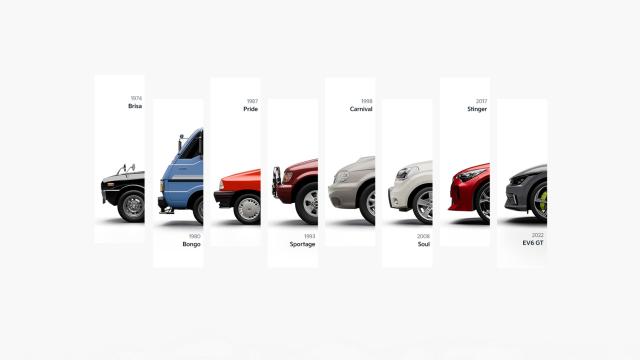
Introduced in 2012 as the successor to the Opirus, the K9 was intended to showcase Kia's premium ambitions, with its top trim featuring a 5.0-liter V8 gasoline engine. The second-generation model, launched in 2018, gained popularity as a chauffeured vehicle for corporate executives, helping annual sales reach 6,585 units in 2022.
Demand, however, deteriorated quickly. Sales fell to 3,898 units in 2023 before dropping to 1,870 in 2024. The K9 sold 1,581 units last year, down 15.4% from a year earlier, while first-half sales this year totaled only 734 units, putting the model on track for its weakest annual performance since launch.
The K9 has been sold only in South Korea since 2021, after Kia withdrew it from North America and Russia.
Genesis has firmly established itself as the dominant player in Korea's premium sedan segment. The G80 has consistently sold between 40,000 and 50,000 units annually since its third-generation launch in 2020, while the flagship G90 has maintained annual sales of around 10,000 units despite carrying a price tag of more than 100 million won.
Competition also intensified from below. Hyundai Motor's Grandeur grew larger and more upscale with successive redesigns, narrowing the gap with the K9, while increasingly refined SUVs convinced many buyers they no longer needed a large sedan for premium comfort and cabin space.
The K9's competitiveness was further weakened by the absence of a hybrid powertrain. While Kia introduced hybrid versions of the K5 and K8, its flagship remained gasoline-only throughout its life cycle as fuel efficiency and electrification became increasingly important to consumers.
The K9 is not the first Korean large sedan to disappear from overseas markets. Kia discontinued the Cadenza, sold domestically as the K7, in North America in 2021, while Hyundai ended sales of the Azera there in 2017.
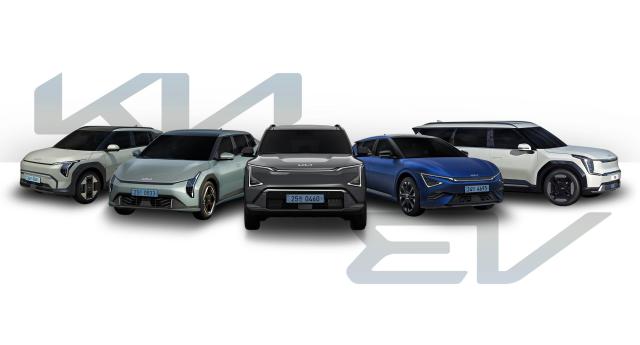
Kia plans to redirect the production capacity and workforce freed by the K9's discontinuation toward next-generation vehicles.
The automaker is expanding its EV lineup with the EV2 following last year's launches of the EV4 and EV5, while targeting a global lineup of 14 electric models by 2030. It is also expanding its purpose-built vehicle business following the launch of the PV5, with the PV7 scheduled for next year and the PV9 for 2029.
Beyond electrification, Kia is preparing the XV1, a compact electric hatchback that will become Hyundai Motor Group's first software-defined vehicle. Scheduled to debut in Korea and Europe late next year, the model will serve as the platform for the group's planned rollout of Level 2++ autonomous driving technology by 2029.
For now, the K9's exit leaves Kia without a large sedan above the K8, a gap the company shows no sign of planning to fill.

Copyright ⓒ Aju Press All rights reserved.
