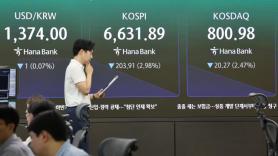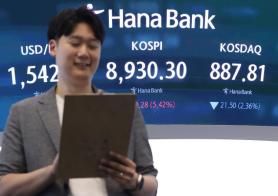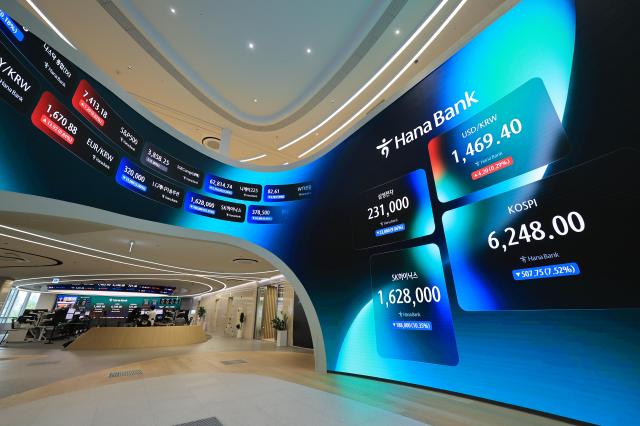
The KOSPI jumped 14.9 percent to 6,427.25 as of 9:30 a.m., recouping much of the roughly 18 percent it had lost over the previous four trading sessions.
The country's two AI memory champions turbocharged the recovery. SK hynix traded at 1,630,000 won ($1,140.80), up 23.3 percent, while Samsung Electronics climbed 19.8 percent to 248,000 won ($173.60). Foreign investors returned in force, buying a net 4 trillion won ($2.8 billion) worth of local equities.
The overnight cue was decisive.
The Nasdaq Composite rose 2.8 percent Thursday to 25,122.18, snapping a six-session losing streak, while the Philadelphia Semiconductor Index gained more than 7 percent, reigniting optimism across global chip markets.
JPMorgan added to the bullish mood, telling clients this week that hedge-fund deleveraging in semiconductor and memory stocks had likely run its course faster than expected. Traders in Seoul interpreted the note as a signal that the forced-selling cycle had largely ended.
The rebound spread well beyond the memory makers.
The tech-heavy KOSDAQ climbed 7.2 percent to 691.35, while semiconductor suppliers outpaced the broader market. Samsung Electro-Mechanics soared 25.6 percent to 1,104,000 won ($772.70) and SK Square jumped 25.8 percent to 1,005,000 won ($703.40).
Friday also marked the first day of tighter trading rules aimed at cooling speculation. The minimum deposit required to trade single-stock leveraged exchange-traded products was raised to 30 million won from 10 million won, part of regulators' efforts to curb extreme swings in large-cap chip names.
Elsewhere in Asia, Japan's Nikkei 225 rose 2.8 percent to 63,609.03 in early trading, tracking the global technology rally.
The Korean won traded at 1,428.80 per dollar, weakening 2.6 won from the previous session.
Copyright ⓒ Aju Press All rights reserved.