SEOUL, August 14 (AJP) - In one of the world's most closed societies like North Korea, what matters may lie in what happens before a successor is ever named. For decades, the isolated country's hereditary Kim dynasty has shown that power is not simply passed down when the previous leader dies. It has to be prepared, groomed and carefully managed to prevent any chaos. That process now appears to be underway for current North Korean leader Kim Jong-un's daughter Ju-ae.
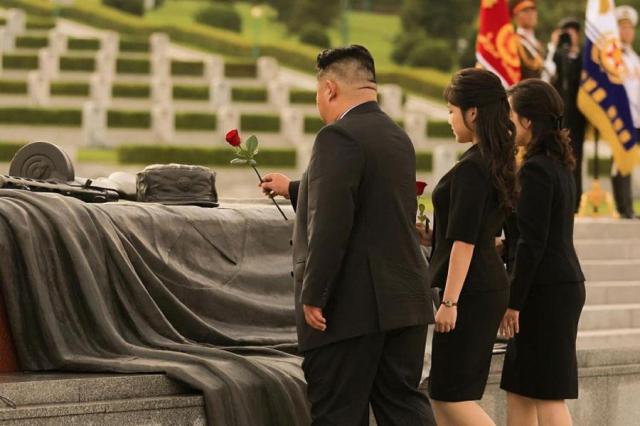
In recent years, the teenage girl has increasingly appeared at the center of major state events and other occasions from military ceremonies and missile launches to official commemorations. In her latest public outing, she joined her father at a cemetery honoring Korean War veterans at the end of July, again standing prominently by his side. That was more than a family appearance. She was being introduced to the rituals North Korea uses to highlight its own history of military victory, revolution and sacrifice while emphasizing the legitimacy of the ruling Kim family.
That little distinction would matter, as it is tempting to look at photos of Ju-ae standing beside her father and assume that North Korea has already picked its next leader. But the evidence is not quite that simple. Neither is it reasonable anymore to dismiss her appearances as the ordinary publicity given to the leader's daughter.
Something more deliberate may be happening. Ju-ae has made frequent public appearances since she first appeared in November 2022, when she accompanied her father at the test launch of a ballistic missile.
Since then, state media have used increasingly respectful terms to describe her, moving from "precious child" and "respected child" to "beloved daughter" and, most recently, the more exalted term "hyangdo," meaning "guidance." The shift in language could signal a potential path toward hereditary succession.
Official events have also repeatedly placed her close to her father, with some senior officials appearing to kowtow to her, even though she holds no known official party or state position and remains largely a symbolic figure.
That may be precisely where her importance lies in a country like North Korea, where even small details and gestures at official events can carry a message. Where someone sits, who walks first, who bows and who stands beside the leader can all reveal their standing in the power hierarchy power hierarchy of the renegade country.
But succession is a delicate matter even in this family-run regime, so Kim, who is widely seen as bold and unpredictable, has appeared particularly careful in preparing Ju-ae for the spotlight through highly calculated moves, gradually making her familiar to the public rather than simply presenting her as his daughter.
Doubts also remain, though, over whether Ju-ae's gender could pose an obstacle, as North Korea has never been ruled by a woman. The country is a deeply male-dominated society, with the military and party elite being almost entirely male, meaning a woman's ascent to the throne would be an unprecedented shift.
Nevertheless, bloodline may matter more than gender in North Korea. The Kim family has long stressed the "Mt. Paektu bloodline," which holds that power should remain within the family lineage of regime founder and Kim's grandfather Kim Il-sung.
Although Kim junior has reportedly suffered from several chronic diseases, as his father Kim Jong-il did before his sudden death in 2011, he is still relatively young and in no rush to name a successor, meaning any succession plan could change over time.
It is also possible that North Korea has other children unknown to the outside world. South Korean intelligence has not ruled out the possibility of an older son, though there is no evidence that he is being secretly groomed for leadership.
But another dynastic succession may be tougher than it may seem to be. It cannot simply be settled by a leader's edict, as that does not mean the North Korean elite and public accept it. The transfer of power would also need to be justified. That is why, even if Ju-ae is being groomed as the leader, it does not guarantee that she will eventually succeed her father.
The real test will come later. To truly become his successor, she would need an official role in the Workers' Party and build relationships with senior military officials, allowing her to establish a track record of her own. Most importantly, the men who run North Korea’s power structure would need to accept her as their leader after Kim Jong-un is gone. That would be a far higher bar to clear than simply appearing beside him in public.
North Korea has already gone through three hereditary transfers of power within the Kim dynasty. If Ju-ae eventually becomes the successor to the throne, it would be the fourth. The bigger question may not be whether North Korea has already chosen its next leader, but it may be whether the regime is preparing the public to accept another Kim as leader.
Whether Ju-ae will eventually take power remains uncertain. But it is increasingly clear that her father wants North Koreans to grow used to seeing her by his side. And that may be the clearest sign of all about what is coming.
In recent years, the teenage girl has increasingly appeared at the center of major state events and other occasions from military ceremonies and missile launches to official commemorations. In her latest public outing, she joined her father at a cemetery honoring Korean War veterans at the end of July, again standing prominently by his side. That was more than a family appearance. She was being introduced to the rituals North Korea uses to highlight its own history of military victory, revolution and sacrifice while emphasizing the legitimacy of the ruling Kim family.
That little distinction would matter, as it is tempting to look at photos of Ju-ae standing beside her father and assume that North Korea has already picked its next leader. But the evidence is not quite that simple. Neither is it reasonable anymore to dismiss her appearances as the ordinary publicity given to the leader's daughter.
Something more deliberate may be happening. Ju-ae has made frequent public appearances since she first appeared in November 2022, when she accompanied her father at the test launch of a ballistic missile.
Since then, state media have used increasingly respectful terms to describe her, moving from "precious child" and "respected child" to "beloved daughter" and, most recently, the more exalted term "hyangdo," meaning "guidance." The shift in language could signal a potential path toward hereditary succession.
Official events have also repeatedly placed her close to her father, with some senior officials appearing to kowtow to her, even though she holds no known official party or state position and remains largely a symbolic figure.
That may be precisely where her importance lies in a country like North Korea, where even small details and gestures at official events can carry a message. Where someone sits, who walks first, who bows and who stands beside the leader can all reveal their standing in the power hierarchy power hierarchy of the renegade country.
But succession is a delicate matter even in this family-run regime, so Kim, who is widely seen as bold and unpredictable, has appeared particularly careful in preparing Ju-ae for the spotlight through highly calculated moves, gradually making her familiar to the public rather than simply presenting her as his daughter.
Doubts also remain, though, over whether Ju-ae's gender could pose an obstacle, as North Korea has never been ruled by a woman. The country is a deeply male-dominated society, with the military and party elite being almost entirely male, meaning a woman's ascent to the throne would be an unprecedented shift.
Nevertheless, bloodline may matter more than gender in North Korea. The Kim family has long stressed the "Mt. Paektu bloodline," which holds that power should remain within the family lineage of regime founder and Kim's grandfather Kim Il-sung.
Although Kim junior has reportedly suffered from several chronic diseases, as his father Kim Jong-il did before his sudden death in 2011, he is still relatively young and in no rush to name a successor, meaning any succession plan could change over time.
It is also possible that North Korea has other children unknown to the outside world. South Korean intelligence has not ruled out the possibility of an older son, though there is no evidence that he is being secretly groomed for leadership.
But another dynastic succession may be tougher than it may seem to be. It cannot simply be settled by a leader's edict, as that does not mean the North Korean elite and public accept it. The transfer of power would also need to be justified. That is why, even if Ju-ae is being groomed as the leader, it does not guarantee that she will eventually succeed her father.
The real test will come later. To truly become his successor, she would need an official role in the Workers' Party and build relationships with senior military officials, allowing her to establish a track record of her own. Most importantly, the men who run North Korea’s power structure would need to accept her as their leader after Kim Jong-un is gone. That would be a far higher bar to clear than simply appearing beside him in public.
North Korea has already gone through three hereditary transfers of power within the Kim dynasty. If Ju-ae eventually becomes the successor to the throne, it would be the fourth. The bigger question may not be whether North Korea has already chosen its next leader, but it may be whether the regime is preparing the public to accept another Kim as leader.
Whether Ju-ae will eventually take power remains uncertain. But it is increasingly clear that her father wants North Koreans to grow used to seeing her by his side. And that may be the clearest sign of all about what is coming.
Copyright ⓒ Aju Press All rights reserved.