“It’s despicable that a film implies the president plotted an assassination that ended up killing the first lady,” she fumed. “What will young people think about our history?”
Some took that anger to the streets. Conservative activists on Sunday carried their protest to the Seoul home of lead actor Yoo Hae-jin, demanding an end to screenings and apologies from the cast and filmmakers, even as the controversy appeared only to fuel the film’s box-office momentum.
About 50 people attended, according to an unofficial police estimate. Some groups also threatened to pressure companies using Yoo as an advertising model to terminate their contracts.
The political backlash crossed borders. The opposition People Power Party said it would ask the Singapore International Film Festival to drop The Assassin(s) from its opening-night program, carrying a domestic dispute over historical representation onto an international stage.
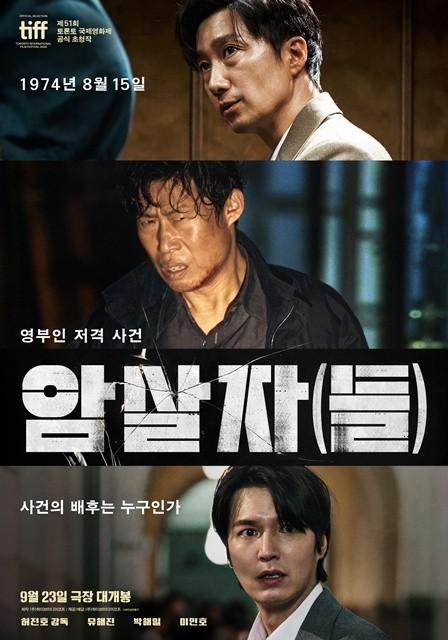
Much of the uproar worked in the film’s favor. The Assassin(s) passed 2 million admissions in 11 days and remained the top-selling Korean film.
A dispute over artistic license has since widened into a broader argument over where fiction ends and history begins, and how readily cinematic speculation can seep into public memory when it touches one of South Korea’s most politically charged episodes.
At the heart of the controversy is the assassination attempt on President Park Chung-hee on Aug. 15, 1974.
The established account identifies Mun as the gunman who attempted to assassinate Park, with Yuk killed in the attack.
Uncertainty has nevertheless lingered over the precise sequence of gunfire. In 2005, Bae Myung-jin, then a Soongsil University professor specializing in sound engineering, analyzed recordings and television footage and argued that the fatal shot may have been accidentally fired by a presidential security officer.
His conclusion remained an expert theory rather than an official finding and did not overturn the historical record. The controversy surrounding The Assassin(s) has blurred those distinctions.
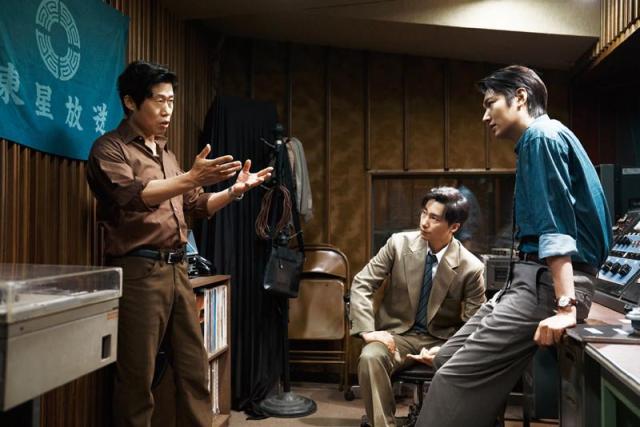
Directed by Hur Jin-ho, the film follows a detective, a newspaper editor and a reporter as they pursue inconsistencies surrounding the shooting. From those discrepancies, the fictional investigation moves toward suspicions involving the Korean Central Intelligence Agency.
Conservative critics argue that the narrative goes far beyond questioning the trajectory of a bullet and invites audiences to infer that Park’s own government may have been implicated in the plot.
No established judicial or official finding has concluded that Park ordered his wife’s killing or that the KCIA organized the assassination attempt.
The filmmakers reject the suggestion that such speculation is presented as historical fact.
The production team has said the movie was “not made to establish a new historical conclusion or deny or distort existing facts,” describing it instead as a fictional work drawing on historical records, books and documentaries.
Hur has separately rejected claims that he conceived Park as the architect of the attack. “I never thought of Park Chung-hee as being behind it,” he said in an interview with a Korean broadcaster.
The distinction is clear on paper. It becomes far less stable once fiction borrows real people, real deaths and unresolved fragments of history, especially when the past itself remains politically contested.
A film set more than half a century ago has therefore evolved into a political hot potato.
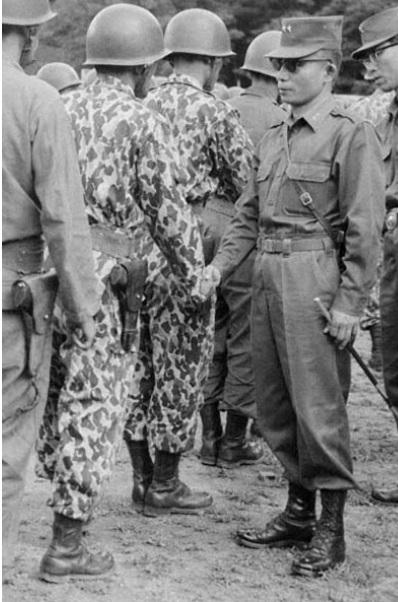
For many older South Koreans who experienced war, deprivation and rapid industrialization, his name remains inseparable from the export drive and industrial buildout that helped transform the country into a manufacturing power.
For others, the economic transformation cannot be detached from military rule, the Yushin Constitution, suppression of political opponents and restrictions on the press and civil liberties.
Those competing memories have never fully reconciled. The Assassin(s) has entered directly into the fault line, using historical uncertainty as the dramatic engine of a fictional thriller. Its box-office success has only broadened the audience for a dispute that might otherwise have remained among historians, filmmakers and political partisans.
The consequences are now visible well beyond the screen. Actors faced protests and advertisers have been threatened with boycotts. Filmmakers have been forced to defend where imagination ends and historical assertion begins.
More than five decades after the gunshots at the National Theater, the argument over The Assassin(s) has moved well beyond the question of who fired which bullet.
The deeper dispute concerns who has the authority to interpret the past, how far filmmakers may travel into its unresolved spaces and what happens when cinematic possibility begins to compete with historical fact.
Copyright ⓒ Aju Press All rights reserved.