

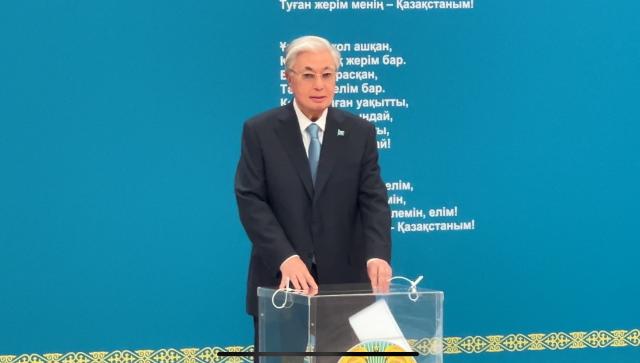
ASTANA, Aug. 23 (AJP) —"Today is undoubtedly a truly historic day for our country. For the first time, we are holding elections to the unicameral Kurultai," President Kassym-Jomart Tokayev said after casting his ballot Sunday.
"We have achieved significant results. At the same time, much work remains to be done, and the goals before us are of particular importance. Today's elections are only the beginning of this major undertaking."
Around him, dozens of cameras remained trained on the polling area inside Astana's Palace of Independence.
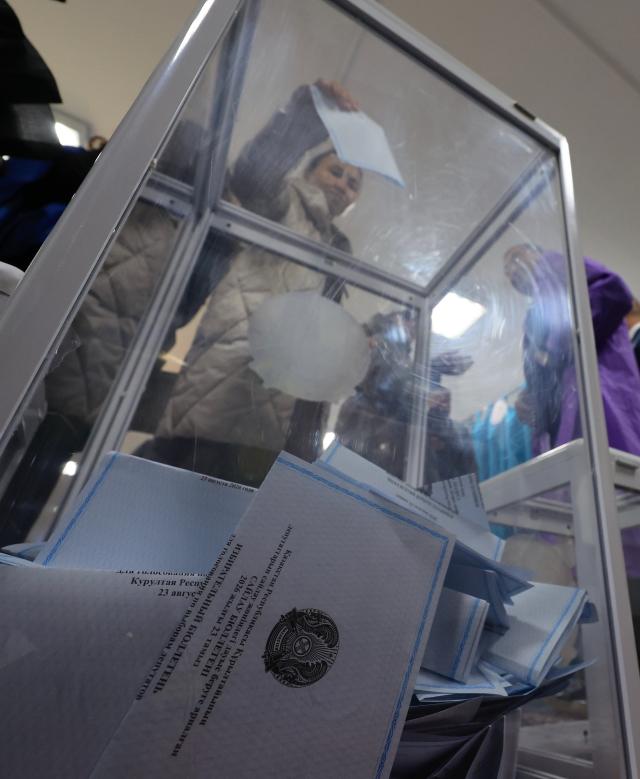
Tokayev had entered the room before tightly packed television crews and photographers, approached a transparent ballot box and slowly placed his ballot inside.
Camera shutters erupted. The act itself took only seconds. But it marked the first parliamentary election under a new Constitution that has redrawn Kazakhstan's political architecture three decades after the Central Asian country built its post-Soviet system around a powerful presidency.
For international journalists behind the press line, reaching that moment had taken most of the morning. The journey began nearly five hours earlier, before Astana was properly awake.

At 5:30 a.m., the hotel was almost completely silent. Outside, cold rain fell steadily onto an empty road.
A white car pulled up. Two men assigned to escort AJP reporter entered the lobby and led the way outside. After brief greetings, the car set off through the rain toward Qazmedia Center, the 22-story broadcasting complex in central Astana that houses several of Kazakhstan's national television and radio outlets.
By shortly after 6 a.m., the building was beginning to fill with journalists from the country's major news organizations, many of whom regularly cover Tokayev and attend presidential briefings.
They arrived carrying cameras, tripods and microphones. Conversations were quiet. Credentials were checked and names counted. AJP was the only South Korean media outlet represented among the journalists assembled for the presidential vote.
The bus pulled away into the rain.
For about 15 minutes, it moved through the wet streets of the capital, passing the sprawling Hazret Sultan Mosque, one of Astana's best-known landmarks, before arriving at the Palace of Independence.
Opened in 2008, the palace is one of the capital's main venues for state ceremonies, high-level meetings and international events.
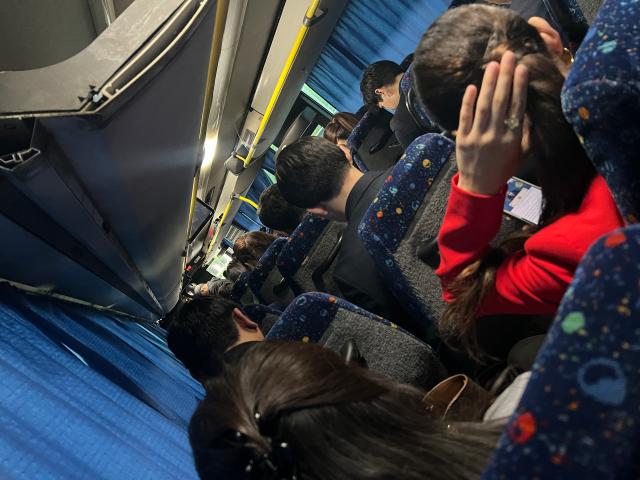
Reporters stepped off the bus and headed inside through the drizzle.
Most were directed toward a press room. The AJP reporter, however, was stopped by a security officer and taken to a separate business conference room.
Coffee, tea and small refreshments had been prepared inside. Several security personnel remained in the room, but there was no indication of when the next move would come.
The wait continued for hours.
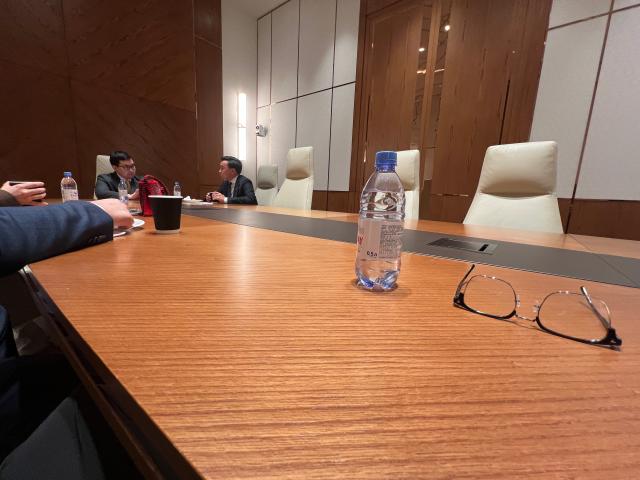
The wait stretched for nearly three hours. The room remained quiet enough that every opening door and approaching footstep drew attention.
At around 10 a.m., a senior security official entered.
The officers in the room turned toward him almost in unison. He looked across the room, pointed toward the AJP reporter and signaled that it was time to move.
The route led through the Palace of Independence toward the polling station on the first floor. The atmosphere changed immediately.
Kazakh journalists were already packed into position behind a designated press line. Photographers had secured their angles. Television crews stood shoulder to shoulder with cameras trained on the polling area.
After hours of travel, security screening and waiting, there was suddenly nothing left to do but stand still.
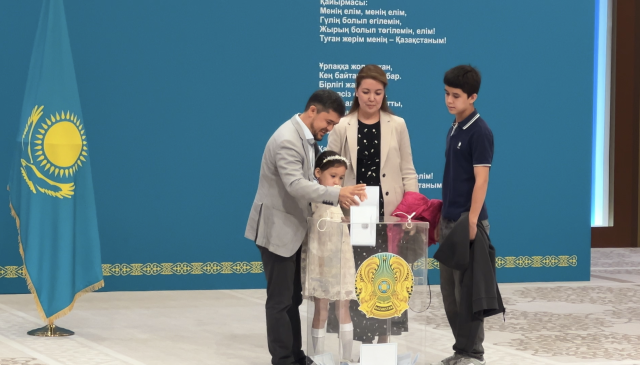
A Kazakh family entered shortly before the president and cast their ballots. Then Tokayev walked in.
Dozens of cameras turned toward him at once, filling the polling station with the rapid mechanical clatter of shutters.
Photographers tracked Tokayev as he moved through the room and approached the ballot box. Another burst of shutters followed as he slowly placed his ballot inside.
For a few seconds, a routine act being repeated by voters across Kazakhstan became the sole focus of the press line.
Tokayev then moved to a nearby area set aside for the media.
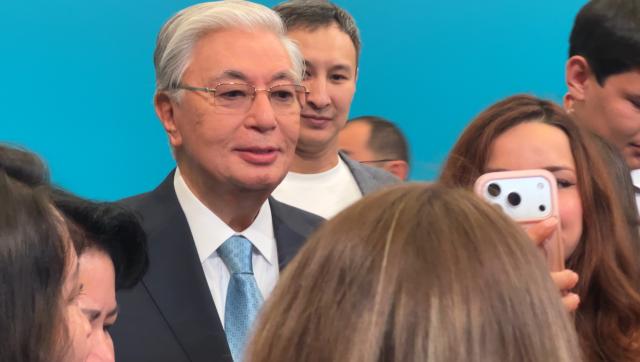
The significance of the vote goes well beyond a president putting a ballot into a box.
Kazakhstan, Central Asia's largest economy and a major oil and minerals exporter, had spent most of its history since independence from the Soviet Union in 1991 under a political system dominated by its presidency.
Nursultan Nazarbayev led the country from independence until 2019, when he stepped down and handed the presidency to Tokayev, a former prime minister, foreign minister and senior United Nations official whom Nazarbayev had chosen as his successor.
Tokayev's early presidency was therefore initially viewed largely as a continuation of the political order established under Nazarbayev.
That changed dramatically in January 2022. Protests over fuel prices spread into nationwide unrest and violent clashes that left more than 200 people dead. A Russian-led security force was briefly deployed at Tokayev's request.
The crisis also marked Tokayev's decisive break with Nazarbayev and figures associated with the former president's political network. Tokayev has described the upheaval as an attempted coup involving Nazarbayev loyalists.
What followed was a succession of political and constitutional changes that Tokayev presented as the construction of a "New Kazakhstan."
A 2022 constitutional overhaul altered the presidency and introduced a single seven-year presidential term. Tokayev won that seven-year mandate later that year.
The changes continued in 2026. In March, voters approved an entirely new Constitution in a nationwide referendum, with the Central Election Commission reporting 87.15 percent support on turnout of 73.12 percent.
Tokayev described the overhaul as a move away from Kazakhstan's previous "super-presidential" model and toward a greater division of state powers, although critics have questioned whether the new system sufficiently constrains presidential authority.
The Constitution took effect on July 1, simultaneously ending the 1995 Constitution and terminating the mandate of the former parliament.
The Senate and lower-house Mazhilis that had formed Kazakhstan's bicameral legislature disappeared.
In their place came the Kurultai.
The new chamber has 145 deputies elected for five-year terms through party lists in a single nationwide constituency. The Constitution defines it as the country's highest representative body exercising legislative power.
The changes extend beyond parliament. The new political framework also creates the office of vice president and restructures several state institutions, making Sunday's vote part of a broader reorganization of how Kazakhstan is governed.
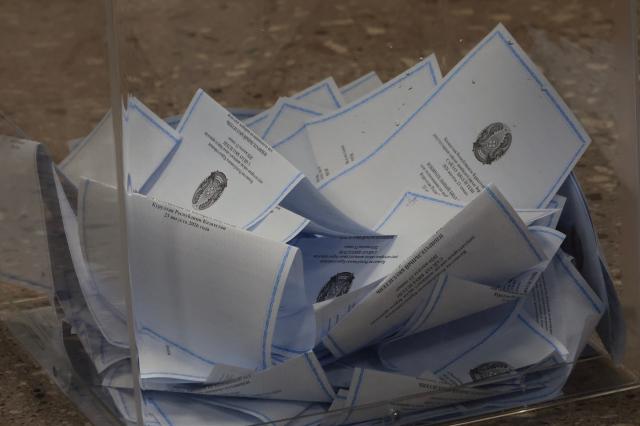
The election outcome itself is not expected to be in doubt. The pro-presidential Adilet party, formed this year through the merger of the longtime ruling Amanat party — previously known as Nur-Otan — with a smaller party of the same name, is widely predicted to win an overwhelming majority, with several other parties loyal to Tokayev also expected to enter the new legislature.
The new constitutional order is also being closely watched for what it could mean for Tokayev's own political future, and for Kazakhstan's position between its two largest neighbors. Kazakhstan's Constitutional Court has ruled that Tokayev, who has served as president since 2019, may seek another seven-year term under the new Constitution — a legal maneuver that leaders in Russia, Belarus, Uzbekistan and Tajikistan have used in similar ways to extend their own time in power.
Asked by reporters after voting Sunday whether he intended to run again, Tokayev said it was too early to say.
Kazakhstan has continued its long-standing effort to balance ties with Moscow and Beijing while courting investment from the West. Tokayev met Russian President Vladimir Putin in Omsk in July for a regional cooperation forum, even as Kazakhstan signed billions of dollars in trade and investment deals with China at a summit in Shanghai the same month.
Analysts have long described this approach — preserving close ties with both powers without fully aligning with either — as central to Kazakhstan's foreign policy since independence. Moreover, political stability in the country carries significance well beyond its population because of its energy resources, minerals and strategic location at the center of Eurasia.
Still, the political meaning of the new system remains contested. Tokayev has cast the constitutional changes as a modernization of government and a departure from the highly centralized model inherited from the Nazarbayev era.
Outside analysts nevertheless question whether the changes instead leave the presidency dominant while reorganizing the institutions around it.
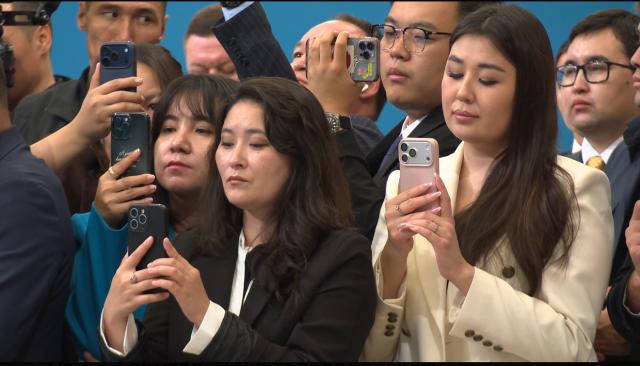
The morning also offered a glimpse of the machinery surrounding presidential coverage in Kazakhstan.
What gave the scene its weight was everything around it — a country dismantling one parliamentary system and beginning another, a president who emerged from the old order but now presides over its restructuring, and an unresolved question over how long that president may remain at the center of the new one.

Copyright ⓒ Aju Press All rights reserved.
