

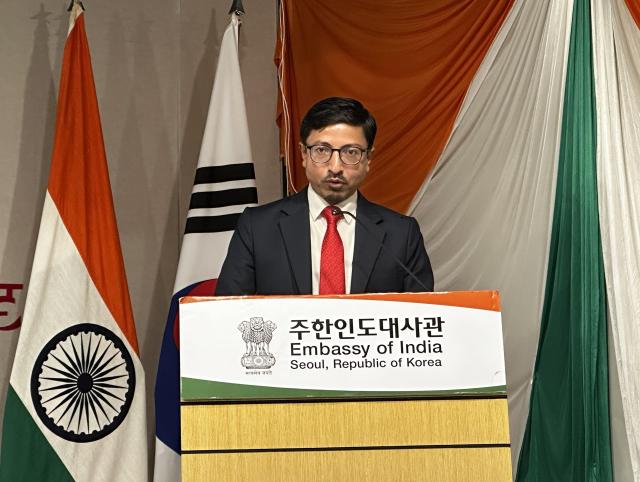
Indian Ambassador to South Korea Gourangalal Das introduced this year’s program during a media briefing at the Swami Vivekananda Cultural Centre in Seoul on Monday, saying the festival is designed to expose Korean audiences to different traditions from across India each year.
Now in its 12th edition, Sarang - The Festival of India in Korea has been held annually since 2015 and serves as one of the embassy’s main platforms for promoting Indian culture and strengthening people-to-people exchanges.
This year’s centerpiece will be Odissi, one of India’s major classical dance traditions originating in the eastern state of Odisha.
A visiting troupe led by renowned Odissi artist Madhulita Mohapatra will tour South Korea from Sept. 15 to 22, giving performances and conducting workshops for Korean audiences.
The tour will open at Samsung Hall at Ewha Womans University in Seoul on Sept. 15 before traveling to Busan, Gimhae, Miryang, Gwangju and Nami Island. The group will then return to Seoul for the final event on Sept. 22.
Das described Odissi as an ancient dance form deeply rooted in Odisha’s cultural and spiritual heritage, characterized by graceful movements, sculptural poses, rhythmic patterns and expressive gestures.
“Sarang has been there for the last 11 years,” Das said during a question-and-answer session. “The fact that we bring cultural elements from different parts of India makes every Sarang festival unique in its own way.”
He said this year’s Odissi troupe is well known in India and has previously performed in Korea, adding that Sarang would provide an opportunity for a broader Korean audience to experience the group’s performances.
The festival’s cultural program will extend into November with the 14th edition of the Indian Film Festival.
Six Indian films, Queen, Newton, Manjhi – The Mountain Man, Dum Laga Ke Haisha, Sui Dhaaga and Sardar Udham, will be screened with Korean subtitles under the theme “Against the Odds: Ordinary Lives, Extraordinary Courage.”
The screenings will take place from Nov. 3 to 29 in Seoul, Yangsan, Gwangju, Miryang, Incheon and Busan.
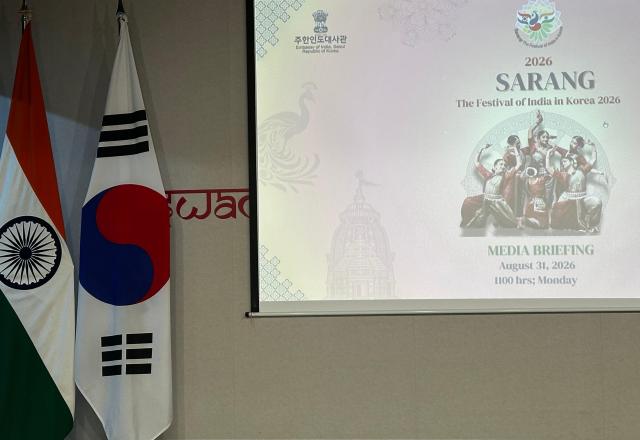
The ambassador also said the embassy is seeking to take Indian cultural events beyond Korea’s largest cities.
Explaining the inclusion of Miryang, Das said the goal of the festival is “not just to go to the usual suspects” but to broaden its network and bring Indian culture closer to people across the country. He pointed to Miryang’s connection with yoga as another reason for the city’s inclusion.
Dance workshops held alongside the performances will be open to the public through registration systems operated by local partner organizations, embassy officials said.
Das placed the festival within a broader effort to deepen cultural ties between India and South Korea, saying the two countries’ leaders have emphasized the long history of cultural exchanges and the need to showcase those links more prominently.
The name “Sarang” itself reflects that connection: “sarang” means “love” in Korean, while in Hindi it can refer to a “medley of colours,” according to the embassy.

Copyright ⓒ Aju Press All rights reserved.
