The unnamed official made the warning in an interview with Al Mayadeen, a Lebanon-based media outlet close to Hezbollah, according to a report Thursday.
“If South Korea takes action against Iran in the Strait of Hormuz, it will be considered direct military aggression and participation in the war,” the official said.
The official also urged Seoul not to give in to U.S. pressure to cooperate with what Tehran described as Washington’s military operations, arguing that South Korea should not sacrifice its own interests and reputation for U.S. policy in the region.
The warning comes as South Korea weighs possible military and nonmilitary contributions to securing freedom of navigation through the Strait of Hormuz, a key waterway for global energy supplies and particularly important to South Korea, which receives more than 60 percent of its crude oil imports through the route. Seoul says no final decision has been made.
The presidential office said Thursday that South Korea could consider military options as long as they do not significantly undermine readiness on the Korean Peninsula.
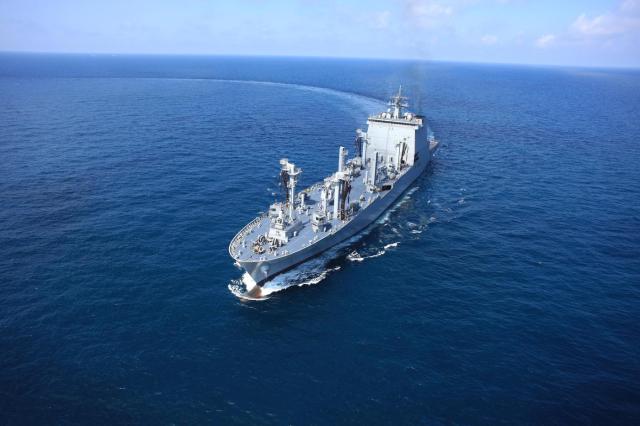
Possible options reportedly under consideration include deploying P-8A maritime patrol aircraft, a naval logistics support vessel or mine-clearing personnel.
Any deployment involving South Korean troops would also have to take domestic legal and political considerations into account, including possible approval from the National Assembly.
Pressure from Washington over Hormuz has persisted since the U.S.-Israel war with Iran began on Feb. 28.
Trump first called on countries heavily dependent on Gulf energy, including South Korea and Japan, to help secure the strait in March, arguing that those benefiting most from the shipping route should contribute to keeping it open. Washington and Seoul subsequently held discussions over a possible South Korean naval contribution.
Trump renewed the criticism late last month, singling out South Korea while recounting what he described as Seoul’s reluctance to assist the United States over Iran.
Trump said Aug. 30 that when he asked South Korea whether it could “help a little bit” with Iran, Seoul responded that it would prefer not to, adding that he would “remember” the response.
The pressure appeared to broaden beyond the Middle East on Friday, when Trump shared a Washington Post opinion column on Truth Social calling for South Korea to sell its domestically developed Cheongung-II air defense missile system to Ukraine.
The column by conservative commentator Marc Thiessen argued that Trump should pressure Seoul to provide the system, also known as the M-SAM II, as an interim solution to Ukraine’s shortage of air defense interceptors. Trump shared the column without adding his own comment.
The move has drawn attention in Seoul because the Cheongung-II is a core element of South Korea’s own missile defense architecture, designed in part to counter North Korean ballistic missile threats.
It also comes as Washington has increasingly linked allied support to a broader expectation that partners shoulder more of the security burden, whether in the Middle East or Ukraine.
South Korean officials are now facing pressure to balance those alliance expectations with concerns over military readiness, domestic opposition and the risk of worsening relations with Tehran.
Seoul, however, has sought to frame any possible role in Hormuz around protecting international shipping rather than joining combat operations against Iran.
“The government is closely communicating with the international community, including relevant countries, for the swift restoration of peace and stability in the Middle East and the free passage of all vessels, including ours, through the Strait of Hormuz,” a Foreign Ministry official said.
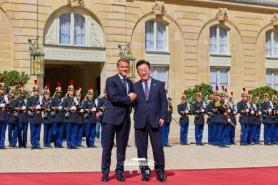
The issue could also surface during President Lee Jae Myung’s talks with French President Emmanuel Macron in France on Tuesday.
France and Britain have been among the countries discussing a multinational mission to help secure the Strait of Hormuz, including possible mine-clearing operations, and Seoul has participated in consultations over the initiative.
AJP Takeaways
- Iran warned any South Korean military role in Hormuz could be treated as participation in the war.
- Seoul is weighing military and nonmilitary options as Trump presses allies to help secure the strait.
- U.S. pressure has widened, with Trump also amplifying calls for South Korea to sell Cheongung-II missiles to Ukraine.

Copyright ⓒ Aju Press All rights reserved.