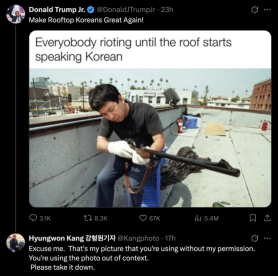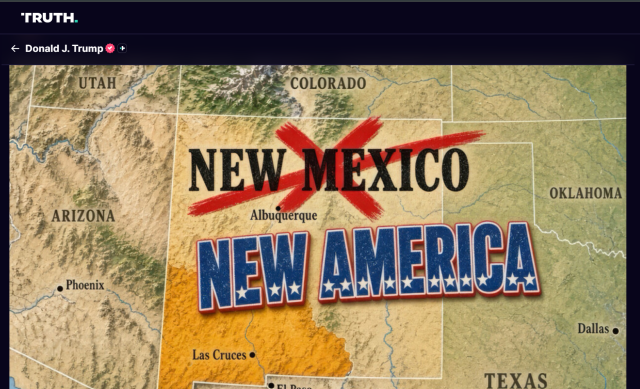
The U.S. president posted more than 60 times on Truth Social on Sunday alone, filling his feed with political messages, memes and AI-generated images. Some mocked foreign countries and political opponents, while others depicted Trump in exaggerated or imaginary scenes.
An independent archive tracking his Truth Social activity counted 972 posts from Trump in August alone, an average of more than 31 a day.
The barrage was an extreme example of a broader shift reshaping how political leaders reach the public, allowing their messages to circulate before traditional media can verify or contextualize them.
A structural shift, not just a new channel
Political leaders once relied heavily on speeches, press conferences and news organizations to carry their messages to the public. Social media now allows them to publish directly and receive an almost immediate response through views, likes, comments and reposts.
Kim Chun-sik, a professor of media communication at Hankuk University of Foreign Studies, said newspapers and broadcasters once acted as filters between politicians and mass audiences.
"Social media has become a direct channel through which politicians can reach the public," Kim said. "They no longer have to go through newspapers and broadcasters."
In the traditional mass-media system, political messages were selected, checked and framed by journalists before reaching a broad audience.
But Kim said the rise of social media does not mean gatekeeping itself has disappeared.
"In the mass-media era, newspapers and broadcasters performed the gatekeeping role in both news production and distribution," he said. "Now they can still perform that role in production, but they can no longer control distribution."
Such power has increasingly shifted toward platforms and their algorithms.
Kim said social media companies can influence which information receives greater exposure even though they do not produce the news themselves. Their commercial incentives can also favor content that generates clicks and reactions, particularly posts built around conflict, anger and other strong emotions.
The shift is unfolding as audiences increasingly turn to social and video platforms for news.
Across 48 markets surveyed in the Reuters Institute's 2026 Digital News Report, 54 percent of respondents said they used social media and video networks for news, compared with 51 percent who used news organizations' own websites and apps.
It was the first time platform-based news access had overtaken direct use of news outlets' own digital channels.
Among people aged 18 to 24, 52 percent said social media, video platforms and AI chatbots were their main way of accessing news.
The Korea Press Foundation's 2025 Media Users Survey found that the share of people consuming news through online video platforms rose to 30 percent from 18.4 percent a year earlier. Short-form news consumption more than doubled to 22.9 percent from 11.1 percent.
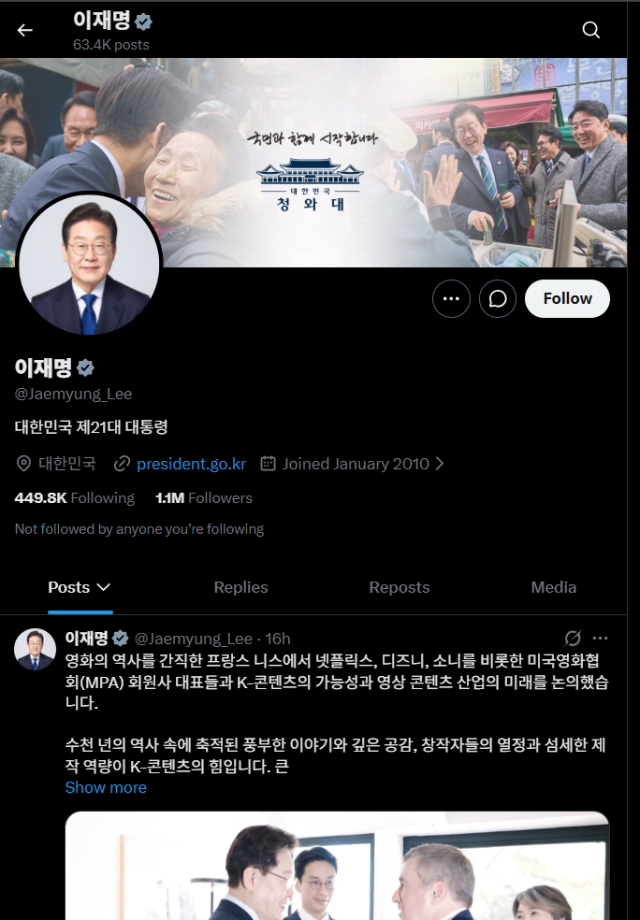
South Korean President Lee Jae Myung has expanded his digital communication alongside that shift.
Lee operates accounts on X, Facebook, Instagram, YouTube and a blog, and added TikTok in February.
An analysis of Lee's X account found that he posted 601 messages between June 8, 2025 and May 22 this year, generating about 318 million views.
Lee has used social media not only to promote government policies but also to comment on current issues, raise questions and signal matters he wants officials to examine.
For some younger users, following a presidential account offers a faster way to keep up with politics than watching broadcasts or reading full news reports.
"I don't always have time to watch political programs or read full news articles," said Choi Eun-young, a 27-year-old job seeker in Hanam who follows Lee on X. "Social media is one of the fastest ways to see what the president is trying to do and what issues he is talking about."
Choi said it has also changed how distant political leaders feel.
"Presidents used to feel very distant and intimidating," she said. "Social media makes them seem more familiar and sometimes even entertaining."

Presidents can reach citizens faster and with fewer intermediaries, but users may have less certainty about why a particular message appeared in their feed, how representative the reaction to it is or whether information surrounding it has been verified.
Im Joo-eun, a 36-year-old office worker in Seoul's Yongsan District, said she often encounters breaking news first through social media but rarely treats it as the final source.
"Sometimes I don't know whether what I am consuming is actually accurate," Im said. "Anyone can make something that looks like a news report, and if people keep reposting it, unverified information can start to look like legitimate news."
When a post catches her attention, Im said she searches Naver for reports from established news organizations.
"In that sense, social media may actually make the role of journalism clearer," she said. "You see something online and then look for a proper news report to find out what really happened."
She also questioned whether the prominence of an issue on her feed necessarily reflected broader public attention.
"Social media keeps showing me the kinds of information I am already interested in," she said. "Sometimes I can't tell whether an issue is genuinely receiving widespread attention or whether it only looks important because of what my feed is showing me."
The Reuters Institute found that 62 percent of respondents worldwide in 2026 were concerned about distinguishing fake or misleading information online.
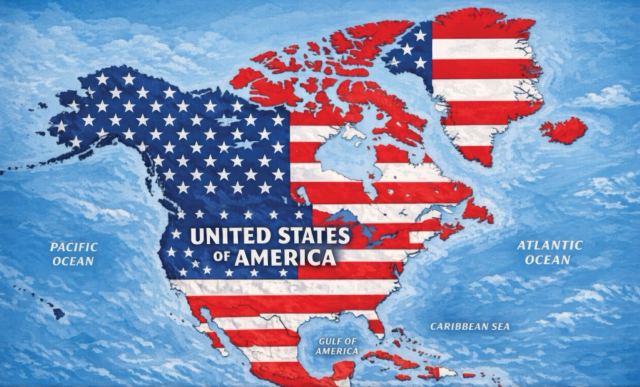
Political leaders are no longer limited to distributing their interpretation of real events through words, photographs or video. They can now produce images of scenes that never happened and release them instantly through an official account.
Trump's AI-generated posts illustrate how political communication can move from presenting a version of reality to creating an entirely imagined one.
What one user views as humor or political branding may carry greater weight for another because it comes directly from the account of a president.
Kim said the risks grow when people repeatedly consume political information that reinforces their existing beliefs, potentially limiting their exposure to competing or verified information.
The shift does not necessarily make journalism obsolete. Rather, it changes where journalism enters the political information chain.
A presidential message can now reach millions of people before a reporter writes a sentence about it.
The press is increasingly left to verify the claim, establish what is true and provide the context that a social media feed does not.
AJP Takeaways
- Social media has replaced much of the traditional media's role in distributing political messages, even as newsrooms retain their role in producing verified news — shifting gatekeeping power toward platforms and their algorithms.
- Reuters Institute data shows social media and video platforms overtook news organizations' own sites as the leading source of news in 2026 (54 percent vs. 51 percent), with 52 percent of 18-24 year-olds naming platforms and AI chatbots as their main news source.
- South Korea's shift is measurable: online video platform news use rose to 30 percent and short-form news use to 22.9 percent in 2025, both roughly doubling year-on-year, according to the Korea Press Foundation.

Copyright ⓒ Aju Press All rights reserved.