SEOUL, September 29 (AJP) - Samsung Electronics is expected to extend its milestone-setting earnings streak in the quarter ended September, eyeing a three-month operating profit of more than 100 trillion won ($70 billion) as the global memory boom rolls on.
A recent one-month consensus compiled by financial data provider FnGuide puts July-September operating profit at around 106 trillion won, topping the previous quarterly record of 89.5 trillion won set just three months earlier. Revenue is projected at about 199 trillion won.
Estimates vary considerably as analysts adjust their models for memory prices, foreign exchange rates and employee incentive provisions.
Citi recently put Samsung's third-quarter operating profit at 104.1 trillion won, down from an earlier forecast of 115.5 trillion won, while Kiwoom Securities expects about 107 trillion won after cutting its estimate from 122 trillion won. A broader FnGuide consensus based on a different collection period stood at 111.4 trillion won as of late September.
Analysts broadly expect Samsung to clear the 100 trillion won mark for the quarter, a first for any Korean company and a profit figure exceeding second quarter reported by even the biggest U.S. technology companies, including Nvidia.
SK hynix, the world's leading supplier of high-bandwidth memory, or HBM, is also expected to break another quarterly earnings record. Recent FnGuide estimates put its third-quarter operating profit at roughly 74 trillion won on a one-month basis, with broader estimates around 78 trillion won.
In the April-June period, SK hynix reported operating profit of 60.5 trillion won on revenue of 79.3 trillion won, giving it an exceptional operating margin of about 76 percent.
Together, Samsung and SK hynix are expected to generate nearly 180 trillion won in operating profit in just three months.
The numbers illustrate how dramatically the economics of memory chips have changed as spending on artificial intelligence infrastructure collides with constrained supply.
HBM remains one of the most visible beneficiaries. Counterpoint Research estimated that SK hynix controlled 50 percent of the global HBM market by revenue in the second quarter, followed by Samsung at 33 percent and Micron Technology at 18 percent.
Samsung's share jumped from 21 percent in the first quarter as it ramped up next-generation HBM products, while SK hynix remained the market leader.
The boom has spilled far beyond HBM.
AI data centers are consuming growing volumes of conventional server DRAM and enterprise solid-state drives, while memory makers' decision to dedicate more manufacturing capacity to AI products has tightened supply elsewhere.
TrendForce expects conventional DRAM contract prices to rise another 13 to 18 percent quarter-on-quarter in the third quarter, with NAND flash prices climbing 10 to 15 percent. The research firm said AI server demand remains strong even as consumer electronics demand weakens under the weight of higher component prices.
That price environment has been particularly lucrative for Samsung.
Its semiconductor Device Solutions division generated 89.2 trillion won in operating profit on 127.5 trillion won in revenue in the second quarter, accounting for virtually all of Samsung's consolidated operating profit.
The third quarter could provide another boost from HBM4.
Samsung said during its second-quarter earnings call that HBM4 revenue is expected to more than triple sequentially in the third quarter as volume shipments expand. HBM4 is expected to account for more than 60 percent of its HBM revenue in the second half, making the latest quarter an early test of whether Samsung's technological catch-up can translate into earnings and market share.
SK hynix began mass shipments of HBM4 in the second quarter and is ramping up production in the second half. It has also completed long-term supply agreements with around 10 major customers as AI companies seek to lock in memory capacity years ahead.
Micron offers first look
Before Samsung and SK hynix open their third-quarter books, the first major readout on the state of the memory boom will come from the United States.
Micron Technology is scheduled to report fiscal fourth-quarter results on Wednesday after the U.S. market closes. Its earnings call begins at 2:30 p.m. Mountain Time on Sept. 30, or 5:30 a.m. Thursday in Korea.
Visible Alpha estimates compiled ahead of the release put Micron's quarterly revenue at about $50.95 billion, roughly 350 percent higher than a year earlier, with adjusted earnings expected at $31.63 per share.
Those estimates are slightly above Micron's own guidance.
The U.S. chipmaker forecast revenue of $50 billion, plus or minus $1 billion, an adjusted gross margin of about 86 percent and non-GAAP diluted earnings of $31 per share, plus or minus $1.
That would mark another sharp sequential jump from its fiscal third quarter, when Micron generated $41.46 billion in revenue. Its GAAP gross margin reached 84.6 percent, illustrating just how profitable memory has become as supply struggles to catch up with AI demand.
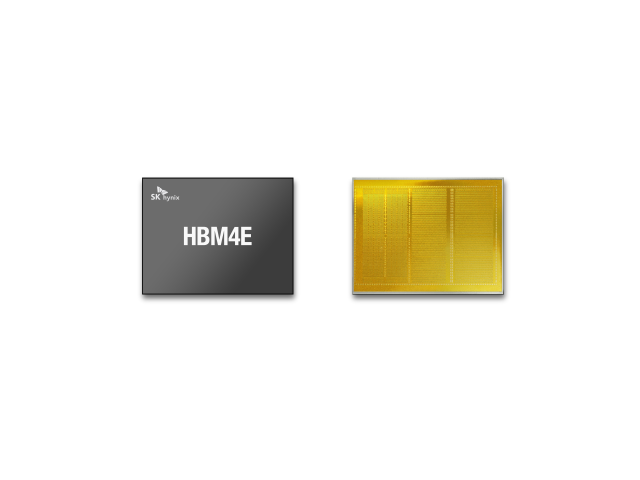
Micron is also shipping HBM4 in high volume for its lead customer's platform and has sent qualification samples to multiple other customers. HBM4E, based on its 1-gamma DRAM process, is scheduled for volume production in 2027.
The results will therefore provide an early indication of whether the same forces expected to lift Samsung and SK hynix — higher memory prices, AI infrastructure spending and constrained supply — remained intact through the end of the quarter.
Records come with a caveat
The size of the expected profits, however, masks signs that the pace of the boom may be beginning to moderate.
Memory prices are still rising, but not as quickly as earlier this year. TrendForce's projected 13 to 18 percent increase for conventional DRAM and 10 to 15 percent gain for NAND in the third quarter comes as high component prices increasingly weigh on PCs, smartphones and other consumer electronics.
Long-term supply agreements could also temper some of the upside. Such deals give chipmakers greater visibility over volumes and earnings but can prevent suppliers from fully capturing sudden jumps in spot and shorter-term contract prices.
Currency movements pose another complication for the Korean chipmakers.
Citi cut Samsung's third-quarter operating profit estimate by about 10 percent to 104.1 trillion won, citing the stronger Korean currency as well as additional employee incentive provisions. It lowered its SK hynix estimate to 74 trillion won from 76.7 trillion won on foreign-exchange effects while maintaining its view that underlying memory-market fundamentals remained solid.
The durability of AI spending is another question hanging over the industry. Micron's earnings arrive as investors debate how long the extraordinary profit expansion across the memory industry can continue, even as analysts including UBS see supply-demand conditions remaining tight into 2027.
That makes the next round of earnings about more than records.
Samsung crossing 100 trillion won would provide the headline. Micron's outlook, Samsung's HBM4 ramp and SK hynix's pricing and long-term supply agreements will provide the more important clues to how much longer the memory boom behind those numbers can roll on.
AJP Takeaways
- Samsung Electronics is expected to top 100 trillion won in quarterly operating profit for the first time, with estimates clustering around 104 trillion won to 111 trillion won.
- SK hynix is also headed for another record quarter, putting the two Korean memory giants on track for nearly 180 trillion won in combined operating profit.
- Micron's earnings and outlook this week will offer an early test of how long the AI-driven memory boom can last as price growth moderates and supply remains tight.

Copyright ⓒ Aju Press All rights reserved.