
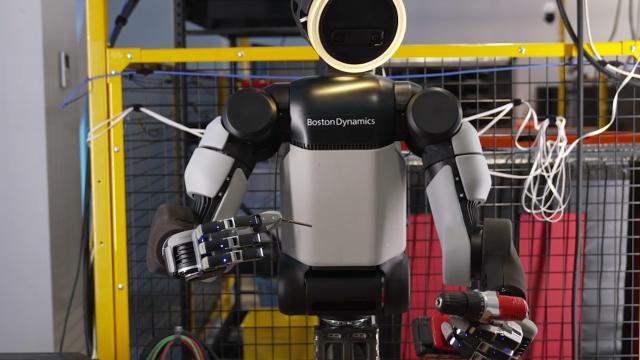
The hand carries 13 degrees of freedom, nearly double the seven on the previous three-fingered generation, with four axes in the thumb and three in each of the other fingers.
It is slightly larger and, on average, stronger than a human hand.
In a video released with the announcement, Atlas loaded a bit into a power drill and bored into wood, tightened a small nut by fingertip.
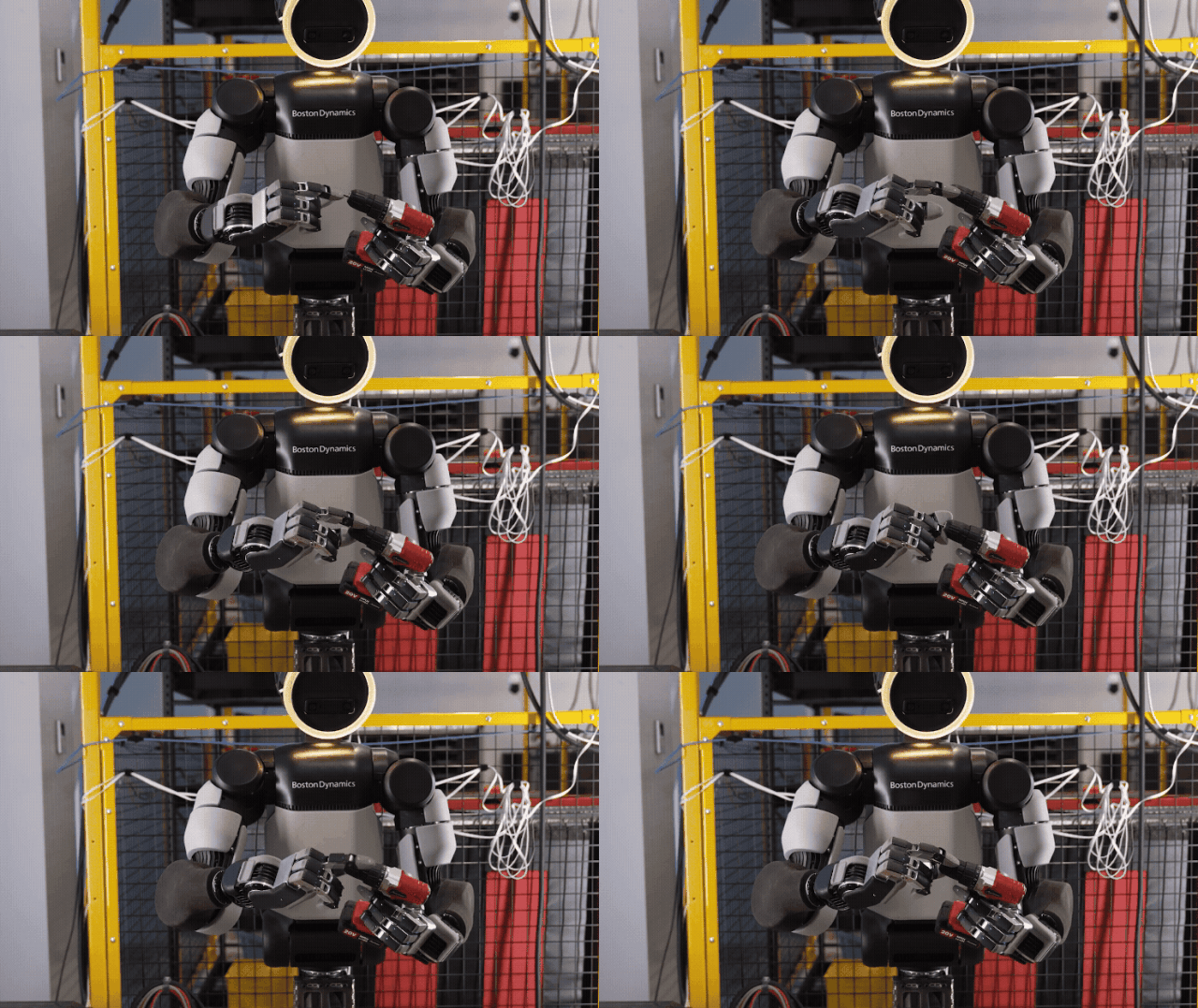
Engineers dropped the little finger after Chief Product and Technology Officer Zack Jackowski asked the team to tape their pinky and ring fingers together for a day.
"At the end of the experiment we had agreement: no pinky," the company said in a blog post.
Pressure sensors blanket the fingertips and palm, and the direct-drive joints were designed to be simulated with high fidelity, letting the company train grasping policies through reinforcement learning in simulation before loading them onto the machine.
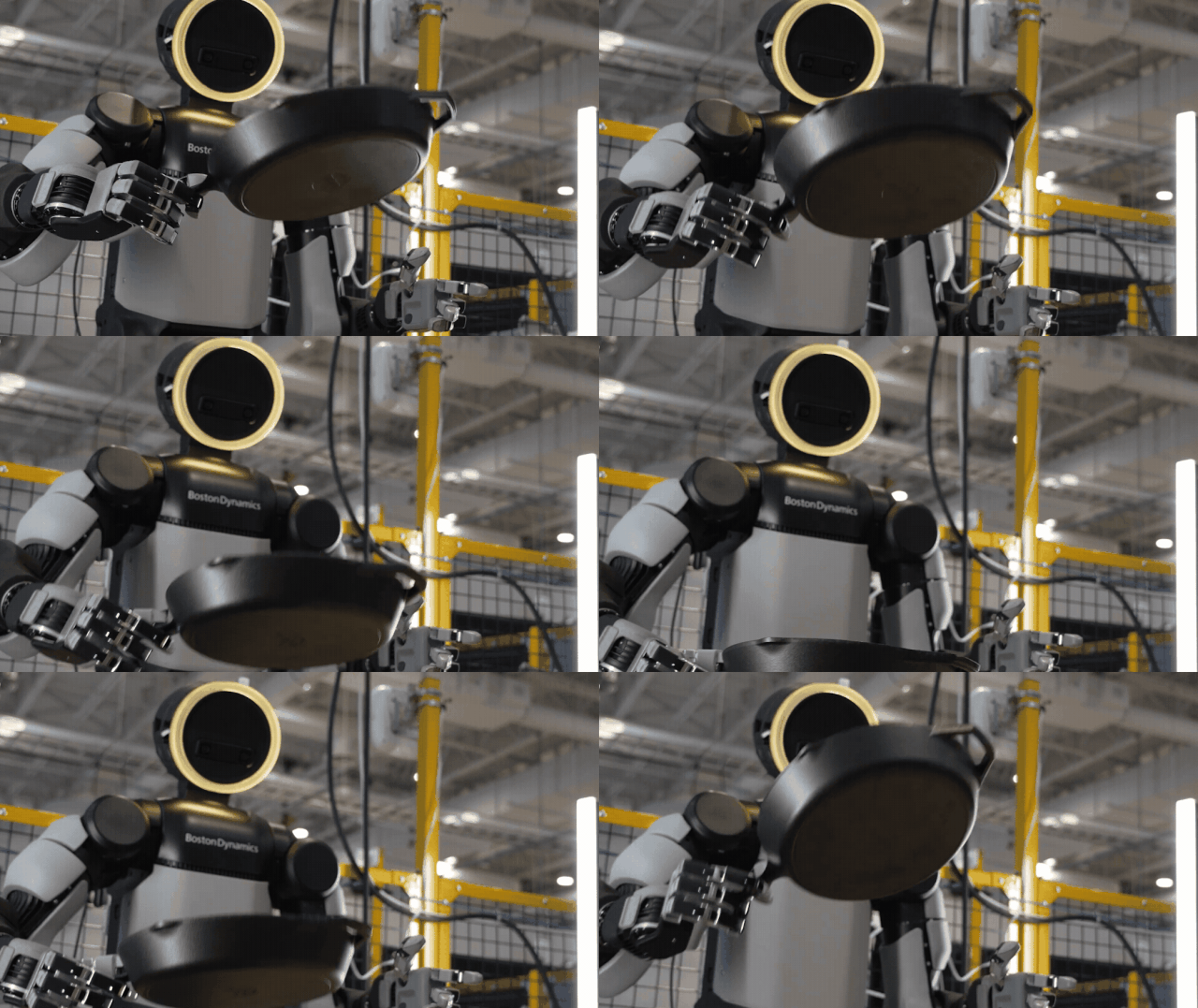
Hyundai and Kia will take 25,000 of the robots across their global plants over the next few years, with component assembly targeted for 2030
AJP Takeaways
- Boston Dynamics unveiled a new four-fingered hand for its Atlas humanoid robot on Oct. 1, 2026, replacing the three-fingered design used until now.
- The hand has 13 degrees of freedom against seven in the previous generation, with pressure sensors across the fingertips and palm and direct-drive actuators chosen for durability and mass production.
- Hyundai Motor Group, which owns Boston Dynamics, is training Atlas on real parts at the Robotics Metaplant Application Center in Georgia, opened Sept. 21, 2026, ahead of a planned 25,000-unit rollout at Hyundai and Kia plants.
Kim Dong-young
Kim Dong-young is a bilingual journalist at AJU Press (AJP), covering Korean tech, energy, and bio/pharma.
He reports from the field at events like CES and APEC, runs AJP's YouTube channels,
and is pursuing a master's at Sogang's MOT program.
Copyright ⓒ Aju Press All rights reserved.
Related News
-
 KOSPI jumps nearly 2% on chip rally, U.S. investment deal
Graphics by AJP Han Jun-gu SEOUL, October 01 (AJP) — South Korean stocks rebounded nearly 2 percent Thursday as Micron Technology's stronger results lifted semiconductor shares, while nuclear and steel stocks gained on new U.S. energy investment projects. The benchmark KOSPI closed higher at 6,971.35, up 1.95 percent from the previous session. The index opened 0.34 percent lower at 6,814.49 and fell as low as 6,765.06 before reversing higher through the session. Institutions bought a net 334.4 billion won ($246 million) of KOSPI shares, while retail investors sold about 1.43 trillion won and foreign investors unloaded 544.2 billion won. The rebound followed Micron's fiscal fourth-quarter results, which beat market expectations and reinforced confidence in demand for memory chips used in artificial intelligence (AI) infrastructure. Micron reported fiscal fourth-quarter revenue of $54.23 billion and adjusted earnings of $33.42 per share. The company forecast revenue of about $61.5 billion for the following quarter, also above market estimates. Customer financial commitments under its long-term supply agreements increased to about $32 billion from $22 billion in June as AI-related memory demand continued to expand. The results helped semiconductor stocks recover after several sessions of pressure from high U.S. Treasury yields and foreign selling. Samsung Electronics closed the regular session 2.79 percent higher at 276,000 won, while SK hynix gained 3.21 percent to 1,833,000 won. Both stocks pared some of their regular-session gains after the close. In KRX after-market trading as of 4:34 p.m., Samsung Electronics was at 273,000 won, while SK hynix traded at 1,815,000 won. Samsung Electronics preferred shares were up 3.23 percent at 201,500 won, while Samsung Electro-Mechanics gained 2.05 percent to 1,544,000 won. SK Square, the largest shareholder of SK hynix, was up 0.26 percent at 1,142,000 won. South Korea's latest export data added to optimism over the chip cycle. Semiconductor exports surged 262.8 percent from a year earlier to a record $60.3 billion in September, helping lift South Korea's overall exports to a record $120.94 billion, up 83.5 percent year on year, according to the Ministry of Trade, Industry and Resources (MOTIR) Thursday. Energy and infrastructure stocks were another focus after South Korea and the United States unveiled plans for projects under Seoul's $200 billion strategic investment commitment. The two countries agreed on a framework to use a $120 billion strategic investment fund to build eight large nuclear reactors in the United States, including two Korean-designed APR1400 units and six Westinghouse AP1000 units, with Korean companies expected to participate in the projects. The plans lifted nuclear-related shares. Wonil T&I hit the daily limit, jumping 29.94 percent to 10,850 won, while KEPCO Engineering & Construction rose 2.61 percent to 125,800 won and Doosan Enerbility gained 0.61 percent to 82,100 won. Steel shares also rose on expectations that the U.S. energy projects could boost demand for construction materials and pipelines. Daehan Steel surged 16.82 percent to 9,100 won, while SeAH Besteel Holdings gained 4.56 percent to 47,000 won and Dongkuk Steel advanced 4.55 percent to 9,880 won. Investors also focused on the proposed Alaska LNG project, which includes a roughly 1,300-kilometer pipeline from Alaska's North Slope to an LNG export terminal. The project could create substantial demand for steel pipes if it proceeds. Other major KOSPI stocks also remained higher in after-market trading. LG Energy Solution was up 0.70 percent at 359,500 won, Hyundai Motor gained 0.72 percent to 347,500 won and Samsung Biologics rose 2.44 percent to 1,425,000 won. The KOSDAQ posted an even stronger advance. The junior index jumped 4.48 percent to close at 894.29. It had opened at 853.96 and briefly fallen to 851.92 before turning higher. Foreign investors bought a net 230.8 billion won of KOSDAQ shares and institutions purchased 568.2 billion won, while retail investors sold about 776.1 billion won. The advance broadened beyond large-cap memory stocks as stronger Micron capital-spending expectations supported semiconductor equipment makers, while biotechnology and battery stocks also attracted buying. The strength continued into after-market trading. Wonik IPS, a semiconductor equipment maker focused on deposition and other chip-manufacturing systems, was up 7.76 percent at 141,700 won as of 4:34 p.m. EO Technics, which supplies laser-processing equipment for semiconductor, display and printed-circuit-board production, gained 6.54 percent to 554,000 won. Jusung Engineering, a maker of semiconductor deposition equipment including ALD and CVD systems, rose 2.37 percent to 238,000 won. LEENO Industrial, which makes semiconductor test probes and IC test sockets, climbed 9.95 percent to 80,700 won. Simmtech, a supplier of semiconductor package substrates, gained 4.99 percent to 157,800 won. HPSP, a semiconductor equipment company, rose 7.22 percent to 68,300 won. Battery shares also remained firm. EcoPro, the holding company of a battery-materials group, rose 4.59 percent to 84,300 won, while cathode-material producer EcoPro BM advanced 4.03 percent to 113,500 won. Alteogen, a biotechnology company developing platform technologies for biologic drugs, gained 3.34 percent to 263,000 won. Rainbow Robotics, which develops collaborative, mobile and humanoid-based robot platforms, rose 3.59 percent to 433,000 won. The turnaround also marked a sharp change from the previous session, when the KOSPI fell for a third straight day as foreign and institutional selling overwhelmed early gains in chip stocks. Still, high U.S. borrowing costs remained a source of pressure. The U.S. 10-year Treasury yield had climbed above 5.3 percent overnight, keeping investors sensitive to the outlook for inflation and interest rates. The Korean won weakened to around 1,362.70 per dollar from 1,361.6 earlier Thursday. Across the region, Japan's Nikkei 225 surged 3.30 percent to 68,956.72 as chip and AI-related shares rallied on strong semiconductor demand. Hong Kong and mainland Chinese markets were closed for the National Day holiday. AJP Takeaways - The KOSPI reversed an early decline to close 1.95 percent higher at 6,971.35 on October 1, supported by institutional buying and a rebound in semiconductor shares. - Micron Technology's record fiscal fourth-quarter revenue and stronger-than-expected guidance lifted sentiment toward Samsung Electronics, SK hynix and South Korean semiconductor equipment makers. - South Korea's September semiconductor exports surged 262.8 percent year on year to a record $60.3 billion, adding to expectations that AI-driven memory demand remains strong. Korea.kr - The KOSDAQ jumped 4.48 percent to 894.29 as foreign and institutional investors bought semiconductor equipment, battery and biotechnology shares.
-
 Government Accelerates $7.9 Billion Corporate Investment in Electric Vehicle Transition
The government is streamlining permitting procedures and regulations to expedite corporate investments totaling 7.9 trillion won, focusing on the transition to electric vehicle factories and clean hydrogen power. The time required for permits and impact assessments, which can take over three years to convert internal combustion engine production lines to electric vehicle plants, will be reduced to within one year. Additionally, the clean hydrogen power bidding market will reopen this month.On October 1, Deputy Prime Minister and Minister of Economy and Finance Lee Hyung-il chaired an emergency economic meeting at the Government Seoul Building, where he announced the 'Field-Centered Corporate Investment and Innovation Support Plan (Phase 2).'The government will first support the early execution of investment projects in green transition, secondary batteries, and advanced sensors.In Ulsan, a project is underway to convert an internal combustion engine production line into a factory focused on autonomous electric vehicles. The government plans to establish a fast track with Ulsan City and the relevant company to shorten the permitting and impact assessment period to within one year, facilitating approximately 4 trillion won in new investments.The clean hydrogen power bidding market will also be reopened this month. The government noted that the cancellation of last year's competitive bidding announcement has delayed investment decisions for related companies in production and power generation facilities. This month, the bidding will be announced, and the evaluation system will be improved by increasing the scoring for contributions to the domestic clean hydrogen ecosystem. After selecting the operators, the government plans to support the execution of investments totaling about 3 trillion won.The period for changing environmental impact assessments to introduce eco-friendly and high-efficiency liquefied natural gas (LNG) blending technology in by-product combined power generation facilities will also be shortened. Consulting for preparing environmental conservation plans will reduce the timeframe from over three months to within one month, helping to expedite approximately 69.7 billion won in fuel cost savings and assist companies in securing investment resources.A fast track for rapid designation will be applied to the Muan National Industrial Complex candidate site, supporting investments of about 761.5 billion won by shortening the permitting and impact assessment procedures by more than one year.From 2027, special safety management measures for hazardous materials related to secondary batteries will be expanded to include material, parts, and equipment companies, promoting approximately 70.2 billion won in new investments. The government will also support the entry of underwater acoustic sensor companies into bio-convergence industrial technology complexes, backing investments of about 40 billion won for manufacturing facility expansions.The government will also revise regulations that hinder corporate investment. By 2027, it plans to allow integrated bidding for electrical and communication work when constructing semiconductor fabs, which currently requires separate bidding. This change aims to reduce construction time specifically for semiconductor fabs.The installation procedures for cylinder cabinets that protect semiconductor manufacturing cylinders will be simplified. When installing multiple cabinets, technical reviews and change approvals will be processed collectively under a new semiconductor special notice.The criteria for small-scale environmental impact assessments for agricultural solar power will also be relaxed. Currently, projects in agricultural areas larger than 7,500 square meters require assessments, but agricultural solar power projects under 20,000 square meters will be excluded from this requirement. The goal is to amend the enforcement decree by December of this year.Additionally, the government will expedite the rapid designation of regulatory sandboxes for the installation of standalone reformers within buildings. The reasons for adjusting operating costs in revenue-generating private investment projects (BTO) will include changes in labor costs due to modifications in working hours.Financial support for advanced industries will also be expanded. The 2027 budget includes 5 billion won for securing key technologies for large-diameter wafer processing equipment for next-generation power semiconductors and 7 billion won for establishing demonstration infrastructure. Furthermore, 13.3 billion won will be allocated for the development of next-generation battery technology for humanoid robots.A dedicated research and development (R&D) project for the technological development of three core components of robots—actuators, sensors, and robotic hands—will also be established. From 2027 to 2029, the government plans to invest 100 billion won, with 30 billion won reflected in next year's budget.Policy Coordination Officer Joo Hwan-wook stated, “We will closely monitor the implementation of these measures to ensure they lead to actual investment results. We will continue to support corporate investment and innovation swiftly, particularly in new industries, by preparing a third phase of corporate investment and innovation support plans.”* This article has been translated by AI.
-
AI Insights: 'Factories Need Ears Like Humans' – AI That Listens to Baby Cries Expands to Industry
Deeplee is evolving into a company that analyzes sounds in manufacturing environments using artificial intelligence (AI) to manage quality and safety. Initially focused on baby cries, the company is now expanding into the industrial sound AI market by analyzing machine noises and fastening sounds in manufacturing, including automotive parts.In an interview on September 30 at Deeplee's office in Mapo, Seoul, CEO Lee Soo-ji described the company as one that supplies auditory modules to automated factories. He stated, "As robots evolve to resemble humans, relying solely on vision will be insufficient, and auditory modules will become essential."Lee's choice to pursue sound AI as a business stemmed from his background in signal processing. After graduating from KAIST with a degree in electronics, he specialized in brainwave signal processing at Seoul National University. He explained that while brainwaves and sounds may appear to be different data types, they are technically similar. "Broadly speaking, both sound and brainwaves fall under the field of signal processing," he noted. With advancements in frequency division and preprocessing technologies, combined with recent developments in AI and deep learning, it has become possible to analyze more signals at higher resolutions.Lee likened the advancement of sound analysis technology to the evolution of cameras. Just as blurry images have improved to high resolution, allowing for more information to be captured, sound can now be analyzed in greater detail due to advancements in AI technology.Deeplee did not initially focus on manufacturing. In 2020, the company launched an application called 'WAAH' that analyzes baby cries. Lee's experience as a parent, struggling to understand what his child wanted based solely on crying, inspired the business idea. "As a parent, I found it difficult to interpret what my child was expressing," he recalled. "I thought that if we gathered and analyzed enough data, it could be effective." While experienced parents can distinguish between hunger and discomfort, first-time parents often struggle, prompting the idea to utilize data.However, as Deeplee engaged in B2C business, the team faced challenges in determining where to apply their accumulated technology. Ultimately, considering their identity as a technology-based startup and existing technical capabilities, they shifted their focus to B2B. Lee explained, "We are a technology-based startup, and we have accumulated a lot of technology. Both my co-founder and I have engineering backgrounds, so we felt B2B would suit us better."The differences between B2C and B2B were also evident in their business approaches. Lee noted that in B2C, enhancing user interface (UI) and user experience (UX) for convenience and conducting large-scale online marketing were crucial. In contrast, in manufacturing, it was essential to validate technology on-site and build trust.Lee remarked, "B2C and B2B feel fundamentally different. In B2C, there were many teams focused on making the consumer experience more convenient through UI and UX, and we conducted large-scale online marketing. However, in manufacturing, it is important to build trust through trade shows and reliable articles."During the transition, the organization underwent significant downsizing. The team initially expanded to analyze baby cries but reduced its size when that business was discontinued. Eventually, Lee, his co-founder, and two colleagues restarted the B2B business. The team has since grown to 27 employees, with about two-thirds focused on development, working on AI algorithms and product development.Deeplee identified a limitation in quality inspections that relied on human ears. In automotive parts manufacturing, inspections have traditionally involved listening for sounds indicating whether parts are properly assembled. However, human inspections are difficult to document objectively. The judgment can vary based on the inspector's skill and condition, making it challenging to trace the basis for determining defects. Lee pointed out, "In the existing automotive industry, checks were done by human ears, but now it is difficult to assess objectively using only human ears. We believe we are in the process of transforming these aspects into a system that can document and data-ify them."Deeplee's industrial sound AI solution, 'Listen AI Industrial,' is utilized for quality inspections of automotive motors, actuators, and bearings, as well as for checking connector and bolt assembly sounds. Currently, the system inspects over 18,000 products per hour in a fully inline manner, with accumulated sound data exceeding 520,000 hours and 20TB.Lee emphasizes the importance of 'data' in this process. Hundreds to tens of thousands of products are produced daily on manufacturing lines, and the sounds generated during production are recorded along with product information. He explained, "In a mass production environment, some lines produce hundreds of items a day, while others can produce tens of thousands. The sounds produced on those lines are recorded and linked to the specific products, creating data."This goes beyond merely collecting sounds. It allows for connections between whether a product is normal or defective, the specific product generating the sound, and the production time and process information. This is why Lee identifies the data accumulated on-site as Deeplee's competitive advantage. He stated, "Having such data continuously accumulated is a significant asset."The application of sound AI in manufacturing is also driven by changes in the automotive industry. As electric vehicles become more prevalent, vehicles are quieter, making quality control of small joints and abnormal sounds increasingly important. The need to differentiate and document subtle differences that were previously checked by human ears has grown.Lee acknowledges that the sound AI market is still smaller compared to vision AI. However, he believes that as manufacturing environments become more automated, the need for sensors that address not only vision but also other senses will increase. He stated, "Sound AI may be a much smaller field compared to vision or humanoid robots, but I see it as the second sense to vision. If the manufacturing industry continues to move in this direction with automated systems, it can play a significant role across various sensor modalities."Deeplee aims to target the global market based on its application cases in domestic manufacturing. In 2025, it supplied Listen AI Industrial to H Group's facilities in South Korea and Mexico, and in 2026, it delivered solutions to a global automotive motor manufacturer. Currently, the solution is operational in 30 industrial sites worldwide.In June, Deeplee secured a new investment of 2.5 billion won from Dev Sisters Ventures, Su Investment Capital, and Nautilus Investment, and in August, it was selected for the TIPS general track by the Ministry of SMEs and Startups.While the focus has been on enhancing performance tailored to specific production lines, the company plans to improve the overall quality of its products so that more manufacturers can quickly adopt the same products. Lee stated, "While we concentrated on enhancing technology performance for a single line, we now aim to improve the basic product capabilities so that more clients can use the same product. Shortening the implementation and installation times will reduce costs and allow more clients to adopt it."Expanding into the global manufacturing sector is also a key goal. Lee noted that the company is currently growing at an annual rate of about three times and emphasized the importance of rapidly increasing actual adoption by clients over securing investments or going public.Lee has a clear vision for Deeplee's future. He aims to create a system where machines can understand not only what humans see but also what they hear. He described Deeplee's direction as a company that creates "the ears of industrial robots." He stated, "While visual modules have dominated automated factories until now, as robots evolve to resemble humans, I believe auditory modules will also be necessary. I want to be a company that supplies those auditory modules."* This article has been translated by AI.