SEOUL, October 14 (AJP) —Bank of Korea Gov. Shin Hyun-song welcomed further won appreciation to contain inflationary pressure fueled by South Korea’s exceptional chip windfall and defended restrictive monetary policy despite geopolitical headwinds.
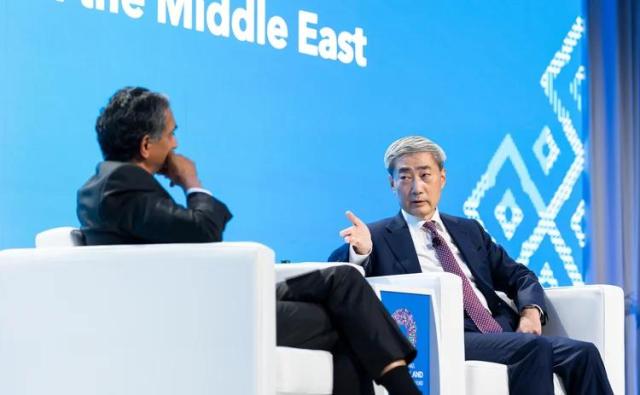
Speaking at an International Monetary Fund Governor Talk in Bangkok on Tuesday, Shin discussed how the BOK is balancing low inflation, exchange-rate flexibility and financial stability as the global AI upcycle collides with uncertainty from the Middle East conflict.
“In Korea, the AI cycle has swamped the negative effect from the Middle East. But for inflation, of course, they combine,” Shin said.
His remarks capture the unusual mix confronting Korea. Higher energy costs from the conflict weigh on growth and push up prices, while the AI boom supports exports and investment but adds demand-side inflation.
The forces partly offset each other on growth while reinforcing price pressure, giving the central bank less reason to ease policy in response to the geopolitical shock.
Shin said headline and core inflation were likely to remain above the BOK’s 2 percent target for some time. Policy would remain restrictive until the central bank was confident inflation was converging toward its target in a timely manner.
Consumer inflation eased to 2.9 percent in September from 3.1 percent in August. The BOK’s benchmark rate stands at 3.00 percent after consecutive quarter-percentage-point increases in July and August.
The central bank had already flagged stronger demand pressure from the AI-driven expansion when it raised rates in August.
It lifted its 2026 growth forecast to 3.3 percent from 2.6 percent, citing stronger-than-expected semiconductor exports and investment and their spillover into consumption. It kept its headline inflation forecast at 2.7 percent but raised its core inflation projection to 2.5 percent from 2.4 percent as improving incomes added to demand pressure.
Shin said the BOK’s three immediate considerations — inflation, the exchange rate and financial stability — were pointing in the same direction, easing the trade-offs central banks typically face.
The won is central to that alignment. Shin said the currency had strengthened substantially since the BOK shifted toward tighter policy but had room to rise further, adding that some additional appreciation would be desirable.
A firmer won can curb imported inflation and boost households’ purchasing power, spreading more of the export windfall to the domestic economy. Shin linked that effect to Korea’s K-shaped recovery, in which the semiconductor-led export sector has far outpaced parts of the domestic economy.
His assessment contrasts with the first half of the year, when won weakness amplified imported inflation and complicated monetary policy. He did not suggest a new exchange-rate target or indicate that the BOK would defend a particular level.
AI could also influence interest rates beyond the current inflation cycle. Shin said stronger productivity and potential growth associated with AI could eventually lift the neutral interest rate — the level that neither stimulates nor restrains the economy — by increasing investment and financing demand.
Heavy borrowing by global technology companies to fund AI infrastructure is already putting upward pressure on long-term market rates, he said.
AI is thus shaping the BOK’s outlook on two fronts: strengthening near-term demand enough to add inflation pressure and potentially raising the interest rate consistent with balanced growth over time.
For vulnerable households and small businesses struggling with high borrowing costs, Shin advocated targeted fiscal support rather than monetary easing before inflation is under control.
The BOK’s next Monetary Policy Board meeting is scheduled for Oct. 22. Shin stopped short of signaling a third consecutive rate increase. Speaking after the IMF session, he said the July and August hikes had produced desirable effects but declined to comment on the coming decision.
AJP Takeaways
- Shin said the AI upcycle is cushioning Korea's growth from the Middle East conflict while the two forces reinforce each other on inflation.
- Shin said further won appreciation would be desirable as a stronger currency eases inflation pressure and improves household purchasing power.
- The BOK remains committed to restrictive policy, but Shin gave no specific signal for the Oct. 22 Monetary Policy Board meeting.

Copyright ⓒ Aju Press All rights reserved.