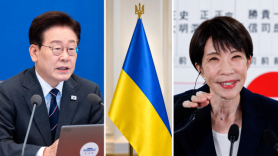
The assessment came during a discussion hosted by the Center for Strategic and International Studies (CSIS), where former U.S. officials and Korea specialists examined the diplomatic fallout from Ukrainian President Volodymyr Zelenskyy's announcement.
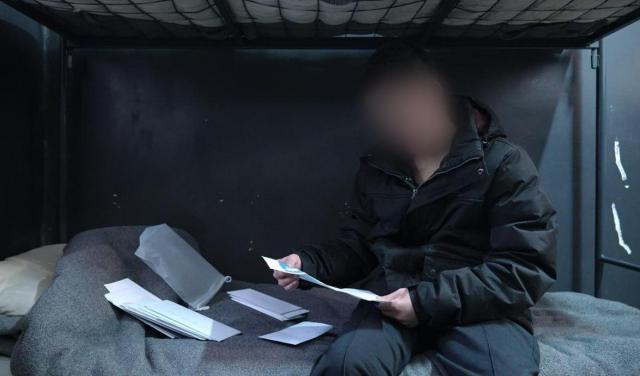
Zelenskyy disclosed during his September address to the U.N. General Assembly that Ukraine had transferred two captured North Korean soldiers to South Korea, triggering a diplomatic dispute over whether the announcement violated a confidentiality agreement.
Sydney Seiler, a senior adviser at CSIS and former U.S. special envoy for Six Party Talks, said Seoul had sought to handle the issue quietly to avoid antagonizing North Korea and Russia as it pursued broader diplomatic objectives.
He suggested that Zelenskyy's announcement undermined Seoul's approach by forcing the Lee administration to publicly address an issue it had hoped to keep out of the spotlight.
"Pyongyang has been quiet on the issue because it would contradict their own narrative of these great heroes going out to fight and die for their country," Seiler said.
Emma Chanlett-Avery of the Asia Society Policy Institute said the disclosure was particularly sensitive because the prisoners were North Korean soldiers rather than ordinary defectors.
"They're not regular defectors," Chanlett-Avery said, noting that the soldiers were part of North Korea's narrative portraying its troops fighting alongside Russia as war heroes.
She also warned that the public disclosure could put the soldiers' families in North Korea at risk of retaliation, while adding to domestic criticism of Lee's conciliatory approach toward Pyongyang.
Victor Cha, president of the Geopolitics and Foreign Policy Department and Korea Chair at CSIS, said Seoul's reaction also reflected its longer-term interests in restoring economic relations with Russia.
Cha outlined several possible explanations for Zelenskyy's announcement, including a lack of awareness of Seoul's diplomatic sensitivities, a psychological operation targeting Pyongyang or an effort to highlight North Korea's growing military support for Russia.
He suggested that Kyiv may have sought to impose political costs on Pyongyang for supporting Russia's war effort, while emphasizing that Zelenskyy's motives remained uncertain.
"It's best not to fight these things out in the press," Cha said, warning that the public dispute reflected deteriorating relations between Seoul and Kyiv.
The experts also warned that deepening military cooperation between North Korea and Russia could continue beyond the Ukraine war, complicating Seoul's efforts to restore relations with Moscow.
Despite the dispute, they expected South Korea to continue providing humanitarian assistance to Ukraine while remaining cautious about supplying lethal weapons that could provoke Russian retaliation.

Copyright ⓒ Aju Press All rights reserved.