
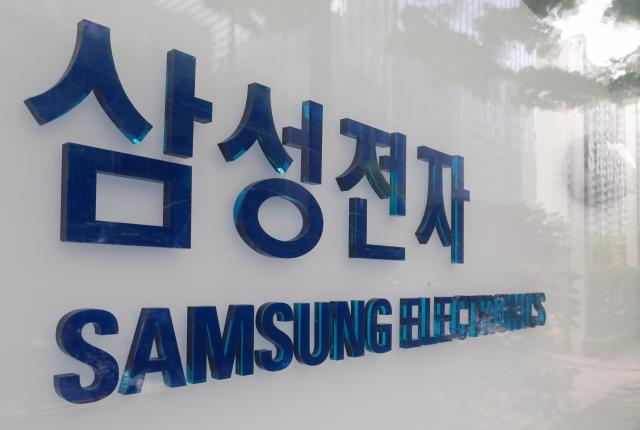
SEOUL, October 27 (AJP) - A South Korean appeals court on Wednesday upheld a three-year prison sentence for a former Samsung Electronics executive convicted of leaking company secrets to support a patent lawsuit against his former employer.
Ahn Seung-ho, who oversaw Samsung's patent operations for nine years before leaving in 2019, was taken into custody after the Seoul High Court upheld his conviction for violating trade secret protection laws.
After leaving Samsung, Ahn established a patent management firm and was accused of conspiring with a company insider to obtain confidential documents for use in a U.S. patent infringement lawsuit against the tech giant.
In 2021, Ahn and audio technology firm Tekiya sued Samsung in the United States, alleging infringement of patents related to audio recording technology. A U.S. court dismissed the lawsuit in May 2024, finding that the use of Samsung's confidential information in bringing the case was improper.
The Seoul High Court rejected Ahn's claim that he had not intentionally disclosed trade secrets, finding no grounds to overturn the lower court's three-year sentence. Unlike the first trial, when Ahn remained free on bail despite receiving a prison term, the appeals court revoked his bail and ordered his immediate detention.
Two former Samsung employees involved in the case received heavier sentences on appeal. A former Samsung Display patent filing manager was sentenced to four years in prison and ordered to forfeit about 530 million won ($400,000), while a former Samsung Electronics intellectual property employee accused of leaking documents to Ahn received a three-year term.
Both were taken into custody.
The court said tougher punishment was warranted for conduct that betrayed an employer for personal gain, noting that the two defendants had failed to adequately compensate for the damage caused.

Candice Kim
Candice Kim is a dedicated business and technology reporter specializing in the intersection of high-tech innovation and fast-paced consumer trends. Her core beats span the semiconductor, IT, cosmetics, and retail sectors, where she provides in-depth coverage of industry titans including Samsung Electronics, SK hynix, and LG Electronics, alongside leading consumer brands like Olive Young and Musinsa. Whether analyzing complex silicon supply chains or tracking the latest shifts in beauty and fashion retail, Candice is committed to delivering sharp, accurate reporting that keeps readers informed on the forces shaping today's most dynamic markets.
Copyright ⓒ Aju Press All rights reserved.
Related News
-
 Korean Beef and Seafood Discounts Up to 50% as 'Korea Grand Festival' Kicks Off
A nationwide large-scale discount event will feature discounts on everything from automobiles and electronics to Korean beef, seafood, and clothing.The government reported on the plans for the '2nd Korea Grand Festival' during a Cabinet meeting on the 27th. The event will take place from the 29th to November 15, spanning 18 days across the country. It will integrate various consumer promotion initiatives from different ministries, including the Ministry of Trade, Industry and Energy's K-Sale Festa, the Ministry of SMEs and Startups' Donghaeng Festival, the Ministry of Agriculture, Food and Rural Affairs' discounts on Korean beef and kimjang ingredients, and the Ministry of Oceans and Fisheries' Korea Seafood Festival.This year, the government aims to expand participation to approximately 40,000 businesses and strengthen connections between local markets and tourism and cultural programs. Five domestic automakers will offer discounts on key models, including mid-size sedans and SUVs. Hyundai Motor, Kia, GM Korea, Renault Korea, and KG Mobility will participate, with specific models and discount rates to be announced on November 1. For the first time, Hyundai and Kia's certified used cars will also be included in the event.Samsung Electronics and LG Electronics will also offer discounts on major home appliances starting November 1. Mid-sized appliance companies like Winix will provide discounts of up to 39% on items such as air purifiers, dehumidifiers, and humidifiers.Large supermarkets and hypermarkets will sell key agricultural, marine products, and household goods at discounts of up to 50% or through buy-one-get-one-free promotions. Department stores will hold sales on winter clothing with discounts of up to 50% and special fashion brand events. Convenience stores will also participate with discounts on popular lunch boxes and special products.A large-scale food discount event will take place as well. From October 28 to November 8, Korean beef will be sold at discounts of up to 50% at retailers nationwide. In preparation for kimjang season, key ingredients such as napa cabbage, radishes, chili peppers, and garlic will be discounted by up to 40% from the 29th to December 2. Major seafood products, including seaweed, salted shrimp, and sun-dried salt, will be available at discounts of up to 50% from October 28 to November 29.Benefits will also be provided to promote consumption in traditional markets and small businesses. From November 2 to 6, the discount rate for digital Onnuri gift certificates will increase from 7% to 10%. A 'Coexistence Consumption Lottery' worth 1.7 billion won will be operated for users of digital Onnuri gift certificates, offering a lottery ticket for every 30,000 won spent. A total of 5,600 winners will receive prizes, with the top prize being 30 million won. Additional lottery tickets will be provided for purchases made outside the capital region.The government will also run regional programs, including discount events, market tours, and coupon distributions in 159 local commercial districts and markets nationwide. Programs will be established to connect visitors to representative local stores, such as Daejeon’s Seongsim Bakery, Busan’s Samjin Eomuk, and Seoul’s Taegukdang, with nearby shops. This initiative aims to extend the consumption effect beyond individual stores to the entire local economy.Special events for foreign tourists will also be organized. Twenty-five duty-free shops nationwide will offer discounts of up to 25% on select products, and cultural events will include free access to the four major palaces, Jongmyo Shrine, and royal tombs, as well as free performances at the National Theater. The grand opening event will take place on the 31st at the old Andong Station in Gyeongsangbuk-do. The government stated, 'Through this event, we aim to stimulate consumption across regions and sectors and develop it into a representative consumer event that includes foreign tourists.'* This article has been translated by AI.
-
Apple's $2,900 iPhone Duo Faces Screen Defect Issues Amid Replacement Challenges
Apple has acknowledged screen defects in its first foldable smartphone, the iPhone Duo, and announced a product replacement policy. However, challenges are expected in securing replacement units due to initial stock depletion.On October 26, Reuters and Bloomberg reported that Apple stated, "We are aware of an issue affecting the internal display on a small number of iPhone Duo devices," and advised affected users to contact AppleCare for replacements.Since its release on October 23, the iPhone Duo has been embroiled in controversy over display defects. Social media posts have surfaced showing cracks at the central fold when the device is opened, along with reports of lines appearing on the screen. Some users reported issues occurring just hours after purchase.Bloomberg confirmed screen damage cases by interviewing over six users. Some claimed they heard a cracking sound while unfolding the device, followed by cracks forming in the center of the screen. Reports also indicated the appearance of white spots on one side of the display.Apple has not disclosed the exact cause of the defect. iFixit, a company specializing in electronics disassembly and repair, suggested that the central support structure, which houses wires beneath the screen, may not be moving correctly, leading to concentrated pressure in specific areas.Despite the replacement policy, consumer inconvenience is expected to persist for some time. Initial online sales sold out within minutes, resulting in a shortage of replacement stock. Bloomberg reported that some users who visited stores were unable to receive immediate replacements due to lack of inventory. Currently, even if new products are ordered, delivery is expected by the end of January next year.After the warranty period, repair costs can be significant. The standard warranty period is one year in the U.S. and two years in South Korea, with repair costs for the internal display reaching $999 in the U.S. and 1,649,000 won in South Korea.This controversy is particularly noteworthy given Apple's emphasis on the durability of foldable phones. Apple CEO John Turnus previously criticized competitor Samsung's foldable phones as "cheap and poorly made," and an executive in charge of hardware engineering expressed confidence in the durability of their products.TechCrunch, a U.S. IT media outlet, noted that while Apple was confident in solving the technical challenges of foldable phones, the defects occurring shortly after launch indicate that related issues may not have been fully resolved. Some foreign media compared this situation to past controversies such as the iPhone 4's reception issues, known as "Antennagate," and the bending issues of the iPhone 6 Plus, referred to as "Bendgate."Francisco Jeronimo, a vice president at market research firm IDC, praised Apple's swift replacement policy as an appropriate initial response. He noted that screen issues also arose with Samsung's first foldable phone, the Galaxy Fold, in 2019, emphasizing that prompt and transparent responses are crucial for maintaining consumer trust.* This article has been translated by AI.
-
 KOPSI surge over 4% on Anthropic's IPO filing
Graphics by AJP Song Ji-yoon SEOUL, October 27 (AJP) - South Korean stocks surged more than 4 percent on Tuesday as foreign and institutional buying lifted semiconductor shares amid growing optimism over Anthropic's planned U.S. initial public offering (IPO). The benchmark KOSPI jumped 4.1 percent to 5,689.23 as of around 10:15 a.m. (0115 GMT), after trading between 5,654.51 and 5,707.70. Foreign investors bought 409.1 billion won (US$309 million) worth of shares, as institutions purchased 228.1 billion won. Retail investors sold 659.1 billion won, taking profits amid the sharp rally. The gains followed an overnight rebound on Wall Street, as the Nasdaq Composite rose 0.83 percent and the S&P 500 advanced 0.70 percent, supported by renewed optimism over AI related investments. Investor sentiment improved after Anthropic, the U.S. developer of the Claude AI chatbot, filed for an initial public offering with the U.S. Securities and Exchange Commission on Monday. The company plans to list on the Nasdaq under the ticker symbol ANT, with Goldman Sachs and Morgan Stanley leading the offering. Anthropic is expected to seek a valuation of up to $2 trillion and raise as much as $100 billion, according to media reports, although the company has yet to disclose its proposed share price range or offering size. The filing showed first half revenue at around $16.3 billion, reflecting rapid growth in demand for enterprise AI services and coding tools. The development helped ease some concerns over AI profitability and the sustainability of massive data center investments, encouraging investors to return to semiconductor stocks. SK hynix surged 7 percent to 1,363,000 won, while Samsung Electronics jumped 5.1 percent to 223,750 won. The gains came as investors reassessed the outlook for memory chip demand amid expectations that AI companies would continue expanding computing infrastructure. Other semiconductor-related stocks joined the rally. SK Square climbed 10.8 percent to 852,000 won, while Hanmi Semiconductor gained 5.5 percent to 194,200 won. Samsung Electro-Mechanics advanced 8.6 percent to 1,214,000 won, supported by broader gains in semiconductor substrates and electronic components. Daeduck Electronics rose 9.5 percent to 131,100 won, while printed circuit board maker Simtech surged 14.2 percent to 122,500 won. Semiconductor substrate shares gained 8.9 percent as a group, while printed circuit board stocks rose 8.6 percent and multilayer ceramic capacitor-related shares advanced 8.5 percent. The rally also extended to power equipment makers, with LS Electric rising 5.3 percent to 161,000 won, HD Hyundai Electric gaining 4.5 percent to 467,000 won and Hyosung Heavy Industries adding 4.5 percent to 1,937,000 won. The stock market recovery coincided with stronger-than-expected economic growth in South Korea, driven largely by semiconductor exports and investment. The country's real gross domestic product expanded 1 percent in the third quarter from the previous three months, accelerating from 0.6 percent growth in the second quarter, according to preliminary data released Tuesday by the Bank of Korea. The expansion exceeded market expectations of around 0.8 percent and the central bank's earlier projection of 0.3 percent. The economy grew 3.4 percent from a year earlier, slowing from 3.7 percent in the previous quarter. Exports increased 2.3 percent from the previous quarter, led by semiconductors, machinery and electrical equipment, while facilities investment jumped 4.1 percent. However, private consumption fell 0.2 percent, reversing a 0.4 percent gain in the second quarter, highlighting the gap between export-driven growth and sluggish domestic demand. The figures showed that the semiconductor boom continued to underpin economic expansion, even as the recovery remained uneven across sectors. Elsewhere on the KOSPI, Samsung E&A rose 4.01 percent to 62,200 won, while Samsung SDI gained 3.6 percent to 501,000 won and LG Energy Solution advanced 1.9 percent to 382,000 won. By contrast, Samsung Biologics fell 4.1 percent to 1,392,000 won, while HD Hyundai Energy Solutions dropped 9.4 percent to 87,300 won. The tech-heavy KOSDAQ climbed 4.4 percent to 759.18, after trading between 742.79 and 759.23. Foreign investors bought 89.1 billion won worth of shares, as institutions followed with 63.9 billion won. Retail investors sold 148.5 billion won. Semiconductor-related shares led gains on the KOSDAQ. Simtech surged 14.2 percent to 122,500 won, while Jusung Engineering jumped 9.4 percent to 183,400 won. EcoPro gained 6.9 percent to 74,500 won, extending the rebound across battery-related shares. Elice, the recently listed AI cloud infrastructure company, climbed 21.2 percent to 92,900 won, continuing its volatile trading following last week's stock market debut. JYP Entertainment jumped 10.4 percent to 39,750 won, while Bigwave Robotics rose 3.5 percent to 29,950 won. Taihan Fiberoptics advanced 3.1 percent to 13,790 won. By contrast, G2G Bio fell 4.5 percent to 43,150 won, while MS Bio slipped 0.7 percent to 10,700 won. Throughout the in Asia market, Japan's Japan's Nikkei 225 rose 2.1 percent to 63,495.54, as Hong Kong's Hang Seng Index edged up 0.1 percent to 23,235.70. China's Shanghai Composite gained 0.04 percent to 3,699.08. The South Korean won strengthened 0.2 percent to 1,324.6 won per dollar. Oil prices fell as renewed diplomatic efforts in the Middle East raised hopes of easing tensions between the United States and Iran. West Texas Intermediate crude slipped 0.7 percent to $101.08 a barrel, while Brent crude declined 0.7 percent to $115.01. The declines followed reports that senior officials from Saudi Arabia, Pakistan and Türkiye held talks with Iranian officials on Monday in an effort to prevent further military escalation.