The Defense Drone Headquarters in Pocheon, north of Seoul, will lead drone and counter-drone development across the armed forces, test civilian technologies for military use and help accelerate the deployment of proven equipment.
It replaces the Drone Operations Command, with a shift in emphasis from conducting missions to developing technology, operational concepts and common standards. Combat functions have been transferred to operational units in the Army, Air Force and Marine Corps under the Joint Chiefs of Staff’s coordinated command and control.
The reorganization follows a drone and counter-drone policy announced in June, before the recent public mishaps. The new headquarters formally opened Sunday, with a founding ceremony held Monday attended by Vice Defense Minister Lee Doo-hee.
In just over five weeks from late August, two loitering munitions crashed after launch from a Navy warship, six of 17 demonstration missions faltered at a Defense Ministry technology exhibition, and a target drone fell during a nationally televised Armed Forces Day event attended by President Lee Jae Myung.
The incidents involved different systems and circumstances, offering no evidence of a common defect across South Korean drone technology. They nevertheless highlighted the importance of repeated trials beyond controlled development environments.
The new headquarters will analyze recent conflicts and battlefield conditions to develop drone operational concepts. It will also test how advanced technologies can be used in the Korean Peninsula’s operating environment, helping the military identify equipment suitable for rapid deployment.
Dedicated departments will handle combat development, testing and demonstration management, acquisition support and civilian-military cooperation.
The ministry has established a certification and adoption framework modeled on the United States’ Blue UAS program to enable the military to purchase civilian drones whose performance has been verified.
It also plans to reduce reliance on Chinese components such as batteries and motors through component standardization and supply-chain cooperation with the United States and other partner countries.
The headquarters will participate in the Joint Chiefs of Staff’s review of equipment requirements, coordinating similar projects across the services to prevent duplicate investment and accelerate deployment.
Purchasing, contracting and acquisition-related quality certification will remain with the Defense Acquisition Program Administration (DAPA).
The distinction between a successful prototype and dependable military equipment became particularly visible during the recent demonstrations.
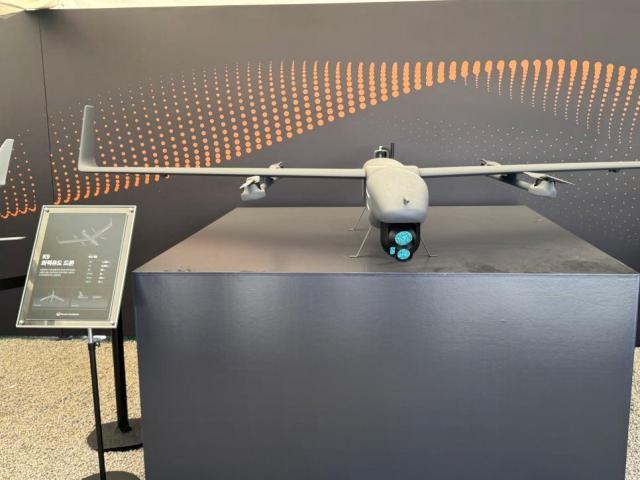
On Aug. 25, two loitering munitions — attack drones designed to remain airborne before striking a target — plunged into the sea after launch from the Navy’s ROKS Marado. The Agency for Defense Development’s preliminary assessment traced the failure to a misaligned launcher door, a problem that had not emerged during previous ground operations.
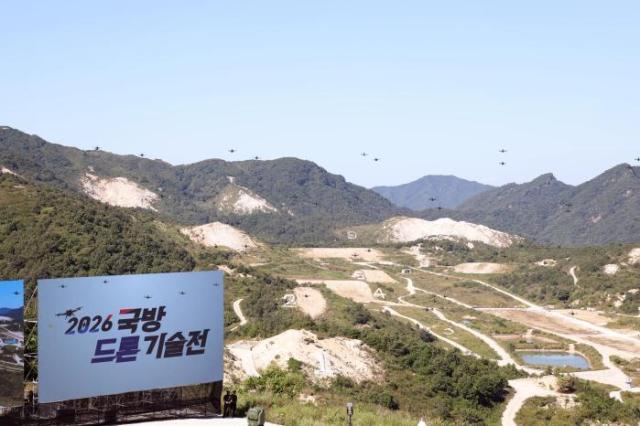
At the September drone exhibition in Pocheon, some systems that had worked in rehearsals faltered during the main event. Participating companies cited possible radio-frequency interference as more drones operated and crowds gathered, although the ministry has not confirmed the cause.
The Armed Forces Day incident involved a modified civilian target drone controlled through a fiber-optic cable. The military said it fell after the cable broke. Another target drone was deliberately brought down after weather conditions carried it beyond the designated safe area, while two others were successfully intercepted by the Cheongwang laser air-defense weapon.
The new headquarters will have about 100 personnel, compared with roughly 280 at its predecessor, as operational, logistics and combat-support functions move elsewhere. More than half its personnel will be field-grade officers or above, including force-development specialists from the services and acquisition experts from DAPA.
The former Drone Operations Command was established in 2023 following North Korean drone incursions in December 2022. A joint civilian-government-military advisory committee recommended its dissolution and replacement with a functional command in January.
Responding to concerns that dismantling a dedicated operational command could weaken drone capabilities, the ministry said the objective was to make drones a routine tool throughout the armed forces.
“To win on the battlefield, we must build a foundation that allows drones to be used as universally as a second personal weapon,” it said. Enabling every unit to conduct drone operations would strengthen capabilities across the military, the ministry added.

Copyright ⓒ Aju Press All rights reserved.