
SEOUL, November 5 (AJP) — Virtual worlds where relationships and experiences can feel real without the physical or emotional wounds of real life are back in vogue in South Korea, helped by AI tools that make them easier to create.
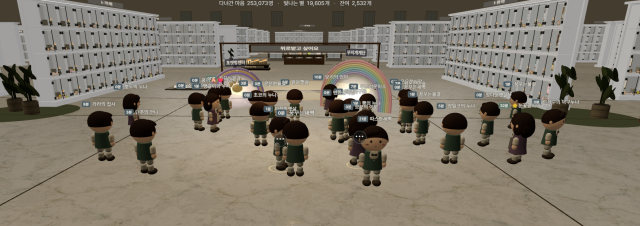
At Starkkuk, an online pet memorial, rows of virtual lockers bear the names of beloved animals who are no longer here. Visitors leave messages, offer chrysanthemums and take virtual walks with the companions they have lost. When words fall short, their avatars can offer another grieving owner a hug.
The pets are gone. The wish to spend a little more time with them remains.
"It's fascinating how these days people are even mourning and comforting each other online," said Yeji Kang, 33, a teacher from Daegu in southeastern South Korea. "Perhaps these spaces could help people cope with losing a pet before the grief becomes too much to deal with in real life."
Elsewhere, visitors enter a virtual Buddhist temple to sit quietly among strangers. Some pray for exam success. Others leave the temple open while studying, finding company in a room where nobody needs to speak.
Together, these spaces offer a glimpse of an online life built around quieter encounters. AI tools are helping individuals turn personal experiences of grief, stress and longing into places where others can gather.
Starkkuk began with one man’s loss.
Lee Seong-min, a developer and marketer in his 30s, created the platform after losing his two cats. He wanted somewhere to remember them and give other bereaved owners room to share their feelings.
The service attracted more than 50,000 users within three days of its launch in late October, with unique visitors approaching 100,000 by Monday. Lee expanded its memorial spaces from 300 to 6,000 as demand grew, although a surge in traffic temporarily overwhelmed the servers.
Visitors can preserve photographs and letters, light candles and leave flowers. A private memory becomes something strangers can acknowledge, even if they never knew the animal or its owner.
The response reflects the place pets hold in Korean households. A survey released by the Ministry of Agriculture, Food and Rural Affairs in February found that 29.2 percent of households kept pets in 2025.
"People now hold funerals for their pets, cremate them and even keep their ashes at home," said Kim Jong-hoon, a Seoul-based consultant in his 30s. "Why not keep their memories in a virtual space? It's a brilliant idea."
For Jin Ha-neul, 31, from Seoul, the appeal lies in being able to participate. She often watches pet-related videos on YouTube after work and sees a natural audience among people already sharing their losses online.
"There are already so many people sharing their grief over lost pets on Instagram and YouTube," she said. "Why just watch their stories when you can step into a virtual world and share your own?"
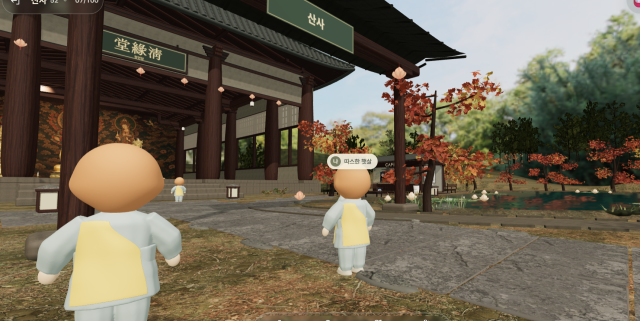
Small avatars dressed as novice monks sit before a Buddha statue. Visitors can offer incense, turn prayer beads or perform 108 bows, a Buddhist practice of reflection and repentance. Others listen to chants or nature sounds while sitting alongside people they may never meet.
Its creator, Park Jin-won, was looking for that calm himself.
The 26-year-old English literature graduate was preparing for employment and wanted to recover the peace he remembered from childhood temple visits. With little time or energy to travel to a temple, he used AI-assisted programming to recreate something of the experience at home.
The space he initially built for just 20 visitors soon needed more room.
According to Park, Sansa recorded about 1.2 million cumulative visits within five days of its launch, as of Nov. 2. Between 1,000 and 3,000 people were online simultaneously, including visitors from overseas. He expanded capacity to accommodate up to 10,000 across multiple virtual halls.
Some keep the temple open beside their study materials. Others wish their favorite sports teams victory or pause briefly before returning to the day. Similar spaces modeled on churches and Catholic places of worship have also appeared.
The technology behind Sansa helps explain how such personal projects can emerge so quickly.
Park used “vibe coding,” describing what he wanted in everyday language and relying on AI to generate much of the code. Creators can test the results and request changes, lowering the programming barrier to building an interactive website.
The ease of construction, however, explains only part of the crowds.

Kwak Keum-joo, a professor of psychology at Seoul National University, said competition, constant social comparison and everyday stress were driving people to seek relief.
"We live in an extremely competitive society, and constantly comparing ourselves with others creates tremendous fatigue and a sense of relative deprivation," Kwak said. "The desire to escape all that and find some peace has been around for a long time."
Virtual temples and memorials make that retreat available whenever someone has a few minutes to spare.
"Today, we are constantly flooded with information, and technologies such as AI only add to that flow. People naturally look for ways to rest their minds.”
There is an irony in using another online space to recover from digital overload. But the appeal may lie partly in what these places ask of their visitors. They can sit, listen or leave a small gesture without having to sustain a conversation.
Kwak said the presence of other people can itself encourage participation.
"The mere presence of others can encourage us to do something," she said.
Much as people choose to study in a library or work in a café, visitors may find reassurance in being alongside others, even when the shared room exists only on a screen.
Whether that reassurance develops into lasting support remains uncertain.
"For now, many people are probably visiting out of curiosity," Kwak said. "There's an element of play. But that doesn't necessarily mean people are genuinely sharing grief or deeper values."
Research on online mourning also suggests that comfort can come with complications.
A study published in the proceedings of the 2026 Conference on Human Factors in Computing Systems drew on interviews with 18 participants in online pet-loss support groups. Participants found understanding, opportunities to express grief and ways to preserve memories. Some also described pressure to remain in mourning, highlighting the need for communities to support both remembrance and a return to everyday life. The study examined support groups, rather than these newly launched Korean platforms.
Kwak cautioned that translating mourning and religious rituals into casual online activities could also weaken their meaning.
"If mourning or religious practices become little more than casual activities, their original meaning could gradually fade. People may eventually grow tired of them and leave."
For now, visitors are finding their way to lockers bearing familiar names and temple halls filled with unfamiliar companions. Whether they return after the novelty fades may depend on what they feel when they leave.
"Ultimately, it depends on how real that experience feels," Kwak said.

Copyright ⓒ Aju Press All rights reserved.