

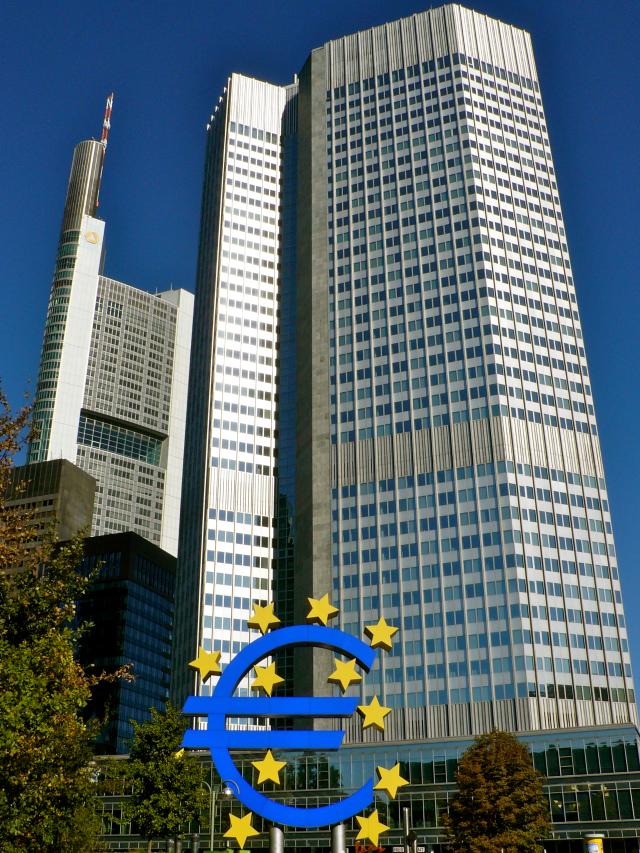
ZURICH, November 05 (AJP) -Rising energy costs are tightening the squeeze on European households, sending Britain to raise interest rates for the first time in more than three years and the European Central Bank (ECB) weigh another increase in December.
The Bank of England (BoE) raised its benchmark rate by a quarter percentage point to 4.0 percent on Thursday. Its policymakers voted 8-1 for the increase from 3.75 percent, marking the first rise since August 2023. Governor Andrew Bailey warned that another increase was likely unless the U.S.-Iran conflict was resolved.
The move came a day after figures showed inflation across the 21 countries that use the euro accelerated to 4.0 percent in October from 3.8 percent in September — twice the ECB’s target. Energy prices rose 20.8 percent from a year earlier, according to Eurostat, the European Union’s statistics office.
Together, the developments show how months of elevated energy costs are putting pressure on central banks to raise borrowing costs even as households struggle with higher bills.
British inflation is expected to reach around 5 percent by the middle of next year, up from 3.5 percent in September, the BoE said. Higher energy bills could lead businesses to raise prices to cover their costs, spreading inflation more widely through the economy.
The outlook poses a challenge for Prime Minister Andy Burnham, who has sought to ease cost-of-living pressures.
The BoE said it had so far seen little evidence of faster inflation beyond sectors directly affected by energy costs. But policymakers judged that the pressure building after months of high prices warranted action now, despite the additional burden on businesses and mortgage borrowers.
“Today's increase should not be seen as the first in an inevitable long sequence of hikes. That is not inevitable. But unless the conflict in the Middle East is resolved, neither does it seem likely to be the last increase,” Bailey said at a press conference.
Across the Channel, ECB President Christine Lagarde said Thursday that the bank was examining incoming indicators to determine whether a December increase was warranted.
The ECB held its deposit rate at 2.5 percent at its October meeting. Several policymakers, including the heads of the German and Italian central banks, have since signaled that another increase in December may be needed.
The bank has already raised rates twice this year, in June and September. Its next policy meeting is scheduled for Dec. 16 and 17.
Energy remains the main driver of euro-area inflation. The annual increase in fuel, heating and electricity prices accelerated from 18.9 percent in September to 20.8 percent in October.
Other categories recorded smaller increases. Food, alcohol and tobacco prices rose 1.6 percent, while services prices increased 3.3 percent. Core inflation, which excludes energy, food, alcohol and tobacco, held at 2.5 percent.
World oil prices have risen for four consecutive months amid conflict around the Strait of Hormuz, the narrow sea route off Iran through which about a fifth of the world’s oil passes.
The impact has varied sharply across the euro area, whose 21 members belong to the 27-country EU.
Inflation in Italy jumped to 5.6 percent from 4.2 percent in September, while Spain’s rate eased to 4.9 percent. France recorded 3.8 percent inflation. In Germany, the euro area’s largest economy, the rate fell to 2.8 percent from 3.3 percent.
Lithuania had the highest rate at 6.1 percent, followed by Bulgaria at 6.0 percent. Malta had the lowest at 2.3 percent.
Public frustration over living costs is also mounting. In France, hundreds of thousands of people marched Thursday in a nationwide strike against higher prices and government spending cuts.
Switzerland, which is outside the EU and uses its own currency, has experienced more moderate price increases. Inflation was 1.5 percent in October as the strong Swiss franc helped contain import costs.
- Tags: euro area, European Union, inflation, Eurostat, European Central Bank, ECB, energy prices, interest rates, Strait of Hormuz, Germany, France, Italy, Spain, Lithuania, Switzerland, cost of living
Copyright ⓒ Aju Press All rights reserved.
