ZURICH, November 05 (AJP) -France’s prime minister called emergency wage talks Thursday as hundreds of thousands of protesters marched nationwide, demanding relief from rising living costs and an end to cuts in public services.
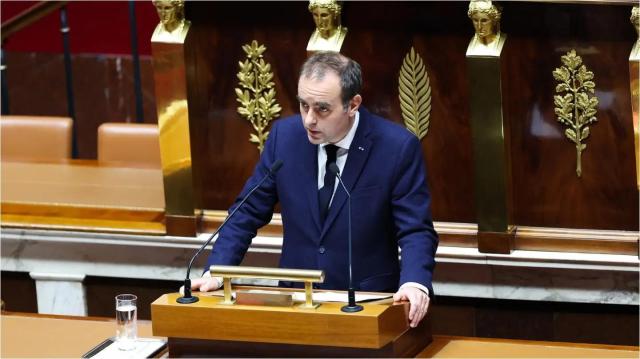
Sébastien Lecornu will meet union leaders and employers at Matignon, his office in Paris, on Monday, Nov. 9. His office said the talks would address wages and purchasing power, with Labor Minister Jean-Pierre Farandou instructed to complete preliminary consultations by Sunday.
The Interior Ministry initially estimated turnout at nearly 600,000, while the General Confederation of Labor (CGT) put participation at almost 1.6 million. Both counts made Thursday the largest day of demonstrations this autumn.
The government’s provisional tally exceeded the 550,000 recorded on Oct. 17, when demonstrations were marred by riots and looting. It also marked a rebound from smaller turnouts on the following two Saturdays.
The protests have brought together workers seeking higher pay, pensioners worried about living costs and students demanding better classrooms, staffing and funding. What began as a dispute over education conditions has widened into a broader challenge over wages and public services.
Unions want increases in pay and pensions alongside more funding for schools, hospitals and other public services. The CGT is seeking a 10 percent rise in the national minimum wage, while the more moderate French Democratic Confederation of Labor (CFDT) wants an additional 100 euros a month in take-home pay.
Farandou has said a minimum-wage increase is open for discussion but warned that the government must consider its effect on employment.
The demands clash with the government’s effort to repair public finances. Its draft 2027 budget seeks 43 billion euros in new fiscal savings, part of a broader 54 billion-euro adjustment that includes previously adopted measures.
Marches took place in about 260 towns and cities. In Paris, the CGT said 350,000 people joined the procession from Place de la République to Place de la Nation.
Most demonstrations were peaceful, but clashes broke out in several cities.
In Lyon, local authorities reported 40 injuries, including 34 among police officers, and 24 arrests. They attributed damage to five businesses to a group of about 500 people at the front of the procession, while stressing that the vast majority marched peacefully.
Officials counted 30,500 protesters in Lyon. In Bordeaux, the official tally was 21,000, compared with the CGT’s estimate of 120,000.
In Nantes, protesters pulled up paving stones and threw them at police. Paris police reported property damage along the march route and said officers had earlier arrested 18 people at railway stations carrying dangerous or flammable materials. A high school near Toulouse was set on fire Thursday morning.
About 70,000 police officers and gendarmes were deployed nationwide. Later figures reported by Reuters put the national toll at 53 police officers injured and 448 arrests.
The strike also disrupted transport, schools, tourism and electricity generation.
Most high-speed trains operated normally, according to national railway operator SNCF, but regional and Paris commuter services suffered substantial disruption. Just over 15 percent of teachers joined the strike, the Education Ministry said.
The Eiffel Tower closed, as did some rooms at the Louvre. Striking workers also reduced output at nuclear power stations, which provide most of France’s electricity.
The unrest adds to pressure on President Emmanuel Macron about five months before a presidential election in which he cannot seek a third consecutive term. Monday’s talks will test whether the government can offer enough relief to contain the protests while pursuing its budget savings.
- Tags: France, strike, Sébastien Lecornu, Emmanuel Macron, CGT, CFDT, Jean-Pierre Farandou, Interior Ministry, SNCF, Lyon, Nantes, Bordeaux, Paris, minimum wage, 2027 budget
Copyright ⓒ Aju Press All rights reserved.