

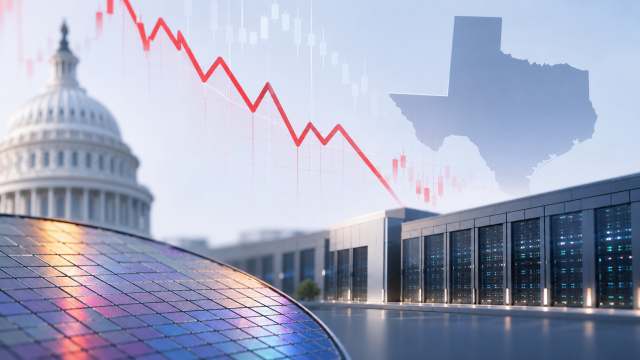
SEOUL, November 06 (AJP) - A US midterm vote half a world away hit the Seoul bourse and its biggest chipmakers hardest. Foreign investors fled, and local players are split on whether this is excess panic or a rightful correction.
SK hynix tumbled 10.76 percent Friday after 9.46 percent a day earlier after sweeping Democrat win became evident. Samsung Electronics lost 6.35 percent on top of Thursday's 7.57 percent retreat.
They had been hammered even before the election results on concerns over the sustainability of AI spending and buildout.
SK Group Chairman Chey Tae-won acknowledged Thursday volatility was inevitable as investors react sharply to political developments and uncertainty over the AI boom.
“Markets are reacting dramatically to something as small as a single midterm election,” Chey said during a lecture at Seoul National University. “We need to keep in mind that this roller-coaster ride will continue.”
Asked how the election results could affect SK hynix and other SK affiliates, Chey said the steep fall in chip shares showed investors viewed the outcome as unfavorable for the industry.
He blamed the market’s sensitivity on excess liquidity that built up after the 2008 global financial crisis and swelled further during the COVID-19 pandemic.
“Too much money has already been pumped into the system,” Chey said. “When people heard that AI could make money, too much capital poured in. In Korea, investors also rushed to buy semiconductor stocks when they started rising.”
“When a correction comes, it creates turmoil. The more prices have risen, the further they can fall,” he added. “These roller-coaster market conditions are bound to continue.”
The selloff has raised questions about whether extraordinary demand for AI processors and high-bandwidth memory, or HBM, can keep supporting chip valuations if U.S. data center construction slows.
Texas in focus
The latest political uncertainty centers on Texas, one of the largest hubs for AI infrastructure and semiconductor investment. Democratic Governor-elect Gina Hinojosa has called for a pause on new data center development until stronger protections are in place for residents facing rising electricity costs, water consumption and other pressures from large computing facilities.
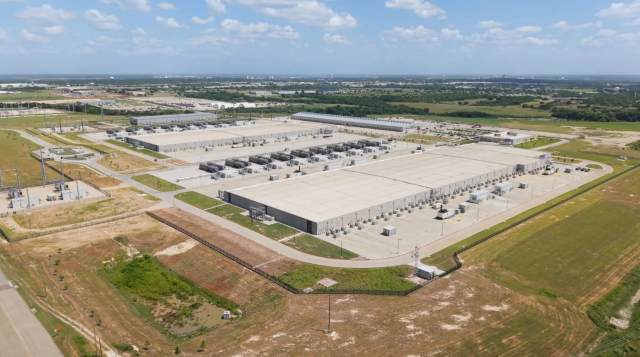
The size of the investment pipeline shows what is at stake in state-level policy shifts. According to Blackridge Research’s U.S. Data Center Project Tracker, Texas accounts for 432 upcoming data center projects. Together they have 65.9 gigawatts of planned capacity and about $1.15 trillion in tracked investment. That is roughly 26 percent of the 256.6 gigawatts of planned capacity across 2,335 upcoming U.S. projects tracked by the firm as of Nov. 6. Georgia, another major market where Democrats won the governorship, accounts for 175 projects with about 10.5 gigawatts of planned capacity.
Much of the nationwide pipeline, however, is still at an early stage. Of the 2,335 projects, 1,469, or about 63 percent, are in the study, announcement or planning phase, while 506 are under construction.
A separate map maintained by Apollo Technical tracks 111 large U.S. projects of at least 100 megawatts each, totaling 106.8 gigawatts. About 52 gigawatts of that is classified as under construction.
Neither tracker shows that the election results have so far led to widespread cancellations or suspensions of data center construction.
For Korean chipmakers, the concern is that delays to computing infrastructure could eventually push back AI server deployments and orders for advanced processors and memory chips.
Samsung operates semiconductor facilities in Austin and is building an advanced foundry complex in nearby Taylor, Texas. SK hynix is a leading supplier of HBM used in AI accelerators, which ties its business closely to spending by major U.S. cloud providers and chip designers.
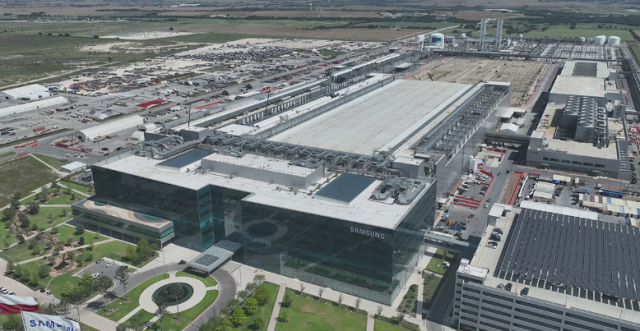
Restrictions on data center construction would not automatically apply to chip manufacturing plants. Any impact on Korean chipmakers would depend on whether planned computing projects are actually delayed or canceled, and whether that translates into fewer chip orders.
The market’s reaction also contrasts with strong operating results across parts of the industry. AMD recently reported a 97 percent year-on-year jump in third-quarter data center revenue to $8.55 billion. Chief Executive Lisa Su acknowledged that demand for critical AI components continues to exceed supply. The gap shows a growing disconnect between current chip demand and investors’ expectations of how fast AI infrastructure spending can grow.
Analysts cautioned that markets may be pricing in a sharper slowdown than current evidence supports.
Nomura kept its long-term KOSPI target of 10,000 in a report released Friday titled “Korea’s market reform moving to next phase.” To reflect macroeconomic and AI-related risks, it set a three-month target range of 7,500 to 8,000. That range applies a 2027 forward price-to-earnings ratio of 5.3 to 5.7 times and a price-to-book ratio of 1.5 to 1.6 times. The 10,000 target assumes a 31 percent return on equity next year and a 2027 P/E of 7.1 times.
“The Korean stock market is oversold, but its fundamentals appear solid,” said Cindy Park, head of Korea research at Nomura.
Park said closer scrutiny of AI companies and data centers after the midterms could make permitting tougher, “but data center construction is more likely to be delayed or relocated to other regions than canceled.” She added that the impact on memory makers from 2028 onward would also be more limited than the market fears. She expects demand for power equipment, multilayer ceramic capacitors and energy storage systems to stay solid.
“A halt to AI data center construction at the federal level is unlikely, but temporary pauses at the state level are possible,” said Chung Chang-won, co-head of Asia research at Nomura. “Views on regulating AI data centers are divided even within the Democratic Party, and we also need to consider the possibility of a veto by President Donald Trump.”
Lee Jae-won, an analyst at Yuanta Securities, said the selloff looked like investors bringing forward a worst-case scenario for AI investment, not clear evidence that the investment cycle had ended.
He estimated that about 75 percent of the 33.8 gigawatts of data center capacity due to come online across 20 major U.S. states in 2027 is already under construction. For 2028, however, as much as 30.3 gigawatts of the projected 62.2 gigawatts in net additions could be exposed to regulatory delays, Yuanta said. That is about 48.7 percent of the projected increase, though none of it amounts to confirmed cancellations or postponements.
Lee said there was little evidence that existing chip supply contracts or memory earnings had been hurt by the political shift. He pointed to long-term HBM supply deals and steady demand for server DRAM as support for Korean memory makers, even if some new data center projects are delayed.
Tighter oversight of data center development does not necessarily mean less AI investment overall, he argued.
Proposed restrictions have focused on electricity prices, water resources and the burden on local communities, and the scope and enforcement of any new rules remain unclear.
The selloff also reflects concerns about whether AI infrastructure spending is financially sustainable. Tech companies and specialized cloud operators are committing heavy capital to facilities that need advanced chips, power infrastructure and cooling systems.
For Samsung and SK hynix, the next test is whether big tech companies stick to their capital spending plans, and whether U.S. political uncertainty shows up as real changes in chip orders.
Until that becomes clearer, Korean chip shares could stay exposed to sharp swings in sentiment despite strong underlying demand for AI computing.

Copyright ⓒ Aju Press All rights reserved.