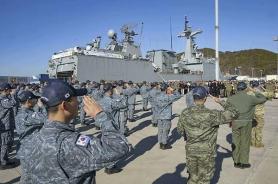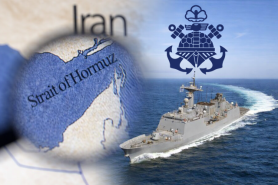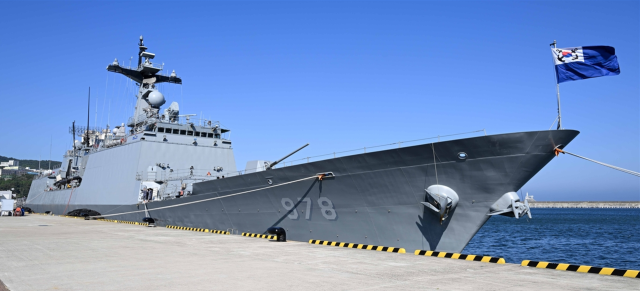
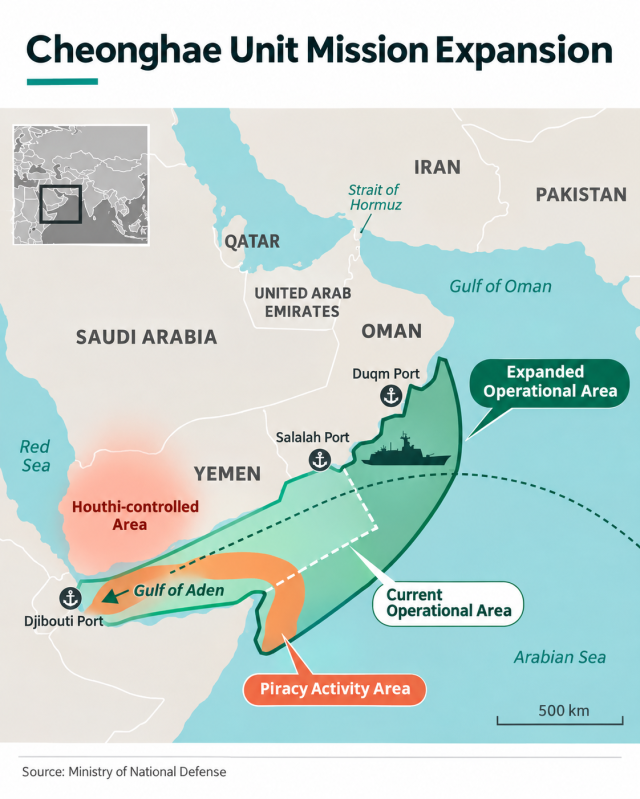
The Defense Ministry said Thursday that a revised deployment motion, cleared at a vice-ministerial meeting, would extend the unit’s operating area from the Gulf of Aden to the southern tip of Oman’s Duqm port, about 650 kilometers from the strait, roughly doubling the waters it patrols.
The unit, built around a 4,400-ton destroyer, would gain a P-8A Poseidon maritime patrol aircraft, an explosive ordnance disposal (EOD) team and unmanned mine-clearing systems, lifting its personnel ceiling by 75 — 45 aircrew and 30 EOD specialists — to 395.
The motion also adds a new task to the unit’s mandate: supporting the restoration of freedom of navigation on international sea lanes. That goes beyond the anti-piracy escorts and protection of South Korean nationals the unit has carried out off Somalia since 2009.
The ministry says the reason is piracy. It said reported attacks off Somalia have climbed from 11 in all of 2025 to 36 so far this year, partly because multinational naval forces have been pulled toward conflict zones in the Middle East.
The timing has drawn attention. Tuesday’s midterms gave Democrats control of both the House and the Senate in a major blow to Trump with still two years left in his second term.
The campaign was dominated by living costs and by the war, which Vice President JD Vance has since blamed for Republican losses. The result leaves open how much room the White House will have to keep the conflict going, or to press allies to share the burden.
The plan itself came before the vote. Seoul had been weighing a wider operating area and a patrol aircraft since at least mid-October, with the unit’s current parliamentary mandate due to expire Dec. 31.
“I think South Korea has made a timely, preemptive move,” said Baek Seung-hoon, a research fellow at the Institute of Middle East Studies at Hankuk University of Foreign Studies.
Baek said the expansion gives Seoul room to maneuver under two scenarios. If Washington steps up pressure on its allies, South Korea can point to a larger naval contribution it has already approved. If the war ends, Seoul will be better placed to join international efforts to reopen shipping routes, possibly alongside European countries that have been discussing maritime security cooperation.
Rather than simply responding to Washington’s demands, he said, the government is staking out a role of its own while U.S. policy remains in flux.
Ban Kil-joo, a professor of international security at the Korea National Diplomatic Academy, said the move serves three goals at once: sharpening the unit’s anti-piracy capabilities, widening South Korea’s contribution to maritime security and reinforcing its alliance with the United States.
South Korea has traditionally sent a single destroyer to the region, he noted, while other countries, including Japan, have flown maritime patrol aircraft alongside their warships. The aircraft and unmanned systems would modernize the unit and extend its operational reach, a longstanding limitation.
Ban cautioned against reading the decision solely through the U.S. elections, noting that the deployment needs parliamentary approval every year.
“The midterm elections do not mean that the war with Iran will suddenly change overnight,” said Ban, adding that delaying the expansion could create other security risks.
He said the deployment could also signal Seoul’s willingness to take a more active role in protecting shipping lanes, given the country’s heavy reliance on Middle Eastern energy.
Defense Ministry spokesperson Chung Bit-na said more than 70 percent of South Korea’s crude shipments pass through the region.
The EOD team and unmanned mine-clearing equipment have raised questions about whether Seoul is positioning itself for a future role in clearing naval mines from the Strait of Hormuz.
The ministry has not hidden that possibility. It insists the expansion is mainly about piracy and does not amount to joining the U.S.-Iran war. But officials said the new assets are also meant to prepare South Korean forces for an international mine-clearing operation once the war ends.
Baek said the equipment could serve both immediate defensive needs and longer-term goals. Mine threats are not confined to Hormuz, he noted, as Yemen’s Houthi rebels could also threaten shipping around the Bab el-Mandeb Strait.
He acknowledged, however, that the deployment could lay the groundwork for postwar mine-clearing. He warned of diplomatic risk if Iran sees it as an attempt to weaken its ability to restrict maritime traffic.
Ban likewise said the EOD team and unmanned systems would let South Korea support future mine-clearing without sending a dedicated minesweeper. He stressed the need to protect personnel and equipment in a region affected by the wider conflict. That would require counter-drone defenses, intelligence sharing and diplomatic coordination with other countries, even with the unit under independent South Korean command.
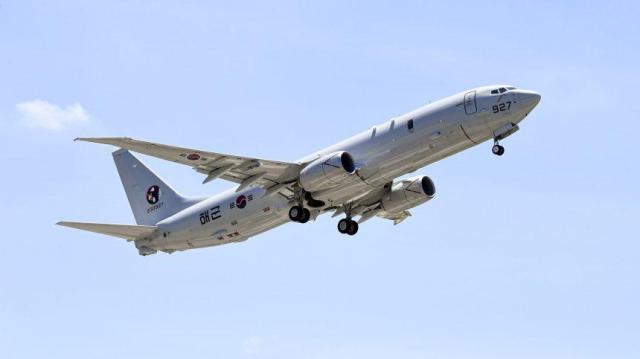
Seoul also plans to explain the deployment to Iran and other key countries to avoid misunderstanding. Officials said they would negotiate with Djibouti so the additional assets can deploy as soon as parliament consents.
Asked how the unit would respond if attacked, officials said it would act in self-defense under established rules of engagement, without giving specific procedures. They did not directly answer whether such a response would need further parliamentary approval.
Any move into the Strait of Hormuz for mine-clearing, the ministry said, would require a new parliamentary mandate and a “permissive environment.” That means an end to hostilities between the United States and Iran, or an agreement allowing safe maritime operations. The additional assets could also be withdrawn before the mandate expires if conditions in the region stabilize.

Copyright ⓒ Aju Press All rights reserved.