

Park Sae-jin
Experienced journalist and editor at AJU PRESS specializing in multilingual news. I cover international diplomacy, geolpolitics, and policy, consistently delivering highly accurate, compelling reporting for a worldwide audience.
Copyright ⓒ Aju Press All rights reserved.
Related News
-
 US Army's 1st hypersonic missile battery now combat-ready
SEOUL, November 27 (AJP) - The U.S. Army has deployed its first long-range hypersonic weapon (LRHW) battery, known as "Dark Eagle." In an interview with defense publication Breaking Defense last week, Lieutenant General Frank Lozano, who oversees U.S. Army weapons acquisitions, said the battery is fully combat-ready, although its deployment comes nearly three years behind the original schedule. The Army has not disclosed the exact deployment date or location. Dark Eagle is a ground-launched hypersonic missile capable of traveling at more than Mach 5 or approximately 6,100 kilometers per hour, with a range of about 2,775 kilometers. Its ability to maneuver during flight makes it difficult to detect, track and intercept. Each battery consists of four mobile launchers, each carrying two missiles, along with command and support vehicles. The deployment marks a major step in U.S. efforts to catch up with China and Russia in hypersonic weapons development. Tags: U.S. Army, Dark Eagle, LRHW, long-range hypersonic weapon, hypersonic missile
-
 Chinese chip strides – legacy, flash, and now HBM?
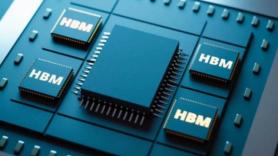
YMTC's semiconductor fabrication plant in Wuhan, China / Courtesy of YMTC SEOUL, November 27 (AJP) - China’s chipmakers have repeatedly been doubted. Yet they have pushed into legacy chips and flash memory and now claim homegrown designs for high-bandwidth memory (HBM), the advanced chips powering AI — all under U.S. restrictions on chipmaking equipment. In flash memory, Yangtze Memory Technologies Co. (YMTC) is rapidly gaining global market share and has built a patent portfolio that Samsung Electronics and SK hynix have reportedly agreed to cross-license. Huawei and ChangXin Memory Technologies (CXMT) are pursuing advanced memory designs that signal China’s ambitions beyond lower-end chips, even as questions remain over their commercial readiness. YMTC captured 14 percent of global NAND revenue in the second quarter of 2026, according to Counterpoint Research, compared with Samsung’s 28 percent and SK hynix’s 19 percent. Micron held 15 percent, while Japan’s Kioxia matched YMTC at 14 percent. The Chinese company’s position is even stronger at home. Its share of China’s NAND market reached 38.5 percent in the second quarter, overtaking Samsung, according to Omdia data. YMTC is also seeking to reduce its dependence on foreign chipmaking equipment. The company aims to source 60 to 70 percent of the equipment for a planned fourth factory in Wuhan from domestic suppliers, Reuters reported earlier this month. The plant is expected to manufacture advanced NAND chips with more than 300 memory layers, primarily for data centers and AI applications. Construction is planned for next year, although supplier negotiations remain preliminary. China’s growing influence also extends to intellectual property. Samsung and SK hynix have agreed to cross-license elements of YMTC’s Xtacking technology, Nikkei Asia reported Thursday. Introduced in 2018, Xtacking involves manufacturing memory cells and control circuitry on separate wafers before bonding them together. The approach allows each component to be optimized independently, potentially improving manufacturing flexibility and memory density. The reported agreements do not establish that Korean manufacturers depend on YMTC’s technology. They may also reflect efforts to avoid patent disputes as chipmakers adopt similar manufacturing techniques. Still, they suggest Chinese competitors are gaining influence through patents as well as production. Image courtesy of Huawei In HBM, the competitive gap is harder to gauge. Huawei plans to present a custom HBM architecture featuring a 4,096-bit interface and five-layer wafer-on-wafer hybrid bonding at the International Solid-State Circuits Conference in San Francisco in February. The interface is twice as wide as the HBM4 standard used by Korean chipmakers, potentially allowing more data to move simultaneously between memory and AI processors. But the preliminary conference program does not disclose Huawei’s operating speeds, manufacturing yields or mass-production timetable, making direct performance comparisons premature. Samsung will present a 48-gigabyte HBM4E design operating at 17 gigabits per second per pin at the same conference. Samsung Electronics' HBM4E/ Courtesy of Samsung Electronics CXMT will also showcase a 32-gigabit DDR5 design capable of 9.2 gigabits per second per pin, using vertical transistors and wafer-on-wafer hybrid copper bonding. The research highlights China’s growing capabilities in advanced memory design. Turning those designs into chips that can be produced reliably and profitably at scale remains a separate test. For Samsung and SK hynix, the challenge is increasingly twofold: maintaining their lead in high-performance AI memory while defending conventional memory markets where Chinese rivals are already gaining ground. U.S. restrictions on advanced semiconductor equipment continue to constrain China’s manufacturing ambitions. They have also added urgency to efforts to develop domestic tools and alternative chip architectures. China has not overtaken South Korea’s memory industry. But its chipmakers are moving beyond replication, building the designs, patents and manufacturing capacity to contest the next generation.
-
Over half of public buses now wheelchair-accessible
SEOUL, November 27 (AJP) - More than half of South Korea's public buses are now wheelchair-accessible, the Ministry of Land, Infrastructure and Transport said Friday. The rate reached 51.8 percent last year, up 7.4 percentage points from 2024. According to the ministry, some 16.46 million people, or 32.2 percent of the population, have mobility difficulties including older adults, people with disabilities and others requiring assistance. Tags: public transportation, wheelchair-accessible buses, mobility, elderly, people with disabilities