

Journalist

Joonha Yoo유준하
joonhayoo94@ajupress.com
ReporterCOEX Sejong Center for the Performing Arts & Music, Culture, Entertainment, Automotive
Joonha Yoo is a bilingual journalist at AJU Press (AJP), covering music, culture, entertainment and Korea’s automotive industry.
Raised in Fort Collins, Colorado, he often writes from the scene, bringing firsthand detail to stories ranging
from BTS comeback concerts to unique cultural events that catch the world's eye. "I write from the scene, not from the sidelines."
Raised in Fort Collins, Colorado, he often writes from the scene, bringing firsthand detail to stories ranging
from BTS comeback concerts to unique cultural events that catch the world's eye. "I write from the scene, not from the sidelines."
Latest by Joonha Yoo
-
 Red Velvet to roll out 'Surfin' Boy' at Seoul fan concert SEOUL, July 29 (AJP) - Red Velvet will perform its new title track "Surfin' Boy" for the first time during a three-day fan concert in Seoul this week, SM Entertainment said Wednesday. The performance comes ahead of the release of the group's new summer EP, its first full-group release in over two years. The group will unveil the song at "2026 Red Velvet FAN-CON ," which runs from July 31 to Aug. 2 at Korea University's Hwajeong Gymnasium. The fan concert sold out during the pre-sale period, while the final performance will be livestreamed globally through Beyond LIVE and Weverse. "Velvet Summer," a five-track EP, is due out at 6 p.m. KST on Aug. 3, two days after the fan concert's final show. The EP marks Red Velvet's first release as a complete five-member group since "Cosmic," which was released in June 2024 to celebrate the group's 10th anniversary. It is also the group's first comeback since Wendy and Yeri left SM Entertainment in April to join separate agencies while remaining members of Red Velvet. Irene, Seulgi and Joy continue to be managed by SM. "Surfin' Boy," the EP's lead single, features lyrics written solely by Joy about revisiting memories of a summer spent with someone special while looking ahead to creating new ones. According to SM Entertainment, the choreography incorporates the Hawaiian "shaka" hand gesture as a key move in the chorus. Red Velvet will also host a countdown livestream through its official YouTube and TikTok channels beginning at 5 p.m. KST on Aug. 3, ahead of the EP's 6 p.m. release. 2026-07-29 15:25:23
-
 Genesis backs Marilyn Monroe short film ahead of Venice premiere SEOUL, July 29 (AJP) - South Korean carmaker Hyundai's luxury brand Genesis is backing a 17-minute short film marking the 100th anniversary of Marilyn Monroe's birth. The project will make its world premiere at the 2026 Venice International Film Festival in September. Genesis said Wednesday that the company played a vital role in the production of "Flesh Impact," by collaborating with Authentic Brands Group, which owns and manages the Marilyn Monroe estate. The film presents two interpretations of the world-famous actress, with Dakota Johnson portraying the actress at the height of her fame and Academy Award-winning actress Ellen Burstyn playing an imagined version of Monroe who lived into old age. Actor and filmmaker Maggie Gyllenhaal directed the project, while Peter Sarsgaard and Sepideh Moafi round out the cast. The company also unveiled the film's first promotional images. The film will premiere at a festival where Gyllenhaal is serving as president of this year's jury and Burstyn is set to receive the Golden Lion for Lifetime Achievement. The project is the latest in Genesis' series of cultural partnerships, following collaborations with New York's Metropolitan Museum of Art and London's Tate Modern. Its Manhattan flagship, Genesis House, has also hosted a range of exhibitions and artist collaborations since opening in 2024, including an immersive floral installation with designer Jeff Leatham and a Korean folklore-themed exhibition created with actress Ashley Park last October. Genesis' Marilyn Monroe centennial campaign began earlier this year with "Manifesting Marilyn: The Making of an Icon," an exhibition developed with Authentic Brands Group at Genesis House. Running from June 1 through Aug. 2, the exhibition explores Monroe's life and legacy through personal archives, photographs and immersive installations. 2026-07-29 10:47:44
-
 Netflix's 'The East Palace' rises to No. 2 on global non-English TV chart SEOUL, July 29 (AJP) -Netflix's Korean fantasy series "The East Palace" climbed to No. 2 on the platform's global Top 10 list for non-English television shows in its second week of release, drawing 8.1 million views and entering the Top 10 in 69 countries, according to Netflix's weekly rankings on Wednesday. The eight-part series, which premiered on July 17, stars Nam Joo-hyuk, Roh Yoon-seo and Cho Seung-woo in a supernatural mystery set in a royal palace. It follows Gu-cheon, a man able to cross into the spirit world, and court lady Saeng-gang as they investigate a curse haunting the East Palace at the king's request. Netflix released 15 behind-the-scenes photos featuring main characters. The images show the cast during filming as well as the sets, visual-effects work and production techniques used to create the series' fantasy sequences. "The East Palace" is directed by Choi Jung-kyu and written by Kwon So-ra and Seo Jae-won. It is available on Netflix. 2026-07-29 08:54:50
-
 Islamic Republic of Iran's Alamut fortress added to UNESCO World Heritage List SEOUL, July 28 (AJP) - UNESCO's World Heritage Committee has inscribed Alamut Castle and six associated mountain fortifications in Iran on the World Heritage List during its 48th session in Busan, making the serial property Iran's 30th UNESCO World Heritage property, the Embassy of the Islamic Republic of Iran in Seoul said Tuesday. The inscription covers Alamut Castle and six associated fortifications that together formed a defensive network across the rugged Alborz Mountains in Qazvin Province, about 150 kilometers west of Tehran. Built into steep cliffs overlooking narrow valleys, the fortifications relied as much on the surrounding terrain as on walls and towers, with the mountain itself serving as part of the defensive system, according to the embassy. From the late 11th century to the mid-13th century, Alamut served as the political, administrative and intellectual center of the Nizari Ismaili state after its leader, Hasan-i Sabbah, a prominent Ismaili leader who took control of the castle in 1090, established it as his base of operations. Historical accounts referenced in UNESCO's evaluation indicate that the site's library attracted scholars from across the Islamic world and contributed to advances in astronomy, medicine and philosophy, the embassy said. Although Alamut is widely associated with Hasan-i Sabbah and the legends surrounding the so-called "Assassins," the embassy said the UNESCO inscription offers an opportunity to recognize the site's broader historical significance as a cultural landscape shaped by architecture, religious and intellectual life, and the natural environment. 2026-07-28 19:26:10
-
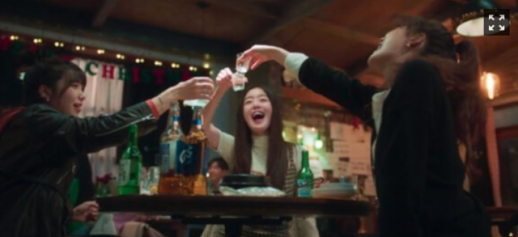 Why South Korean women are drinking more while men cut back SEOUL, July 28 (AJP) — Grabbing a beer after work, unwinding with a glass of wine while watching Netflix or sharing a highball with friends has become a familiar scene in South Korean dramas. Increasingly, it is reflecting real life. Every evening, Kim Ji-hyun, a 45-year-old office worker in Ilsan, pours herself a glass of wine or mixes a highball before settling in with Netflix. Her husband sometimes joins her. "It's not that I drink because of stress," she said. "It helps me relax, and it feels like a pleasant way to finish the day." Ironically, she now drinks less than she once did at company dinners, where heavy drinking has become less common. Instead, drinking has quietly moved into the home. Kim's routine bears little resemblance to the repeated heavy drinking measured by public health officials. But it illustrates a broader cultural shift: alcohol has become more varied, more accessible and more seamlessly woven into everyday life for many South Korean women. New government data suggest that shift is extending beyond casual drinking. A health behavior analysis released Monday by the Korea Disease Control and Prevention Agency (KDCA), based on the 2025 Community Health Survey of about 230,000 adults aged 19 and older, found that women over 30 are drinking heavily more often than a decade ago even as men steadily cut back. The sharpest increase came among women in their 40s, whose high-risk drinking rate rose from 5.8 percent in 2016 to 7.6 percent in 2025. Women in their 30s also saw the rate climb from 6.8 percent to 8.1 percent, while women in their 50s and 60s posted more modest increases. Women in their 20s were the only exception, with the rate falling from 9.2 percent to 7.5 percent. The KDCA defines high-risk drinking for women as consuming at least five alcoholic drinks on one occasion at least twice a week. For men, the threshold is seven drinks. Men moved in the opposite direction across every age group. High-risk drinking among men in their 20s fell 41.6 percent over the decade, the steepest decline of any male age group, while the rate among men in their 30s dropped 36.1 percent. Men nevertheless continue to drink substantially more in absolute terms. Nearly half of men in their 30s, 40s and 50s reported binge drinking at least once a month in 2025, while more than one in five men in their 40s and 50s qualified as high-risk drinkers. South Korea's overall monthly binge-drinking rate stood at 33.7 percent in 2025. According to the OECD's Health at a Glance 2025, the country ranked fifth among 27 member economies with comparable 2023 data, although survey methods differ across countries. The figures raise a bigger question than who drinks more: why are women's drinking habits changing while men's are becoming more moderate? Beyond workplace stress One popular explanation is straightforward. As more women have entered the workforce, they have also become more exposed to Korea's long-standing drinking culture while balancing careers, child care and household responsibilities. Kim Yoon-tae, a sociology professor at Korea University, argues the answer is more complicated. "It is difficult to attribute the increase solely to stress," Kim said. Instead, he sees several social changes unfolding simultaneously. The first is women's expanding participation in economic and social life. More women now attend company dinners, professional networking events and social gatherings where drinking remains an established way of building relationships. "As women's economic and social participation has expanded, there may be more occasions when they drink at workplaces or social gatherings," Kim said. "In Korea, drinking remains a strong part of social culture and can be used to increase familiarity." The second is a profound shift in how and where people drink. South Korea's growing number of single-person households has normalized honsul—drinking alone—while convenience stores have become major retailers of alcoholic beverages. At the same time, wine, highballs and ready-to-drink cocktails have broadened alcohol's appeal beyond the traditional soju-centered drinking culture. "Drinking no longer simply means soju," Kim said. "Wine and highballs have become popular, and more people drink alone, whether they are feeling good or bad." A third factor may be the double burden many women face as they juggle careers with child care and household responsibilities. Kim acknowledged that stress likely contributes to higher drinking among women in their 30s and 40s, but argued it represents only one part of a broader cultural transition. "Drinking is not an appropriate way to relieve stress," he said. "It does not resolve stress and may ultimately make things worse." Popular culture reflects the same shift. The TVING series Work Later, Drink Now, which became a surprise hit after premiering in 2021, follows three women in their 30s whose friendships revolve around sharing drinks after work. Alcohol is portrayed not as an act of excess but as an ordinary ritual—a way to unwind, console one another and mark the end of another demanding day. The series cannot explain why more women are drinking heavily. It does, however, capture a cultural change in which alcohol has become a familiar part of women's everyday routines rather than a predominantly male social ritual. The KDCA's own findings also complicate a simple workplace-stress narrative. Monthly drinking and binge drinking were most common among office workers. High-risk drinking, however, was highest among people in craft and elementary occupations. Likewise, college graduates recorded the highest rates of monthly drinking, while high-risk drinking was most prevalent among high school graduates. Adults reporting stress were 1.12 times more likely to qualify as high-risk drinkers than those reporting lower stress levels. But the analysis covered adults overall, not women specifically, making it impossible to conclude that stress alone explains the increase among women over 30. The government data cannot fully explain why repeated heavy drinking has become more common among a subset of South Korean women over 30. What they do show is that South Korea's drinking culture is evolving. As after-work drinks migrate from mandatory company dinners to living rooms, wine glasses increasingly replace soju bottles, and women become more visible participants in drinking culture, the country's traditional image of who drinks—and why—is changing alongside society itself. 2026-07-28 17:45:14
-
 BLACKPINK's Jennie Breaks K-pop's U.S. Radio Barrier SEOUL, July 28 (AJP) - K-pop has long dominated U.S. streaming and album charts, but mainstream radio has remained one of the industry's toughest markets to crack. BLACKPINK's Jennie has now helped break that barrier, becoming only the second K-pop-related act to top Billboard's Adult Pop Airplay chart, Forbes reported Monday, citing Billboard data. Jennie's collaboration with Australian psychedelic music project Tame Impala, "Dracula," climbed to No. 1 on the chart, which ranks songs based on airplay across adult pop radio stations in the United States. Unlike streaming and album charts, Adult Pop Airplay is determined by radio airplay rather than fan-driven consumption, making it one of the clearest measures of a song's mainstream appeal. Before "Dracula," the only K-pop-related song to reach No. 1 on the chart was "Golden," the theme song from Netflix's animated film KPop Demon Hunters. Performed by Korean American singer EJAE alongside Rei Ami and Audrey Nuna, the track topped the ranking in January following the film's commercial success. Originally released by Tame Impala in October last year, "Dracula" gained renewed momentum after a remix featuring Jennie was released in February. The remix went viral on short-form video platforms, helping propel the song up multiple Billboard rankings. The song currently tops seven Billboard charts, including Pop Airplay, Adult Pop Airplay, Hot Rock & Alternative Songs, Hot Rock Songs, Hot Alternative Songs, Hot Dance/Electronic Songs and Dance Streaming Songs. 2026-07-28 17:10:45
-
 KOSPI leads broad Asian selloff with 8% tumble SEOUL, July 28 (AJP) - Korean stocks plunged Tuesday morning, with the benchmark KOSPI falling more than 8 percent to the 6,200 level, as a selloff in U.S. artificial intelligence chip stocks and concerns over China’s growing semiconductor capabilities battered major technology shares. Sell-side sidecars were triggered in both the KOSPI and KOSDAQ markets shortly after the opening bell, followed by a circuit breaker on the main market that halted trading for 20 minutes. As of 10:30 a.m., the KOSPI stood at 6,212.30, down 8.1 percent from the previous session. The index opened at 6,400.27, down 5.26 percent. Retail investors purchased 1.87 trillion won ($1.27 billion) worth of shares, while foreign investors sold 1.72 trillion won and institutions offloaded 148.2 billion won. The Korea Exchange activated a circuit breaker on the KOSPI market at 10:13:43 a.m., suspending trading for 20 minutes. It was the eighth circuit breaker triggered on the main market this year and the first since July 13, 10 trading sessions earlier. Before the trading halt, a sell-side sidecar was triggered at 9:06:02 a.m., suspending program sell orders for five minutes. Semiconductor shares led the decline. SK hynix tumbled 11 percent to 1,616,000 won, while Samsung Electronics sank 9.5 percent to 230,000 won. Samsung Electro-Mechanics fell 13.9 percent to 1,141,000 won, and Hanmi Semiconductor declined 9.34 percent to 185,400 won. Other major stocks also fell. SK Telecom plunged 15.3 percent to 82,950 won, Hanwha Ocean dropped 8 percent to 81,700 won, Samsung SDI lost 7.4 percent to 399,000 won, LG Electronics declined 6.7 percent to 160,800 won and Doosan Enerbility fell 6.6 percent to 66,200 won. Celltrion moved against the broader market, gaining 1.9 percent to 182,100 won. The selloff followed sharp losses in U.S. semiconductor stocks overnight. The Philadelphia Semiconductor Index fell 2.23 percent, while Nvidia dropped 4.99 percent. AMD declined 5.17 percent, Western Digital fell 4.21 percent, Micron Technology lost 2.25 percent and SanDisk plunged 11.02 percent. The Dow Jones Industrial Average rose 0.51 percent to 52,210.08, while the S&P 500 edged up 0.02 percent to 7,413.18. The Nasdaq Composite fell 0.18 percent to 24,932.08. Reports that Chinese companies had developed domestic deep-ultraviolet lithography equipment added to concerns over China’s push for semiconductor self-sufficiency. ChangXin Memory Technologies surged 465 percent in its debut on Shanghai’s STAR Market on Monday. The KOSDAQ stood at 716.00 at 10:30 a.m., down 6.4 percent. The index opened at 742.13, down 2.97 percent. Retail investors bought 98.1 billion won worth of KOSDAQ shares, while foreign investors sold 37.6 billion won and institutions offloaded 57.9 billion won. A sell-side sidecar was triggered on the KOSDAQ market at 9:14:47 a.m., suspending program sell orders for five minutes. Yas hit the daily lower limit, falling 30 percent to 5,210 won, while Kangstem Biotech plunged 23.5 percent to 1,730 won. KNR Systems jumped 16.2 percent to 16,580 won. Remedi dropped 16.1 percent to 8,050 won, TSE lost 15.7 percent to 176,200 won, Simtech fell 14.6 percent to 78,800 won and VM declined 14.3 percent to 64,200 won. Nepes dropped 13.8 percent to 15,490 won, PSK lost 13 percent to 127,100 won and Jusung Engineering fell 12.5 percent to 131,200 won. The Korean won weakened 0.3 percent to 1,470.6 won against the U.S. dollar. Japan’s Nikkei 225 fell 4.1 percent to 62,270.80, while China’s Shanghai Composite was trading 0.6 percent lower at 3,837. Hong Kong’s Hang Seng Index rose 0.4 percent to 25,307.10. West Texas Intermediate crude fell 0.4 percent to $81.70 a barrel, while Brent crude declined 0.6 percent to $87.40. 2026-07-28 11:07:18
-
 Korea's tourist boom spreads beyond Seoul, Busan rises fast SEOUL, July 28 (AJP) -South Korea's tourism boom is increasingly spreading beyond Seoul, with foreign arrivals through regional airports growing more than twice as fast as those through the capital area as inbound visitors topped 10 million in the first half for the first time since the pandemic. According to the Ministry of Culture, Sports and Tourism on Tuesday, 1.99 million foreign travelers visited South Korea in June, up 23.1 percent from a year earlier, lifting first-half arrivals to 10.71 million, a 21.3 percent increase from the same period last year. Foreign arrivals through regional airports, including Gimhae, Daegu, Jeju and Cheongju, surged 42.5 percent in June to 395,246, far outpacing the 18.2 percent increase recorded at airports serving the Seoul metropolitan area. The figures point to a gradual shift away from Seoul-centric tourism as more overseas visitors travel directly to regional destinations. China remained South Korea's largest source market with 649,582 visitors in June, up 36.2 percent from a year earlier. Japan followed with 348,216 visitors, while Taiwan contributed 223,127 travelers. Arrivals also increased from North America, Europe and Southeast Asia, reflecting continued diversification of South Korea's inbound tourism market. The tourism recovery is also translating into stronger domestic consumption. Foreign visitors spent 2.05 trillion won ($1.5 billion) using credit cards in June, marking the second consecutive month that spending exceeded the 2 trillion won mark. Cumulative foreign card spending reached 10.04 trillion won in the first half, up 50.8 percent from a year earlier. Last year, foreign visitor spending did not surpass 10 trillion won until September. The quality of tourism also improved. South Korea's inbound visitor satisfaction score rose to 90.5 points in the second quarter from 89.8 a year earlier, while the share of tourists visiting destinations outside Seoul increased to 34.2 percent from 31.4 percent. Travel destinations also have diversified beyond the capital reigon. According to Yanolja Research, international arrivals through regional airports in the first quarter rose 40.1 percent from pre-pandemic 2019 levels, compared with a 19 percent increase at airports in the Seoul metropolitan area. The biggest beneficiary of the trend has been Busan's Gimhae International Airport, which has become the country's fastest-growing international gateway outside the capital. International passenger traffic at Gimhae reached about 6.07 million during the first half, up 23.2 percent from a year earlier and nearly one million above the previous first-half record set in 2019 before the pandemic. After surpassing 10 million international passengers for the first time last year, the airport is now on course to exceed 12 million this year. Japan accounted for the largest share of international passengers with 2.59 million travelers, followed by Vietnam with 1.03 million, Taiwan with 946,000 and China with 599,000. Foreign arrivals have been the key growth driver. During the first quarter, the number of overseas visitors entering South Korea through Gimhae Airport jumped 45.5 percent from a year earlier, roughly twice the pace of overall international passenger growth. Demand has remained resilient despite expanding flight capacity. International load factors stayed between 83 percent and 89 percent throughout the first half, indicating airlines have been able to fill additional seats as new routes were introduced. The city has become increasingly popular among travelers from China, Taiwan and Japan, where social media users have coined the phrase "Busan disease" to describe the irresistible urge to revisit the city after a first trip. According to Yanolja Research, analysis of reviews on Chinese social media platform Xiaohongshu and travel site Ctrip ranked Busan as the highest-rated destination among eight major Asian cities for Chinese visitors, ahead of Tokyo and Singapore. Google Trends also showed worldwide searches for "Busan" in English increased about 50 percent over the past year, while searches from Japan surged nearly 190 percent. 2026-07-28 10:36:22
-
 BLACKPINK x Tamagotchi pop-up to open in Seoul SEOUL, July 28 (AJP) - A limited-edition BLACKPINK x Tamagotchi collection will go on sale at a weeklong pop-up store in Seoul, giving fans in South Korea their first opportunity to purchase the collaboration in person, Lotte Department Store said Tuesday. The pop-up will run from Thursday to Aug. 5 at Lotte World Mall in Jamsil, southeastern Seoul. Lotte said it will exclusively host the collaboration's retail pop-up in South Korea. The collection features limited-edition Tamagotchi devices inspired by BLACKPINK members Jisoo, Jennie, Rosé and Lisa, along with character plush key rings based on each artist. Visitors to the pop-up will also have a chance to find four exclusive editions of the plush key rings that have not been revealed through previous online promotions, according to Lotte. The lineup includes 28 merchandise items, including the BLACKPINK Original Tamagotchi, hats, T-shirts and bags. Customers who make purchases at the pop-up will receive limited-edition BLACKPINK x Tamagotchi photo cards while supplies last. A themed photo booth will also be available at the venue. 2026-07-28 09:45:19
-
 China's new chip power triggers Korean selloff, sparks 21st sidecar SEOUL, July 28 (AJP) - South Korean stocks plunged Tuesday, triggering the market's 21st sidecar of the month after a fresh rout in U.S. semiconductor shares combined with growing investor bets on China's emerging memory-chip champion to spark another wave of foreign selling. The Korea Exchange activated a sidecar — a five-minute suspension of program trading designed to cool excessive volatility — shortly after the open as benchmark indices tumbled more than 5 percent. By 9:30 a.m., the KOSPI had slumped 7.24 percent to 6,263.30, falling below the 6,400 mark for the first time since April 23. The tech-heavy KOSDAQ dropped 5.64 percent to 721.71. The latest halt marked the 21st sidecar in July, including 12 on the KOSPI market and nine on the KOSDAQ over just 18 trading sessions, according to the Korea Exchange. From July 10 through July 25, a sidecar was triggered for 10 consecutive trading days, underscoring one of the most volatile periods in the market's history. So far this year, the exchange has activated 66 sidecars, already far exceeding the previous annual record of 45, set during the 2008 global financial crisis. The selloff followed a sharp overnight decline in U.S. semiconductor stocks, with SK hynix's American depositary receipts (ADRs) tumbling 7.47 percent to $143.02 after falling nearly 10 percent intraday. The ADRs closed below their $149 Nasdaq offering price for the first time since the company's blockbuster U.S. listing earlier this month. In Seoul, SK hynix fell about 10 percent, while Samsung Electronics slid 8.2 percent by mid-morning. Adding to the pressure was the strong market debut of China's ChangXin Memory Technologies (CXMT) on Shanghai's STAR Market on Monday. The rally reinforced investor expectations that China could emerge as a credible new force in the global memory industry, prompting speculation that international funds may gradually rebalance semiconductor holdings toward Chinese chipmakers after years of concentrating on South Korea's AI-driven memory leaders. While analysts said the immediate impact on foreign fund flows may be limited because CXMT is not yet eligible for trading through the Stock Connect program linking mainland China and Hong Kong, its debut has intensified concerns that the competitive landscape in memory semiconductors is entering a new phase. The sharp retreat also extended a reversal from this year's AI-fueled rally, which had driven the KOSPI to repeated record highs as investors piled into South Korea's semiconductor exporters on expectations of surging demand for high-bandwidth memory used in artificial intelligence servers. Tuesday's selloff suggested investors are beginning to reassess whether China's rapid technological progress could narrow that advantage faster than previously expected. 2026-07-28 09:45:06