

Journalist

Joonha Yoo유준하
joonhayoo94@ajupress.com
ReporterCOEX Sejong Center for the Performing Arts & Music, Culture, Entertainment, Automotive
Joonha Yoo is a bilingual journalist at AJU Press (AJP), covering music, culture, entertainment and Korea’s automotive industry.
Raised in Fort Collins, Colorado, he often writes from the scene, bringing firsthand detail to stories ranging
from BTS comeback concerts to unique cultural events that catch the world's eye. "I write from the scene, not from the sidelines."
Raised in Fort Collins, Colorado, he often writes from the scene, bringing firsthand detail to stories ranging
from BTS comeback concerts to unique cultural events that catch the world's eye. "I write from the scene, not from the sidelines."
Latest by Joonha Yoo
-
 Korea's middle-aged dads find an unlikely superhero in 'Agent Kim' SEOUL, July 27 (AJP) - As South Korean companies quietly push employees toward early retirement, millions of middle-aged office workers have found an unlikely superhero in a timid bank manager who secretly used to be one of the country's deadliest intelligence operatives. The latest hit K-drama "Agent Kim Reactivated," known in Korean as Kim Bu-jang, wrapped up its 10-episode run Sunday after becoming one of the year's biggest television successes. But its strongest following may have come not from young streaming audiences but from men in their 40s who saw something of themselves behind the show's punches and gunfights. Kim Hyun-soo, a 47-year-old office worker in Seongnam, never missed an episode. His company has been encouraging voluntary retirement, and several colleagues of similar age have already accepted the offer as employers quietly trim payrolls despite an economy buoyed by booming semiconductor exports and record stock prices. Lying awake at night, Kim often wonders when his turn will come. The drama gave him something reality could not. "I felt a sense of release," he said. Premiering to a nationwide audience rating of 9.5 percent — the strongest opening for a South Korean miniseries this year — the show finished with ratings exceeding 23 percent, according to Nielsen Korea. It also topped Netflix's global non-English television rankings for two consecutive weeks, drawing 10.5 million views during the week of June 29 and another 9.1 million the following week. Its appeal stretched well beyond one demographic. But for Kim and another office worker interviewed by AJP, the series became more than entertainment. It became wish fulfillment. Manager Kim, the show's protagonist, works in the accounting department of a small savings bank. He is a widowed father raising his daughter alone, quietly absorbing insults from colleagues while avoiding confrontation. Unknown to everyone around him, however, he and his two closest friends are former intelligence operatives who once carried out dangerous covert missions. When his daughter disappears, the three middle-aged men return to a world they thought they had left behind. The premise is simple but emotionally powerful. The ordinary "ajeossi" — a Korean term for middle-aged men often associated with being unfashionable, invisible or past their prime — turns out to be the most capable person in the room. Park Seong-min, a 42-year-old office worker in Gwacheon, found himself drawn to precisely that contrast. "The three characters don't even have impressive jobs," he said. "By some standards, they're losers." Yet he binge-watched the series almost without noticing the time. The action reminded him of the John Wick films, but the Korean setting and middle-aged protagonists made the story feel closer to home. "Since it's a Korean drama, there were parts I related to much more," he said. Unlike many Korean dramas, its heroes are neither wealthy heirs nor gifted young professionals. They wear office shirts instead of designer suits. They worry about mortgages and children instead of corporate takeovers. Society has already decided they are ordinary. The action begins when that assumption proves spectacularly wrong. For viewers like Kim, the fantasy is not simply that middle-aged fathers can still fight. It is that becoming ordinary in the eyes of society does not mean becoming powerless. That anxiety extends far beyond television. South Korea's banking industry has increasingly offered voluntary-retirement packages to employees well below the statutory retirement age of 60. Voluntary retirements at the country's five largest commercial banks rose 24 percent in 2025 to 2,470 employees, the highest level since comparable disclosures began in 2021, according to reports filed with the Korea Federation of Banks. Eligibility has also crept steadily downward. Shinhan Bank included employees born as late as 1986 in one retirement program, while Hana Bank opened another to general employees aged 40 or older with at least 15 years of service. The programs remain voluntary and often include generous compensation. Still, for workers like Kim, seeing retirement packages offered to people barely into middle age reinforces an uncomfortable reality: careers once expected to last until 60 may end much earlier. Many people in their 40s also belong to South Korea's so-called sandwich generation, supporting aging parents while still raising children of their own. Park, however, is reluctant to portray his generation as uniquely burdened. He also helps support his parents. "I don't think people in their 40s necessarily have it harder," he said. "Everyone believes their own situation is the hardest." His answer complicates the familiar narrative. Not every middle-aged Korean man feels defeated. Some fear restructuring. Others simply accept uncertainty as another part of working life. "You just quietly get through each day," Park said. Perhaps that is why Agent Kim Reactivated resonated so deeply. Its greatest fantasy was never that an ordinary office worker could defeat heavily armed criminals. It was that the quiet, overlooked middle-aged man whom society had already dismissed still possessed extraordinary value. For one hour each week, Kim and Park could imagine themselves not as employees worrying about restructuring or fathers wondering whether they had already reached their peak, but as men whose years of quiet endurance concealed exceptional strength. When the credits rolled, Monday morning returned. The restructuring notices remained. Retirement still seemed closer than either expected. The responsibilities of work and family had not changed. But for a brief moment, neither had to believe that becoming older meant becoming less important. There is a little of Agent Kim in millions of Korean fathers — men who quietly shoulder mortgages, aging parents and children while wondering whether their own best years have already passed. The show's greatest achievement may not have been creating another action hero. It was reminding a generation of overlooked men that their story does not have to end at middle age. 2026-07-27 17:43:02
 -
 Large-scale K-pop festival planned for launch next year with global ambitions SEOUL, July 27 (AJP) - A large-scale K-pop event will be held late next year as part of a program unveiled on Monday by the presidential committee for promoting Exchanges in South Korean Popular Culture. The event, tentatively dubbed "Fanomenon," will run from Dec. 2 to 12 next year at Changdong in northern Seoul and KINTEX in Goyang, Gyeonggi Province, featuring headliner concerts, a fandom-focused awards show and industry exhibitions. Those plans were presented at a press event in Seoul by Culture Minister Choi Hwi-young and JYP Entertainment founder Park Jin-young, who co-chair the committee. A 20,000-seat arena in Changdong will host concerts and awards ceremonies, while KINTEX will hold a music festival, showcases, screenings and other exhibitions spanning the food, fashion, gaming, webtoon, animation, film and television industries. Organizers expect the event to attract more than 520,000 visitors including over 200,000 from overseas, based on preliminary estimates by the Korea Culture and Tourism Institute. Questions at the press event focused on whether Fanomenon could secure top-tier artists and whether the involvement of four major K-pop agencies — HYBE, JYP Entertainment, SM Entertainment, and YG Entertainment — could limit opportunities for smaller talent mills. But Park dismissed the concern, saying the four major agencies would be responsible for drawing global attention, while the wider program would provide opportunities for rising artists and smaller labels. He nevertheless admitted that the headliner concerts would require major acts, but said the accompanying performances, fan meets and showcases are intended to support newer artists and companies. No artist lineup has been decided yet. Organizers said talks are underway with performers at home and overseas, while Park said foreign artists approached so far have responded positively. Park said Fanomenon must quickly build enough prestige for leading artists to seek participation, citing Stray Kids' appearances at Lollapalooza and Rock in Rio as examples of South Korean acts performing at globally recognized festivals. Unlike conventional ceremonies, the Fanomenon's awards will recognize fandoms rather than artists as performers will accept awards on behalf of their fans. Organizers plan to identify the world's 10 most active fandoms across several categories using data analysis rather than fan voting. However, the selection criteria and weighting system have yet to be finalized. Park said the committee was examining data from platforms such as Spotify and YouTube and expected to select a specialist company through a competitive bidding process to help establish the evaluation system. The event's total budget, ticket prices and division of costs between the government and private companies also remain under discussion. Organizers said revenue would come from paid admission and sponsorships, while public funding would support the event's broader cultural objectives. Officials also said the Changdong arena, scheduled for completion in May 2027, remains under construction. They added that an alternative venue would be considered if construction is delayed. The upcoming event is separate from a traveling Fanomenon festival expected to begin in Los Angeles in May 2028. Park said the overseas festival, rather than the Seoul awards event, would more closely resemble global music festivals such as Coachella. 2026-07-27 17:16:28
 -
 Seoul turns Han River into day-and-night summer destination SEOUL, July 27 (AJP) - Seoul city will turn the Han River into a day-and-night summer destination from Aug. 1 to 16 with a festival featuring what the city calls the river's first synchronized surface drone show, overnight programs and expanded water sports. The 2026 Hangang Summer Festival will be held across nine Han River parks and nearby waterfront areas, offering 16 programs ranging from live performances and outdoor screenings to water recreation, the Seoul Metropolitan Government said Monday. One of the festival's headline events is the surface drone show. Some 25 autonomous surface drones will perform alongside live jazz and K-pop cover concerts during the Hangang Summer Music Picnic at Yanghwa Hangang Park on Aug. 1 and 2. The festival also expands overnight programming with activities designed to keep visitors at the river after dark. Programs include an overnight gathering featuring television drama and horror film screenings at Mangwon Hangang Park, silent DJ parties and yoga sessions using wireless headphones, and outdoor movie screenings beneath Han River bridges. Hands-on activities include a traditional tightrope performance at Jamsil Hangang Park's swimming pool, a homemade boat race and an overnight walking challenge of up to 42 kilometers marking its 10th anniversary. Water safety workshops and ecology programs will also be offered for children and families. The city is also expanding opportunities for visitors to experience the river through paddleboarding, kayaking, yachting and cruises. Participating operators will offer discounts of 10% to 50% on selected water leisure programs during the festival. Seoul officials advised visitors to use public transportation during the festival, saying heavy crowds are expected at Han River parks throughout the event. 2026-07-27 16:16:39
 -
 Annual contest invites participants to share their first encounters with Korean culture SEOUL, July 27 (AJP) - A Korean culture-themed annual international contest began accepting entries on Monday, the Ministry of Culture, Sports and Tourism said on Monday. Under the theme "My First K-Culture Moment," this year's “TalkTalk Korea” contest invites foreign nationals worldwide to share how they first encountered Korean culture through videos, photographs, illustrations and written works. Those interested can submit entries by Sept. 28 about how they first embraced Korean music, dramas or other aspects of Korean culture. With the addition of a writing category for the first time this year, the contest has expanded to four categories: video, photo book, drawing and illustration, and writing. Participants must post their entries on social media using the hashtags "#TalkTalkKorea2026," "#TTK2026" and "#MyPOV," then complete an application on the ministry's website to finalize their submission. The ministry will select 124 prize recipients with the top winners in each category receiving a travel voucher to Seoul worth 3 million won (about US$2,000), while about 40 other winners will receive Amazon gift cards worth between $200 and $1,000. The entrant with the highest overall score across all categories will receive a ministerial award. The final winners will be announced on Nov. 5, with an online awards ceremony scheduled for Nov. 17. "We hope the memories and emotions participants experience through this contest can be shared with people around the world," a ministry official said. Now in its 13th year, the annual contest was first held in 2014 with around 7,000 participants. Last year, it received more than 76,000 entries from 108 countries, according to the ministry. 2026-07-27 14:14:53
 -
 NCT 127 to mark 10th anniversary with seventh studio album SEOUL, July 27 (AJP) - K-pop boy group, NCT 127 will mark the 10th anniversary of its debut with the release of its seventh studio album, "BLINGY," on Aug. 24, the group's first full-length release since 2024's "Walk." The nine-track album will be released at 6 p.m. KST across global streaming platforms, with physical editions arriving the same day, SM Entertainment said Monday. Preorders opened Monday through online and offline retailers. According to the agency, the album title references the equation "1+2+7=10," linking the group's name to its 10th anniversary. The record reflects on the members' decade together while reaffirming their commitment to continue performing as "One Team." NCT 127 debuted on July 7, 2016, with the single "Fire Truck." The announcement of the new album also came on July 7, exactly 10 years after the group's debut. It remains unclear whether the group will promote as a full seven-member lineup, as Doyoung and Jungwoo are currently serving their mandatory military service. Since debuting, NCT 127 has built a global fan base with songs including "Cherry Bomb," "Regular," "Kick It," "Sticker," "Fact Check" and "Walk." The group has completed four world tours, performing at stadiums, domes and arenas across Asia, North America and other regions. The group will launch its fifth world tour, "NEO CITY – THE REDLINE," in Seoul on Sept. 18, before continuing across five more Asian cities through January 2027. 2026-07-27 11:33:05
 -
 KakaoBank strike spotlights uncommon union structure SEOUL, July 27 (AJP) - KakaoBank employees are set to stage a full-day strike on Friday - in what would be the first labor action by a South Korean online-only bank - after this year's wage negotiations collapsed over performance-based compensation. Instead of belonging to the Korea Financial Industry Union, KakaoBank employees are members of the Kakao chapter of a union representing chemical, textile and food industry workers, which also covers workers across Kakao affiliates, including the company's messaging, mobility and payment businesses. The strike follows the collapse of this year's wage negotiations after the Gyeonggi Provincial Labor Relations Commission ended mediation without reaching an agreement. The two sides have not resumed talks since then. Union members plan to take paid leave rather than stage large-scale rallies or demonstrations. The dispute centers on KakaoBank's performance-based compensation system. While details of the negotiations have not been disclosed, local media reported that the two sides discussed an annual wage increase of around 5 to 6 percent before failing to reach a final agreement. The case also underscores how labor relations differ across South Korea's internet-only banking sector. Neither K Bank nor Toss Bank has a labor union, and public labor disputes have been rare among the country's digital lenders. Despite the planned strike, customers are unlikely to experience significant service disruptions. South Korean regulations require financial institutions to maintain business continuity plans that keep essential services operating during emergencies, including labor disputes. A similar test came earlier this year during "logout days" at Kakao and Kakao Pay, when system operations continued with little disruption. KakaoBank said it would maintain core banking services under its existing business continuity plan to minimize inconvenience to customers. If the strike proceeds, it will mark the first industrial action since South Korea introduced internet-only banks in 2017. While time remains for the two sides to resume negotiations before Friday, no additional talks have been reported since mediation ended. As of 11:20 a.m. Monday, KakaoBank shares were trading at 22,250 won on the Korea Exchange, up 0.91 percent from the previous session's close. 2026-07-27 11:32:58
 -
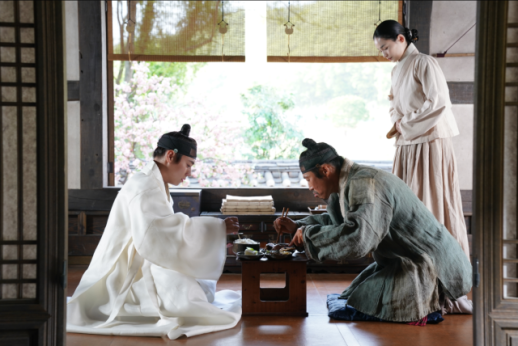 Court rejects bid to block wider distribution of box office hit 'The King's Warden' SEOUL, July 24 (AJP) - A Seoul court has rejected a bid to block further distribution of The King's Warden, clearing a legal obstacle to the historical drama's release on streaming services, home video and other platforms. The Seoul Western District Court dismissed an injunction sought by the family of a screenwriter who alleged that the film had copied the script of the 2000s television drama Eom Heung-do. The application was filed against co-producers Onda Works and BA Entertainment, as well as distributor Showbox. Thursday's decision allows the companies to offer the film through over-the-top streaming platforms and DVDs, arrange screenings aboard aircraft and ships, and pursue further overseas distribution. Directed by Jang Hang-jun, The King's Warden has drawn about 16.88 million admissions since opening in February, making it the second-most-watched film in South Korean box office history. It trails only the 2014 historical epic Roaring Currents, which recorded about 17.61 million admissions. The court's 21st Civil Division, led by Presiding Judge Shin Myung-hee, found that the two works were not sufficiently similar despite drawing on the same historical figures and events. According to the ruling, the television screenplay is built around Confucian loyalty, depicting Eom Heung-do as unwaveringly devoted to the deposed King Danjong. The film instead focuses on how Danjong, Eom and the villagers change through their encounters, giving the two works different themes, narrative structures and characterizations. The court said similarities arising from their shared historical setting were insufficient to establish copying because the relationship between Danjong and Eom, the overall plots and the central themes differed. It also found no evidence that Jang, who revised the film's screenplay, had access to the plaintiffs' work. The allegations surfaced after the film's theatrical release, with the screenwriter's family claiming that the film had copied elements of the earlier drama. 2026-07-24 17:19:10
 -
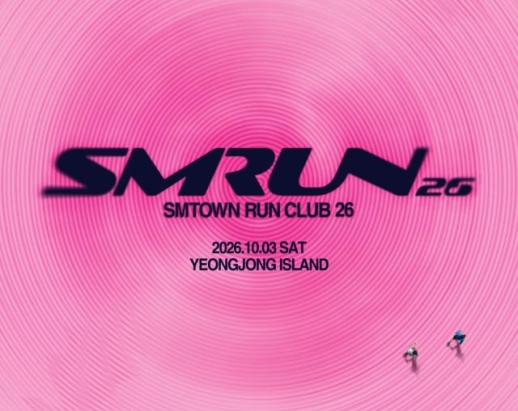 SM Entertainment to host running event for K-pop fans this fall SEOUL, July 24 (AJP) - A running event bringing together K-pop singers and their fans will be held this autumn, talent mill SM Entertainment said on Friday. Dubbed "SMTOWN RUN CLUB 26," the event is scheduled to be held at Wangsan Marina in the western port city of Incheon on Oct. 3, featuring a 10-kilometer course followed by live performances by SM artists and singers. The event was inspired by the "SM London Run," a fan-coined name for an impromptu run last summer in which SHINee member Minho and fellow SM stars ran through central London while taking part in the annual SMTOWN LIVE tour in the city. Photos and videos from the outing went viral on social media, prompting the company to turn the idea into an official event. Those interested can sign up through sneaker resale platform KREAM from Aug. 6 to Aug. 13, with more information available on the event's official website and Instagram account. 2026-07-24 17:15:05
 -
 Jennie takes creative control of new single 'Less than a Lover' SEOUL, July 24 (AJP) - BLACKPINK's Jennie released a new single, Less than a Lover, on Friday after taking part in both the songwriting and visual production of the project. The track arrived at 1 p.m. (0400 GMT), according to OA Entertainment. Jennie contributed to its lyrics and composition, drawing on the atmosphere of summer while developing the song. Less than a Lover centers on the anticipation and lingering uncertainty of a relationship suspended somewhere between friendship and romance, the agency said. Jennie also participated in directing the song's music video, extending her involvement beyond the recording process. She is set to headline Lollapalooza Chicago, which runs from July 30 to Aug. 2 at Grant Park, before performing at Summer Sonic 2026 in Tokyo on Aug. 14 and Osaka on Aug. 16. 2026-07-24 17:05:45
 -
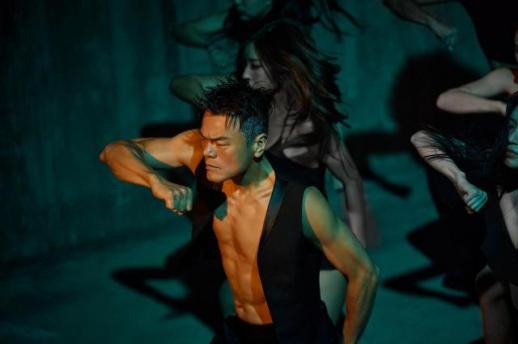 K-pop impresario Park Jin-young shows off biceps in photos for new single SEOUL, July 24 (AJP) - K-pop singer and producer Park Jin-young on Friday shared several behind-the-scenes photos to promote his new single released the previous day. "WET" marks his first summer-themed single since "When We Disco," his 2020 collaboration with Sunmi, a former member of K-pop girl group Wonder Girls. The reggae-inspired track was also chosen as the main theme song for this year's "Waterbomb," one of South Korea's biggest summer music festivals. The photos show Park showcasing his choreography with dancers under red lighting during the single's music video shoot. His namesake agency, JYP Entertainment, said Park reduced his body fat percentage to below 10 percent for his return, showing off his biceps and toned physique. He wrote, composed and produced the single, describing it as "reggaeton with a Latin American sound that perfectly matches the heat of summer," and said it is about dancing until "your whole body is soaked in sweat." Park, who performed the song on Mnet's "M Countdown" the previous day, is set to appear at the Waterbomb festival in Goyang, Gyeonggi Province on Sunday. 2026-07-24 16:51:53