

Journalist

Joonha Yoo유준하
joonhayoo94@ajupress.com
ReporterCOEX Sejong Center for the Performing Arts & Music, Culture, Entertainment, Automotive
Joonha Yoo is a bilingual journalist at AJU Press (AJP), covering music, culture, entertainment and Korea’s automotive industry.
Raised in Fort Collins, Colorado, he often writes from the scene, bringing firsthand detail to stories ranging
from BTS comeback concerts to unique cultural events that catch the world's eye. "I write from the scene, not from the sidelines."
Raised in Fort Collins, Colorado, he often writes from the scene, bringing firsthand detail to stories ranging
from BTS comeback concerts to unique cultural events that catch the world's eye. "I write from the scene, not from the sidelines."
Latest by Joonha Yoo
-
 Seoul Arts Center chief Chang reports over $1 million cello collection SEOUL, July 24 (AJP) -A prized cello, bow and Steinway piano worth nearly $1 million appeared among the assets disclosed by internationally acclaimed cellist Han-Na Chang after she joined South Korea's mandatory wealth disclosure system as president of the Seoul Arts Center. Han-Na Chang, president of the Seoul Arts Center and an internationally acclaimed cellist, reported assets totaling 7.82 billion won ($5.6 million), according to a public asset disclosure released Friday by the Government Public Ethics Committee. The disclosure showed that Chang owns an apartment in Seoul's Gangnam District valued at 1.28 billion won and a detached house in California worth 653.5 million won. She reported 2.78 billion won in deposits and 1.74 billion won in securities. Her declared assets also included musical instruments valued at about 1.5 billion won, including a cello and bow worth 1.37 billion won and a Steinway piano valued at 133.7 million won. Chang reported the largest asset holdings among the heads of organizations under the Ministry of Culture, Sports and Tourism included in the latest disclosure. Kim Kyung-bae, president of the Korea Craft & Design Foundation, reported assets of 2.24 billion won, followed by Jeon Woo-yong, chairman of the King Sejong Institute Foundation, with 1.94 billion won. Yoo Mi-jung, chief executive of the National Symphony Orchestra, reported assets of 1.46 billion won, while Kim Seung-soo, president of the Korea Publishing Industry Promotion Agency, reported 612.6 million won. Hwang Kyo-ik, president of the Korea Culture & Tourism Institute, reported assets of 56.7 million won despite owning an apartment valued at 830.2 million won, with debts totaling 1.33 billion won. 2026-07-24 15:46:49
 -
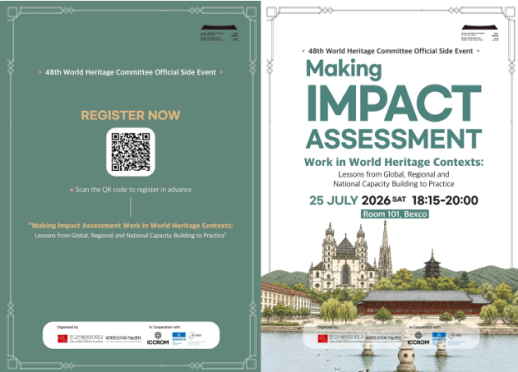 Korea spotlights heritage impact assessments versus developments SEOUL, July 24 (AJP) - Korea will bring together international heritage experts to discuss how Heritage Impact Assessments (HIA) can help safeguard UNESCO World Heritage sites from mounting pressure caused by development projects, tourism and climate change, the Korea National University of Heritage, which operates under the Korea Heritage Service, said Friday. The forum, titled Making Impact Assessment Work for World Heritage: From Capacity Building to Practice, will be held from 6:15 p.m. to 8 p.m. on July 25 in Room 101 at BEXCO in Busan as an official side event of the 48th session of the UNESCO World Heritage Committee. The event is organized by the Centre for World Heritage and Sustainable Development at the Korea National University of Heritage in cooperation with the International Centre for the Study of the Preservation and Restoration of Cultural Property (ICCROM) and UNESCO's World Heritage Institute of Training and Research for the Asia and the Pacific Region, Shanghai. According to the university, Heritage Impact Assessments are becoming increasingly important as governments seek to evaluate how development projects, infrastructure expansion, tourism and climate change could affect the Outstanding Universal Value of World Heritage properties before projects move forward. The forum will explore ways to integrate the assessments into heritage conservation, site management and development planning. The program will open with presentations on international, regional and national efforts to strengthen impact assessment capacity. Speakers include Eugene Jo of the ICCROM-IUCN World Heritage Leadership Program, Li Hong of UNESCO WHITR-AP Shanghai, and Seolin Kim of the Korea National University of Heritage. The presentations will be followed by a roundtable discussion on the legal, institutional and practical challenges of implementing Heritage Impact Assessments. The discussion will examine Korea's legal and institutional framework before experts from Norway, Ireland and Japan share their national experiences in implementing the system. The Korea National University of Heritage said the forum aims to contribute to international discussions on Heritage Impact Assessments while strengthening Korea's capacity to conserve and manage World Heritage sites in line with international standards. The university also plans to expand cooperation with UNESCO WHITR-AP Shanghai on education and professional training in Heritage Impact Assessments. 2026-07-24 11:30:40
 -
 Korea brings galleries, auction houses under mandatory art-market registration SEOUL, July 24 (AJP) - South Korea will require galleries, auction houses and other art businesses to register with local authorities beginning July 26, marking the country's first comprehensive effort to bring the commercial art market under a unified regulatory system, the Ministry of Culture, Sports and Tourism said Friday. The new system applies to six business categories: galleries, art auctions, art advisory services, art rental and sales, appraisal services, and exhibition operators. Businesses must register separately from their standard business registration. The registration requirement was newly established under Article 18 of the Fine Arts Promotion Act, which was enacted in 2023 and takes effect this year after a three-year preparation period. The requirement extends beyond major auction houses and established galleries. Online platforms that repeatedly broker art sales, individuals who continuously engage in art sales as a business — including artists selling their own work — foreign galleries operating in Korea, and regularly held art fairs may also be required to register, according to ministry guidance. One-off private sales and temporary exhibitions are generally exempt. The ministry said the system is intended to improve transparency in an industry where transaction records, auction disclosures and appraisal standards have not previously been subject to uniform rules. It also expects the registration framework to provide a clearer picture of Korea's commercial art market, supporting future policy development. Registered galleries, auction houses, advisers and art dealers will be required to keep records of the artworks they handle, including the type of artwork, transaction date, title, artist, sale price and seller. They must also provide information needed to administer artists' resale royalty payments. Auction houses must disclose winning bids and whether buyers have completed payment. They are also prohibited from participating in their own auctions or engaging in practices that undermine fair bidding. If an auction house offers a work owned or managed by the operator or a relative, that relationship must be disclosed to bidders before the auction. Separate rules apply to appraisal businesses. Appraisers must remain independent from clients and other market participants and issue appraisal reports using a government-designated format. They are prohibited from issuing false appraisal reports, conducting sole appraisals of works owned or circulated by themselves or close relatives where conflicts of interest may arise, and accepting compensation beyond appraisal fees and related expenses. They are also barred from offering money or other benefits in exchange for appraisal work. Businesses that fail to register or violate their obligations may face administrative fines or suspension of operations. However, the ministry will operate a one-year grace period through July 25, 2027, postponing penalties while local governments and related agencies help businesses adapt to the new requirements. Once the registration system is fully in place, the ministry said it plans to use the data collected to develop policies and support programs tailored to different sectors of the art market. "The art service business registration system will help build consumer confidence in the art market and support its continued growth," Jeong Hyang-mi, head of the ministry's Culture and Arts Policy Office, said. 2026-07-24 11:28:17
 -
 China-based K-pop boy group CIIU to release album next month SEOUL, July 24 (AJP) - China-based K-pop boy group CIIU will release their first extended play (EP) next month since making their debut last year, their agency JYP Entertainment said on Friday. CIIU debuted in August 2025 under JYP Entertainment's "Globalization by Localization" strategy, which develops artists tailored to individual overseas markets. The strategy first produced Boy Story in China before expanding to Japan-based girl group NiziU and U.S.-based girl group VCHA. Following their debut, CIIU's first single entered the top 10 of QQ Music's daily popularity and trending charts. With the EP, "Closer To 'You'" slated for release on Aug. 4, its title track "Closer" centers on themes of youth and emotional growth, portraying the journey of growing closer to someone. The release is built around the group's signature "C-Tro Pop" style, which blends Chinese retro influences with contemporary pop. The promotional rollout began earlier this month with the release of a teaser poster and concept film. On July 14, CIIU pre-released the B-side track "Step By Step" along with its accompanying music video. The song combines the sound of a traditional Chinese wind instrument with hip-hop elements. Another B-side, "Next To You," is scheduled for release on Aug. 19. Beyond music, the boys have expanded their presence in China through collaborations with local brands and promotional events. They were recently selected as an advertising model for Chinese electric bicycle brand Xinri and are partnering with theme park operator Fantawild for promotional events. They are also scheduled to perform at the 2026 TMELive International Music Awards on Aug. 22 before meeting fans in Shanghai on Aug. 29 to mark the first anniversary of their debut. 2026-07-24 11:14:55
 -
 K-pop quartet aespa release new album in Japan SEOUL, July 24 (AJP) - K-pop girl group aespa released their first Japanese mini album on Friday as they seek to expand their presence in Japan. "KISS N TELL" features six songs including the title track of the same name, a dance-pop song with upbeat piano melodies, rhythmic beats and layered harmonies, with lyrics exploring deepening friendships through shared personal concerns and emotions, according to their agency SM Entertainment. Released alongside the album, the music video for the title track is set in an amusement park and showcases the quartet's choreography against bright, summery visuals. The album also includes "ATTITUDE," a theme song for the Japanese television anime "Kill Blue"; "In Halo," featured in the drama "First Bite"; and three new songs, "Orbit Pop," "Fangirl" and "Done with Rules." The latest release comes about two years after aespa debuted in Japan with their single "Hot Mess" in 2024. Meanwhile, aespa will perform at this year's Lollapalooza Chicago in Grant Park, a music festival in Illinois, in August. 2026-07-24 11:04:48
 -
 Hyundai flags Europe drag as sales target comes under pressure SEOUL, July 23 (AJP) -Shares of Hyundai Motor have nearly halved from their June peak entering the second half, and the automaker on Thursday signaled its annual sales target could come under pressure as weak European demand offsets resilient profitability. South Korea's largest automaker reported an operating profit of 2.851 trillion won ($1.94 billion) for the April-June period, down 20.8 percent from a year earlier, even as revenue rose 1.9 percent to a record 49.215 trillion won. Operating margin narrowed to 5.8 percent from 7.5 percent a year earlier. The results came in slightly below analysts' consensus forecasts of about 2.90 trillion won in operating profit and a 6.0 percent operating margin. During the earnings conference call, Hyundai said annual wholesale sales could fall short of its original target amid persistent market uncertainty, while maintaining its full-year operating margin guidance of 6.3 percent to 7.3 percent on expectations of a richer product mix and growing hybrid demand. "Based on current forecasts and various indicators, we may fall short" of the annual wholesale sales target, Chief Financial Officer Lee Seung-joo told analysts, while stopping short of a formal downgrade. Lee noted Hyundai has missed its annual sales target in each of the past three years while still meeting its revenue and profitability goals. Updated sales assumptions will be presented at the company's Investor Day in late August after gaining greater visibility into second-half market conditions. Europe has emerged as Hyundai's biggest challenge for the remainder of the year. Wholesale shipments in the region fell 10.9 percent from a year earlier to 144,000 vehicles as aging core models, including the Tucson and Kona, lost momentum while Chinese electric vehicle makers intensified price competition. Lee said Europe has grown into a larger industry market than the United States, making the slowdown particularly significant for Hyundai. The company expects the launch of the Ioniq 3, positioned as a competitively priced compact EV, and a redesigned Tucson later this year to strengthen its lineup. Hyundai aims to sell more than 20,000 Ioniq 3 vehicles in the second half, although the redesigned Tucson will not reach Europe until the fourth quarter. "Hitting our original European target this year will be difficult," Lee said, adding that a more meaningful recovery is likely next year after both new models have been on sale for a full year. The Ioniq 3 is intended to expand Hyundai's presence in Europe's mass-market EV segment rather than maximize near-term profitability as the company seeks to counter rapidly expanding Chinese rivals. Much of the second-quarter volume decline stemmed from a fire at an engine-valve supplier that disrupted production at Hyundai's largest domestic plant, halting Genesis and Palisade output for several weeks. Replacement parts were qualified by May, allowing production to normalize. A separate fire at a Hyundai Mobis supplier also temporarily disrupted production at Hyundai's Indian plant. Global wholesale shipments consequently fell 6.9 percent from a year earlier to 992,000 vehicles. Despite softer vehicle demand, Hyundai expects profitability to remain resilient thanks to a stronger sales mix. Hybrid vehicles accounted for a record 18.9 percent of global wholesale shipments during the quarter. In the United States, hybrids represented a record 26.2 percent of sales, helping lift Hyundai's market share to 6.3 percent, up 0.2 percentage point from a year earlier and marking its fifth consecutive quarter above the 6 percent threshold. The company attributed the decline in operating profit primarily to weaker sales volume, which reduced earnings by 542 billion won, and a less favorable product and incentive mix, which cut another 570 billion won. Lee said the weaker mix reflected roughly 200 billion won in lost Genesis and Palisade production following the supplier fire, along with about 400 billion won in higher incentives following the repeal of U.S. EV tax credits, intensifying Chinese EV competition in Europe and inventory clearance ahead of new model launches. Those headwinds were partly offset by roughly 400 billion won from a richer hybrid mix. Favorable exchange rates added 238 billion won, while the financial services division contributed 106 billion won. Higher raw material costs, driven by Middle East geopolitical tensions and inflation, increased expenses by roughly 400 billion won during the quarter. About half of the increase was offset through cost-cutting measures, with further relief expected in the second half as raw material prices stabilize. Executives also said U.S. tariff-related costs should become more manageable in the second half because of a more favorable comparison base, although they cautioned that policy uncertainty remains. Tariff-related costs totaled about 900 billion won in both the first and second quarters, compared with 1.8 trillion won in the third quarter of last year and 1.5 trillion won in the fourth. Shares of Hyundai Motor closed 3.35 percent higher at 432,000 won on Thursday despite the weaker earnings, though the stock remains about 45 percent below its June 1 peak of 783,000 won. 2026-07-23 17:22:38
 -
 Hyundai Motor's Q2 operating profit falls 21% despite record sales SEOUL, July 23 (AJP) — Hyundai Motor, South Korea's largest automaker, suffered 20-percent dip in second-quarter operating profit even as quarterly revenue hit a record high, as weaker sales volume, higher costs, and an unfavorable product mix outweighed favorable currency effects. Operating profit for the April-June period came in at 2.851 trillion won, down 20.8 percent from a year earlier and slightly below market consensus, though up 13.4 percent from the first quarter. The operating margin narrowed to 5.8 percent from 7.5 percent a year earlier but improved from 5.5 percent in the first quarter. The year-on-year decline was driven mainly by weaker sales volume, which cut operating profit by 542 billion won, and the combined effect of product mix and incentives, which reduced it by a further 570 billion won. Favorable currency effects partially offset the pressure, adding 238 billion won, while the financial services division contributed an additional 106 billion won. The U.S. dollar rose around 3 percent against a year-ago period to average around 1,500 won in the second quarter. Revenue totaled 49.215 trillion won, a record for a single quarter, up 1.9 percent from a year earlier and 7.1 percent from the previous quarter. Currency effects added 2.571 trillion won to revenue, while lower sales volume and an unfavorable mix subtracted 2.246 trillion won and 1.101 trillion won, respectively. Net income fell 11.1 percent from a year earlier to 2.888 trillion won, though it rose 11.7 percent from the first quarter. Profit before tax declined 16.9 percent on-year to 3.646 trillion won. Global wholesale shipments fell 6.9 percent from a year earlier to 992,000 vehicles, while retail sales dropped 4.2 percent to 999,000 units, as steep declines in China weighed on an otherwise mixed regional performance. In the United States, Hyundai's largest market, wholesale shipments rose 0.9 percent to 265,000 vehicles even as industry-wide demand was nearly flat. Its market share increased 0.2 percentage point from a year earlier, remaining above 6 percent for a fifth consecutive quarter. European wholesale volume fell 10.9 percent to 144,000 vehicles amid intensifying competition, geopolitical risks and major model launches scheduled for the second half, including the Tucson and Ioniq 3. Domestic wholesale sales dropped 16.4 percent to 158,000 vehicles amid a parts-supply disruption. Sales in China tumbled 36.9 percent to 19,000 vehicles, while wholesale volume in India rose 5.4 percent to 139,000 vehicles. Hybrid vehicles accounted for a record 18.9 percent of Hyundai's global wholesale volume during the quarter, with the hybrid share of U.S. sales reaching an all-time high of 26.2 percent. 2026-07-23 14:57:40
 -
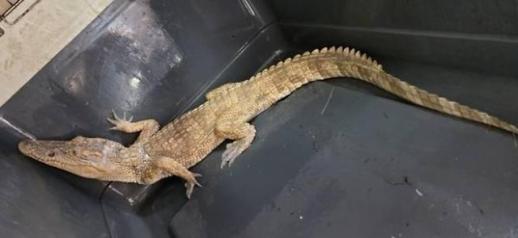 Crocodile discovery renews scrutiny of Korea's exotic pet trade SEOUL, July 23 (AJP) - A crocodile pulled from a stream in Yeoju has been identified as a critically endangered Siamese crocodile, adding to a series of crocodile discoveries in South Korea over the past two years and renewing scrutiny of the country's exotic pet trade. Firefighters captured the 50-centimeter reptile from Soyang Stream on July 18 after a passerby reported what appeared to be a pet crocodile swimming in the water. Rescue crews netted the animal within about 30 minutes without injuries. Yeoju City later asked the National Institute of Biological Resources to identify the species using photographs and video taken after the capture. The institute concluded that the reptile was a Siamese crocodile (Crocodylus siamensis), a freshwater species native to Southeast Asia that is listed in Appendix I of the Convention on International Trade in Endangered Species of Wild Fauna and Flora (CITES), the treaty's highest level of protection. Once found across Thailand, Cambodia, Laos and Vietnam, Siamese crocodiles are now among the world's rarest crocodilian species after decades of habitat loss, hunting and hybridization. International commercial trade in wild-caught animals of the species is prohibited under CITES. The crocodile is being housed at a temporary animal shelter operated on behalf of Yeoju City while officials search for its owner during the legally required 10-day public notice period. If no owner comes forward, the animal is expected to be transferred to the National Institute of Ecology in Seocheon, South Chungcheong Province, for long-term care. The discovery follows several unusual crocodile incidents in South Korea in recent years. In February 2024, two dead juvenile crocodiles measuring about 30 centimeters each were found beside a trash pile near a shopping complex in Incheon. The National Institute of Biological Resources said they were believed to be either Siamese crocodiles or saltwater crocodiles, both species protected under CITES. Six months later, a 60-centimeter crocodile carcass, believed to be either a New Guinea crocodile or a saltwater crocodile, was discovered on a roadside in Sacheon, South Gyeongsang Province. Another reported sighting in Yeongju, North Gyeongsang Province, in June 2023 prompted an extensive search after witnesses reported seeing what appeared to be a crocodile in a stream. Authorities found no animal or physical evidence confirming the sighting. Police are investigating how the Yeoju crocodile ended up in the stream, including whether it escaped from private captivity or was deliberately abandoned. Under South Korean law, possession, trade or release of internationally protected wildlife without proper authorization may result in criminal penalties. Experts say South Korea's climate makes it unlikely that crocodiles released into the wild could survive long enough to establish a breeding population. Even so, the repeated discoveries have raised concerns about the illegal trade and abandonment of exotic reptiles, as authorities continue investigating how protected species are entering the country. 2026-07-23 13:45:11
 -
 Foreign arrivals to Korea near 2 million in June SEOUL, July 23 (AJP) - Nearly nine in 10 foreign visitors to South Korea in June traveled for tourism, driving monthly arrivals to nearly 2 million while business, official and study-related travel remained comparatively subdued, the Korea Tourism Organization said Thursday. Korea received 1,993,128 foreign visitors during the month, up 23.1 percent from 1,619,220 a year earlier. The total reached 135 percent of its June 2019 level, before the COVID-19 pandemic disrupted international travel. Tourism accounted for 1,731,508 arrivals, or 86.9 percent of the total, after rising 26.3 percent from a year earlier. By comparison, business arrivals increased 3 percent to 12,797, official visits slipped 0.2 percent to 6,257, and arrivals for study and training fell 12 percent to 25,582. China remained South Korea's largest source market with nearly 650,000 visitors, followed by Japan with 348,000, Taiwan with 223,000, the United States with 178,000 and Hong Kong with 66,000. Together, the five markets accounted for nearly three-quarters of all foreign arrivals in June. Arrivals from China and Japan recovered to 136.8 percent and 123.3 percent, respectively, of their June 2019 levels. Women accounted for about 60 percent of all foreign arrivals. Female visitor numbers rose 27.5 percent from a year earlier to 1,202,181, outpacing a 17 percent increase among men to 654,363. A further 136,584 arrivals were recorded as airline or ship crew members. Korea welcomed 10.71 million foreign visitors in the first half of the year, up 21.3 percent from a year earlier. Chinese visitors totaled 3.21 million, accounting for about 30 percent of all arrivals during the period. Meanwhile, Koreans made 2,004,723 overseas trips in June, down 10 percent from a year earlier and equivalent to 80.3 percent of the June 2019 level. First-half outbound travel reached 14.96 million, recovering to 99.7 percent of its pre-pandemic level. 2026-07-23 11:24:54
 -
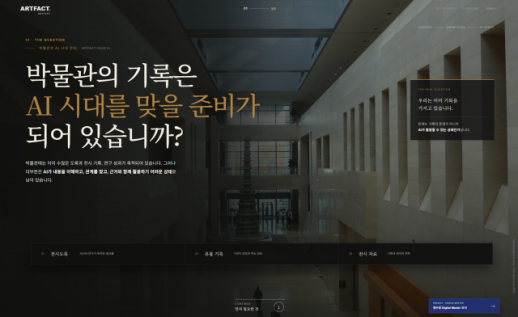 Korean firm launches AI-ready museum archive platform SEOUL, July 23 (AJP) -Korean technology firm Indik said Thursday it has launched a platform that converts museum exhibition catalogs into curator-verified digital archives. The launch comes as museums prepare AI and digital transformation projects for 2027, with budget planning set to begin in September. Based in Jeonju, Indik has developed museum exhibitions, catalogs and cultural heritage content using public data. The platform, called ARTFACT, extracts artifact records, images and exhibition narratives from museum catalogs, linking every record back to its original source page. Indik calls the resulting database a "Digital Master" reviewed, corrected and approved by museum staff before it becomes part of an institution's verified knowledge base. Museums often produce extensive research and exhibition documentation, but much of it becomes scattered across PDF files and image folders once a show closes, Indik says. Curators then have to locate and reorganize the same material for the next exhibition or education program. Collection management databases, though widely used, do not always preserve the curatorial interpretation and narrative connections that catalogs contain — a gap ARTFACT is designed to fill by linking structured collection records to that broader context. "Adopting new AI tools alone will not complete museums' digital transformation," Indik CEO Kwak Hyun-hae said. "Institutions first need reference materials that allow AI to verify sources and context." The process begins with a single representative exhibition catalog. ARTFACT generates a preliminary Digital Master, and staff compare each record against the original pages and images before revising and approving the data. Indik has begun offering consultations for museums, galleries and cultural institutions considering AI or digital transformation projects for 2027, including those that have yet to determine project scope or budgets. The sessions assess the condition of existing materials, the feasibility of building a Digital Master, integration with current collection databases and review procedures ahead of September budget planning. Indik plans to expand the platform with a "Planning Engine" to help curators draft exhibition proposals, educational materials and production guidelines from approved Digital Masters. Its longer-term goal is a "Discovery Platform" that maps relationships among artifacts, historical figures, regions and past exhibitions to support future research and exhibition planning. 2026-07-23 10:11:29