

Journalist
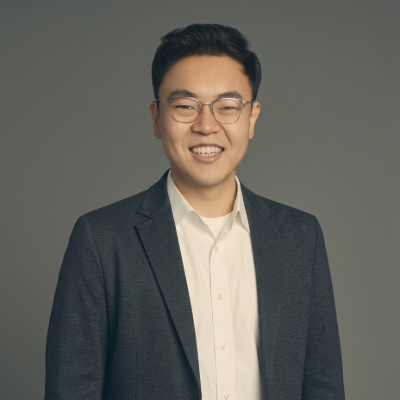
Joonha Yoo유준하
joonhayoo94@ajupress.com
ReporterCOEX Sejong Center for the Performing Arts & Music, Culture, Entertainment, Automotive
Joonha Yoo is a bilingual journalist at AJU Press (AJP), covering music, culture, entertainment and Korea’s automotive industry.
Raised in Fort Collins, Colorado, he often writes from the scene, bringing firsthand detail to stories ranging
from BTS comeback concerts to unique cultural events that catch the world's eye. "I write from the scene, not from the sidelines."
Raised in Fort Collins, Colorado, he often writes from the scene, bringing firsthand detail to stories ranging
from BTS comeback concerts to unique cultural events that catch the world's eye. "I write from the scene, not from the sidelines."
Latest by Joonha Yoo
-
 K-pop's second act: Why groups no longer really disappear SEOUL, July 22 (AJP) - When NewJeans released a surprise anniversary film at midnight on July 22, it did more than celebrate four years since the group's debut. The video reunited Minji, Hanni, Haerin and Hyein in official group content for the first time in one year and four months after a prolonged contract dispute that had brought the group's activities to a halt. A court sided with their agency, ADOR, in both an injunction and the main lawsuit over the validity of their exclusive contracts. Haerin, Hyein and Hanni subsequently returned to the label, while ADOR terminated Danielle's contract in December. Minji also appeared in the film, although her contractual status had not been formally clarified at the time of its release. No comeback has been announced. ADOR has said it will reveal NewJeans' future plans once discussions are complete. Yet the appearance of four members alone was enough to reignite speculation that one of K-pop's most influential groups of the past four years could be edging toward a return. NewJeans has neither disbanded nor reunited. That ambiguity is precisely what makes the group's situation significant. Increasingly, a K-pop group can stop functioning without disappearing. A breakup, agency split or years-long hiatus no longer necessarily marks the end. Members may pursue separate careers. The legal rights may remain with a former agency. The original lineup may never perform together again. Yet the group's name, catalog, visual identity and emotional bond with fans often continue to exist—and to retain considerable commercial value. In modern K-pop, a group is becoming less a temporary collection of performers than a long-lived intellectual property. More than one way back The industry has already produced several models of what a "comeback" can mean. Sechs Kies offers the classic reunion story. After formally disbanding in 2000, the first-generation boy band unexpectedly reunited in 2016, signing with YG Entertainment, holding concerts and releasing new music 16 years after its final activities. Kara followed a different path. Rather than reuniting after an official breakup, it resumed activities in 2022 following a seven-year hiatus with the anniversary album Move Again. Its title track, When I Move, made Kara the first girl group to win on Korean music programs across the 2000s, 2010s and 2020s. Then came 2NE1. A decade after its previous solo concert, the four members reunited in October 2024 for a 15th-anniversary world tour. YG Entertainment expanded the tour to 27 performances in 12 cities, with expected attendance of about 220,000. More than 400,000 users reportedly attempted to purchase tickets for the opening Seoul concerts alone. All three are commonly described as reunions, but each represents a different business model. Sechs Kies returned after formal disbandment. Kara resumed activities after an extended hiatus. 2NE1 reassembled years after its agency had effectively ended the group's career. Other groups demonstrate that survival sometimes requires abandoning the very identity that made them famous. Unable to continue using the Beast trademark after leaving Cube Entertainment, the remaining members relaunched as Highlight in 2017. Although they later regained the legal rights to the Beast name, they continued promoting under Highlight, having already built a successful second identity. VIVIZ illustrates yet another model. Rather than reviving GFriend, former members Eunha, SinB and Umji created a separate trio after GFriend's activities ended in 2021. What links these examples is not disbandment itself but something more fundamental. K-pop groups have become modular. Their lineup, catalog, trademark, music and fan community can now survive independently and be recombined in different ways. Nostalgia has become an asset For entertainment companies, the value of returning groups is easier to see in ticket demand than in abstract discussions about fandom. Launching a successful rookie group requires years of recruitment, training, production and marketing—with no guarantee of success. Returning groups already possess something almost impossible to manufacture: recognition. They also own an existing catalog and a fan base whose emotional attachment has survived years of inactivity. The phenomenon extends well beyond K-pop. Oasis sold roughly one million tickets after announcing its reunion despite a 15-year split. ABBA went even further. Its London residency ABBA Voyage, featuring digital avatars rather than the members themselves, generated £103.7 million ($139 million) in ticket revenue in 2023 while attracting nearly 1.1 million visitors. Different technology. Different audiences. The same commercial principle. People are not simply paying to hear familiar songs. They are paying to revisit a period of their own lives. In that sense, nostalgia is no longer merely an emotion. It has become a monetizable asset. The fight over identity Turning nostalgia into a comeback, however, is often more difficult than reuniting the members. A group also needs access to its name, catalog, trademarks, recordings and performance rights—assets that frequently remain under the control of current or former agencies. Shinhwa spent 12 years fighting legal battles over the right to use its own name before reaching a court-mediated settlement in 2015. Highlight chose the opposite strategy, building a new identity instead of waiting to recover Beast. NewJeans now finds itself confronting the same divide between performers and intellectual property. According to legal experts cited during the dispute, ADOR owns the NewJeans trademark. The members briefly attempted to promote independently as NJZ before a court prohibited activities outside the agency. Changing the name solved nothing. The legal conflict was never about the letters. It was about ownership of the identity those letters represented. That explains why entertainment companies fight so fiercely over trademarks. A group's name is no longer simply a label. It is a business asset built through years of accumulated recognition, fan loyalty and commercial value. The people who created that value and the company that legally owns it are not always the same. What fans are really waiting for For fans, however, reunions are rarely experienced as legal disputes. Lim Jung-bin, a 40-year-old office worker in Seoul, has followed 2NE1 since its debut in 2009. "When I heard they were getting back together, I almost cried," she said. "The group was part of the brightest years of my twenties." She never stopped listening to 2NE1's music during the hiatus and followed each member's solo career. Attending the reunion concert in Seoul last October, she said, "felt like a dream." "It was a precious moment when everyone sang together and shared the same memories. I want to experience it again." Her comments illustrate why inactive groups continue to generate economic value. Fans rarely experience the inactive years as empty time. They keep listening. They follow individual members. They preserve the emotional context that first connected them to the music. Watching the NewJeans dispute, Lim said the exact lineup mattered less than preserving the group's distinctive identity. "Whether four members come back or five, NewJeans has its own atmosphere," she said. "I miss that retro, lo-fi sound." Not every fan would agree. Some believe a reunion without every original member is incomplete. But her response highlights the central paradox of modern K-pop. Fans often remain attached to the identity of a group even after the people, contracts and companies behind it have changed. That is what makes returning groups simultaneously so valuable—and so difficult to recreate. A K-pop group is no longer defined only by the people standing on stage. It is also a trademark, a catalog, a visual language and a community of memories that can outlive the contracts that first brought those people together. The performers may leave. The music may stop. Ownership may change. But the group itself rarely disappears. Its next chapter is written in the space between what fans still remember and what the law allows someone else to revive. 2026-07-22 18:04:05
-
 AMCHAM launches program connecting South Korean firms with US lawmakers SEOUL, July 22 (AJP) - A new program launched by the American Chamber of Commerce in Korea (AMCHAM) will give South Korean businesses direct access to senior U.S. policymakers, the U.S. business lobby in Seoul said on Wednesday. According to AMCHAM, the program, called "K-Doorknock," made its debut with its annual visit to Washington, D.C., from July 13 to 16. A delegation from about a dozen companies led by AMCHAM chairman James Kim held more than 30 meetings with White House officials, executive branch agencies, and members of Congress including four senators as well as representatives from business associations and policy organizations. Their discussions focused on South Korea's investment in the U.S., advanced technologies, economic security, and industrial competitiveness. K-Doorknock is intended to help South Korean companies raise investment priorities, expansion plans and operational concerns directly with U.S. government officials as they increase their presence in the market. The program expands AMCHAM's traditional advocacy work, which has largely focused on strengthening business ties between Seoul and Washington. It said it now plans to support investment in both directions by assisting U.S. companies operating in South Korea and South Korean companies investing in the U.S. Kim said the program's positive response showed that South Korean businesses are increasingly seeking direct communication channels with U.S. policymakers. "This shows how important South Korean companies consider direct dialogue with U.S. policymakers to be as they expand their operations in the market," Kim said. He also said the delegation found broad bipartisan support in Washington for the U.S.-Korea alliance, along with growing recognition of South Korea's contributions to key sectors such as artificial intelligence (AI), semiconductors, shipbuilding, and advanced manufacturing. Rather than announcing additional commitments, participants stressed the need to carry out investment and cooperation plans that have already been agreed upon, Kim said. They also discussed market access, non-tariff barriers, and the need for a predictable and fair business environment. Kim said sustained dialogue between governments and industry would be necessary to turn investment, innovation, supply chain resilience, and economic security cooperation into measurable results. AMCHAM said it will continue its efforts to connect companies with policymakers in both countries. 2026-07-22 17:12:26
-
 Hyundai Motor Q2 earnings seen down 17%, data due Thurs SEOUL, July 22 (AJP) - Hyundai Motor is expected to post a double-digit decline in second-quarter operating profit, as weaker vehicle sales combine with continued U.S. tariff costs and rising material and warranty expenses to squeeze margins despite favorable currency effects and a richer hybrid mix. According to consensus estimates compiled by FnGuide, the automaker’s operating profit is forecast at 2.99 trillion won ($2.03 billion), down about 17 percent from 3.60 trillion won a year earlier. Revenue is expected to edge up 0.7 percent to 48.6 trillion won. The company is set to report its results 2 p.m. Thursday. Hyundai Motor shares finished 4.76 percent higher at 418,000 won. The outlook weakened as the quarter progressed. Hyundai Motor’s second-quarter operating profit consensus fell 5.8 percent over the month through July 13, according to Kyobo Securities. The downgrade reflects a combination of lower production and rising costs. A supplier fire disrupted output in South Korea, while higher raw material prices, increased warranty expenses and lower factory utilization added pressure. The won’s weakening toward the end of the quarter cut both ways. It raised the won value of overseas sales but also increased foreign-currency-denominated warranty liabilities, adding to costs. Hana Securities is among the more cautious, projecting operating profit of 2.90 trillion won on revenue of 48.3 trillion won. Hanwha Investment & Securities expects operating profit of 3.04 trillion won and revenue of 48.5 trillion won. U.S. tariffs remain a major drag on profitability. Under a 15 percent tariff assumption, Hanwha estimates Hyundai Motor’s tariff-related expenses at about 998 billion won for the quarter, equivalent to roughly one-third of the company’s projected operating profit. The burden remains substantial even though the brokerage expects it to ease from its estimate of 1.82 trillion won a year earlier. Unlike the first quarter, when costs were the dominant drag on earnings, weaker volume is expected to play a larger role in the second quarter. Hyundai Motor’s global wholesale sales are estimated at about 990,000 to 1 million vehicles, down 6 to 7 percent from a year earlier, compared with a 2.5 percent decline in the first quarter. Production disruptions in South Korea and India, an aging domestic model lineup and intensifying competition overseas weighed on deliveries. Regional performance was mixed. U.S. wholesale sales rose 2 percent to 265,208 vehicles, supported by demand for models including the Palisade. European sales fell 9.8 percent to 145,549 vehicles, while domestic sales dropped 15.9 percent to 158,515. Production began returning to normal in June after the supplier disruption affected output in April and May. A more favorable product mix and exchange rate helped prevent a steeper decline. Hana Securities estimates Hyundai Motor’s average selling price rose about 4 percent from a year earlier, as the share of hybrid vehicles increased by 3.2 percentage points and the average won-dollar exchange rate climbed 7 percent. Those gains partly offset higher sales incentives and weaker overall volume. Brokerages expect earnings momentum to improve in the second half as production normalizes and new or updated models, including the Avante, Tucson, Santa Fe and Ioniq 3, support sales and product mix. Higher raw material costs and sales incentives, however, are expected to remain a burden on margins. 2026-07-22 16:40:21
-
 Stray Kids to open five-show Seoul run ahead of Aug. 7 EP SEOUL, July 22 (AJP) - K-pop boy group Stray Kids will launch their latest world tour with five sold-out shows in Seoul before releasing its eight-track EP “THIS & THAT” on Aug. 7, JYP Entertainment said Wednesday. The “Stray Kids World Tour ” will open at KSPO Dome in Seoul’s Songpa District on July 25, 26 and 29 and Aug. 1 and 2. The EP will be released at 1 p.m. alongside its title track, “This & That.” Stray Kids’ in-house production trio 3RACHA, Bang Chan, Changbin and Han, is credited on all eight tracks. The three members co-wrote and co-composed “FARMING,” with Bang Chan also contributing to the arrangement. A preview released through the group’s recurring “UNVEIL : TRACK” series on July 17 surpassed 1 million views on YouTube in about two days. The album also includes the pre-release tracks “RUN IT” and “After You,” along with “I Do,” “Way Out,” “The Day” and a festival version of “This & That.” The tour follows the group’s “dominATE” tour, which comprised 56 shows across 35 stops worldwide. Stray Kids will also perform at Tokyo’s National Stadium later in August, becoming the first overseas male act to hold a standalone concert at the venue. The group will return to Latin America in September to headline Brazil’s Rock in Rio and three editions of STRAYCITY, a new festival centered on Stray Kids. In 2025, Stray Kids became the first act to debut at No. 1 on the Billboard 200 with each of its first eight chart entries. 2026-07-22 14:27:32
-
 Seoul's last shantytown takes first step towards redevelopment SEOUL, July 22 (AJP) - The planned transformation of Guryong Village, widely known as Seoul’s last remaining shantytown, moved a step closer after the city conditionally approved plans to build 2,120 public housing units in two core sections of the settlement. The Seoul Metropolitan Government said Wednesday that its Public Housing Integrated Review Committee, conditionally approved construction plans for the M and B2 blocks within Guryong Village in Gangnam District. The review marks a key administrative step toward the city’s target of beginning construction in 2027 and completing the housing complexes by 2031. Seoul plans to seek approval for the housing construction plans in the second half of 2026. Guryong Village is a settlement of unauthorized makeshift homes that has remained for decades in Gangnam, one of Seoul’s most affluent districts and home to some of the country’s most expensive real estate. The village was formed as people displaced by demolition and redevelopment projects moved into the area during the rapid development of southern Seoul in the 1970s and 1980s. Its proximity to high-priced apartment districts has made it one of the most visible reminders of the displacement that accompanied Gangnam’s expansion. Under the conditionally approved plans, public housing complexes of up to 28 stories will be built in the M and B2 blocks. The larger B2 block will contain 1,820 homes on a 52,718 square-meter site. The complex will include 643 integrated public rental units and 1,177 long-term lease homes under Seoul’s Mirinae House program. The M block will add 300 homes on a 12,901 square-meter site, comprising 115 integrated public rental units, 165 Mirinae House units and 20 units for public sale. Buildings in the block will rise to a maximum of 15 stories. The city plans to provide units ranging from 31 to 59 square meters, or about 330 to 635 square feet. The plans may be revised during the remaining approval process. Seoul said the complexes will be arranged to preserve as much of the surrounding natural environment near Mount Daemo and Mount Guryong as possible. Pedestrian routes will connect the residential buildings with neighborhood parks, community facilities and surrounding green spaces. The project will also incorporate high-insulation and airtight exterior systems, renewable energy facilities and other low-carbon design features. “This review has put the supply of more than 2,000 public housing units in Guryong Village on track,” said Myeong No-jun, head of Seoul’s Housing Office. “The project will significantly improve housing conditions in Guryong Village while contributing to housing stability by supplying quality homes in Gangnam, where demand remains high.” 2026-07-22 13:44:52
-
 Korean stocks lead Asia as chip rally sends KOSPI above 7,000 SEOUL, July 22 (AJP) - Korean stocks led Asian markets by a wide margin Wednesday morning, driven by heavy foreign buying in semiconductor shares after a sharp overnight rally in U.S. chipmakers revived expectations for continued artificial intelligence infrastructure investment. The benchmark KOSPI was trading 5.6 percent higher at 7,125.8 as of 10:30 a.m., outperforming Japan's Nikkei 225, which gained 1.9 percent to 67,512.1. China's Shanghai Composite and Hong Kong's Hang Seng Index each fell 0.6 percent to 3,839.7 and 24,978.9, respectively. The KOSPI opened at 7,052.09, up 4.51 percent from the previous session, and climbed as high as 7,166.00 before trimming part of its gains. Its intraday low stood at 7,052.09. A buy-side sidecar was triggered at 9:06 a.m. after KOSPI 200 futures surged more than 5 percent, temporarily suspending program buy orders. The benchmark reclaimed the 7,000 level as soon as trading began. Foreign investors led the advance, purchasing 1.78 trillion won ($1.2 billion) worth of KOSPI-listed shares. Retail investors sold 1.37 trillion won, while institutions were also the biggest sellers, offloading 430.7 billion won in the latest disclosed tally. Semiconductor heavyweights accounted for much of the index's gain. SK hynix jumped 8.5 percent to 1,992,000 won, while Samsung Electronics rose 5.8 percent to 274,000 won. The two companies together account for more than half of the KOSPI's total market capitalization. Their gains followed a semiconductor-led rebound on Wall Street. Micron Technology surged 12.2 percent, Intel gained about 8 percent and Nvidia advanced 2 percent. SK hynix's U.S. depositary receipts soared 13.74 percent to $171.93, while the Philadelphia Semiconductor Index climbed 5.21 percent. Buying returned to chipmakers as investors reassessed concerns over slowing AI infrastructure investment and focused instead on continued growth in demand for AI servers, memory chips and data centers. SK hynix received an additional boost amid separate reports that SK Group Chairman Chey Tae-won, Samsung Electronics Chairman Lee Jae-yong and Naver founder Lee Hae-jin were arranging a private meeting with Nvidia Chief Executive Jensen Huang near Silicon Valley this week, with OpenAI's Sam Altman and Anthropic's Dario Amodei also reportedly possible attendees. The proposed talks are expected to cover high-bandwidth memory, graphics processing units, AI data centers and generative AI services, although the participants and schedule have not been finalized. Samsung Electronics also benefited after S&P Global Ratings raised its outlook on the company to positive from stable, citing stronger memory-chip earnings and expectations that Samsung will be a major beneficiary of an extended memory supercycle. The credit rating agency projected that shortages in memory supply could persist for at least two years as capital expenditure by the world's four largest hyperscalers increasingly shifts toward AI data-center construction. Other KOSPI heavyweights advanced alongside the semiconductor rally. Samsung Electro-Mechanics gained 9.5 percent to 1,435,000 won, Hyundai Motor rose 6.8 percent to 426,000 won and LG Electronics climbed 10.1 percent to 190,700 won. Doosan Enerbility added 6.3 percent to 71,000 won, while SK Eternix surged 19.3 percent to 66,700 won. Electronic products and wireless communications services were the strongest sectors, each rising about 9 percent, followed by machinery stocks with an 8.4 percent gain. SK Telecom climbed 11.3 percent, while LG Uplus advanced 1.7 percent. The tech-heavy KOSDAQ was trading 2.9 percent higher at 774.8. The index moved between an intraday low of 767.77 and a high of 789.23, giving up part of an earlier gain of more than 4 percent. Retail investors bought 176.3 billion won worth of KOSDAQ shares, while foreign and institutional investors sold 95 billion won and 80.2 billion won, respectively. Robot and physical AI stocks led the secondary market after Samsung Electronics announced the establishment of its Robotics eXperience, or RX, business office directly under its chief executive. The unit will oversee the company's medium- and long-term robotics strategy, core technology development and commercialization as Samsung seeks to expand robotics into a major growth business. Rainbow Robotics, which Samsung Electronics incorporated as a subsidiary in late 2024, surged 23.5 percent to 508,000 won. The stock climbed as high as 529,000 won earlier in the session. Buying spread across the robotics sector, which gained 9.8 percent as a group. TXR Robotics and Cosmo Robotics both hit their daily limit with 30 percent gains, while robotics-related shares including Doosan Robotics, Robotis, Robostar and Neuromeka also posted double-digit advances. Physical AI stocks rose 9.5 percent, led by KNS, which surged 29.9 percent. Among heavily traded KOSDAQ shares, Lightron gained 15.4 percent to 2,770 won and NRobotics rose 28.6 percent to 2,367 won. On the downside, HLB fell 7.7 percent to 28,050 won. Pintel dropped 28.2 percent, while Zinitix, Nano, Plasmapp and Sonokong declined between 11.9 percent and 17.9 percent. The Korean won strengthened 0.2 percent to trade at around 1,480 won against the U.S. dollar. Oil prices continued to rise as geopolitical tensions threatened supply routes in the Middle East and other major exporting regions. West Texas Intermediate crude gained 1.5 percent to $85.60 per barrel, while Brent crude rose 1.6 percent to $92.50, remaining near a six-week high. Concerns intensified over potential disruptions in the Red Sea and the Strait of Hormuz, as well as attacks targeting the Caspian Pipeline Consortium's Black Sea terminal, a key export route for crude oil from Kazakhstan. 2026-07-22 11:07:50
-
 Netflix's 'The East Palace' debuts at No. 2 on global non-English TV chart SEOUL, July 22 (AJP) - Netflix's Korean fantasy mystery series The East Palace debuted at No. 2 on the streamer's global Top 10 list for non-English television after drawing 4.9 million views in its first three days, marking a strong international start for Nam Joo-hyuk's first series since completing military service. Released on July 17, the eight-episode series also topped Netflix's daily rankings in South Korea and entered the Top 10 in 27 markets, including Hong Kong, Thailand, the Philippines and India. Netflix calculates views by dividing a title's total watch time by its runtime. Directed by Choi Jung-kyu and written by Kwon So-ra and Seo Jae-won, The East Palace follows Gucheon, a supernatural warrior who can cross between the human and spirit worlds, and Saenggang, a palace court lady harboring a secret, as they investigate a curse haunting the royal palace at the king's request. Decider praised Roh Yoon-seo's performance for balancing vulnerability with resolve, while Collider called the series one of Netflix's most striking fantasy productions of 2026, citing its rendering of the spirit world. Produced by Showrunners and Imaginus, The East Palace is streaming exclusively on Netflix. 2026-07-22 10:14:38
-
 AI-theme stocks turbocharge KOSPI above 7,100 mark SEOUL, July 22 (AJP) - AI-theme turbocharged South Korean chip and robotics stocks on Wednesday, sending both the main and secondary market indices well above 5 percent as big-tech earnings reaffirmed AI demand and investment. A buy-side sidecar was triggered on the KOSPI at 9:06:02 a.m., halting program buying for five minutes after the KOSPI 200 futures index surged 5.40 percent. As of 9:06 a.m., the KOSPI was up more than 6.1 percent at 7,155.5, while the tech-heavy KOSDAQ had climbed 4.2 percent to 784.8. The KOSPI reclaimed the 7,000 mark for the first time in a week. SK hynix jumped 8 percent to 1,986,000 won, while Samsung Electronics gained 5.4 percent to 273,000 won. Foreign investors returned in full force, buying a net 1.2 trillion won ($866 million) worth of shares, triggering retail profit-taking with net sales of 708.6 billion won. The rally was broad-based, with gainers outnumbering decliners 740 to 139 on the KOSPI. The AI supply chain advanced almost across the board. Electronics and equipment stocks surged an average 10.5 percent, while electronics shares gained 8.2 percent on mounting expectations that the AI boom will extend into robotics. The rally followed another strong overnight advance in U.S. semiconductor shares. The Philadelphia Semiconductor Index jumped 5.21 percent, extending gains for a second straight session as investors bought back beaten-down chip stocks on expectations of sustained AI investment and robust South Korean semiconductor exports. Micron Technology soared 12.17 percent, while SanDisk gained 14.27 percent, Western Digital 12.51 percent and Seagate Technology 11.14 percent. SK hynix's American depositary receipts also jumped 13.75 percent to close at $171.94. Nvidia added 1.97 percent after reports that mass production of its next-generation Vera Rubin AI server platform had begun, fueling expectations for another round of AI infrastructure investment. Investor sentiment was also buoyed by UBS's view that the recent correction in AI chip stocks reflected hedge-fund position unwinding rather than deteriorating fundamentals. The recovery in risk appetite extended beyond semiconductors. The MSCI Korea ETF rose 6.16 percent overnight, while the MSCI Emerging Markets ETF gained 2.80 percent. 2026-07-22 09:44:05
-
 ARKO festivals bring Korea's living traditions to new audiences SEOUL, July 21 (AJP) — "Ulsoo!" The spirited exclamation that punctuates BTS's hit song "Idol" comes from Pansori, Korea's traditional musical storytelling in which audiences cheer performers over the hypnotic yet exhilarating beat of the janggu drum. That same call-and-response energy also defines Madanggeuk, Korea's open-air folk theater where music, dance, satire and audience participation blur the line between performers and spectators. Now, those centuries-old traditions are finding new audiences through ARKO SUM FESTA, as artists reinterpret Korean heritage while organizers work to ensure it remains accessible — even dispatching vans to bring elderly villagers to performances. Arts Council Korea (ARKO) on Tuesday unveiled the second lineup of ARKO SUM FESTA, featuring eight performing arts festivals to be held across the country from August through September. The events complete a 15-festival nationwide program uniting independently organized dance, music, theater and traditional arts festivals under one banner. Traditional arts occupy the center of this year's lineup, with organizers focusing on three challenges: preserving disappearing performance traditions, encouraging younger artists to reinterpret them and expanding access to audiences often left behind. In Busan, the Dongnae Folk Arts Festival, organized by an association established in 1965, will devote its second day to students studying traditional performing arts, highlighting efforts to cultivate the next generation of performers. Association chairman Kim Ik-hyeon warned that enrollment in traditional arts training programs has continued to decline. "Our responsibility is to interpret these traditions and find ways for them to connect with today's generation," Kim said. Scheduled for Sept. 19-20, the festival preserves five local traditions, including the state-designated Dongnae Yaryu mask dance drama, Dongnae Hakchum crane dance and Jisin Balbgi, a traditional ground-blessing ritual. This year's program will also feature a Japanese creative taiko ensemble and performances led by younger practitioners. Younger artists will also take center stage at the 16th Chum & Pan Gomusin Dance Festival, where 24 emerging choreographers — twice last year's number — will collaborate on a joint production. Kim Yeon-hwa of the Korean Dance Association said the festival's traditional dance performances consistently attract more overseas ticket buyers, both online and at the venue, than any of the organization's other events, reflecting growing international interest in Korean dance. Running in Seoul from Aug. 27 to Sept. 5, the festival will present inherited repertoire alongside newly created works and contemporary reinterpretations of traditional Korean dance. Accessibility remains another defining theme. In Cheongju, the Rural Madanggeuk Grand Festival will continue a tradition it began more than two decades ago by operating shuttle vans that transport elderly residents from surrounding villages to live performances. Organizer Kim Chang-gon said the idea emerged after his theater company relocated to a rural village of about 20 households and discovered many older residents rarely attended performances because of transportation difficulties and costs. The company initially operated four vans, providing transportation, meals, performances and return trips. While audiences have since expanded to include families, the transportation service for senior residents remains a core part of the festival. The lineup also stretches beyond traditional performance. British tenor Ian Bostridge will perform Mahler with the Sejong Soloists at the Hic et Nunc! Music Festival on Aug. 26, while the Seoul International Computer Music Festival will merge electronic sound, digital media and traditional Korean instruments under the theme "Time Synthesis." The Chuncheon Performing Arts Festival will feature Liquid Sound, a Korean performance group officially invited to the 2026 Avignon Festival, alongside dance, theater, music and children's productions staged throughout the city. The eight festivals will take place in Seoul, Chuncheon, Busan, Cheongju and Gwangmyeong through Sept. 20, presenting Korea's performing arts not as museum pieces but as living traditions evolving for new generations at home and abroad. 2026-07-21 20:50:37
-
 Korea ups casino taxes while Japan expands casino resort SEOUL, July 21 (AJP) - South Korea is moving to raise the maximum levy on casino operators by 50 percent, a step that could further erode the industry's competitiveness just as Japan expands its gaming sector with its first integrated resort. The government plans to lift the statutory ceiling on the Tourism Promotion and Development Fund levy from 10 percent to 15 percent of casino revenue. The current system applies a progressive levy of 1 percent on annual revenue of up to 1 billion won, 5 percent on revenue between 1 billion won and 10 billion won, and 10 percent on revenue above 10 billion won. The levy is imposed on individual casino properties rather than on operators, meaning a company running several casinos is assessed separately for each location. The government plans to amend the Tourism Promotion Act to raise the legal ceiling, then set the revenue threshold for the new 15 percent rate through an enforcement decree. The threshold has not yet been decided. The Ministry of Culture, Sports and Tourism is also pursuing a five-year casino license renewal system and a prior approval requirement for transfers of casino business rights. The ministry said the renewal system would periodically verify whether operators continue to meet their original licensing conditions. The transfer approval system would tighten scrutiny of ownership changes and how casino acquisitions are financed. The ministry argues that the current levy brackets no longer reflect the scale of the industry. When the levy was introduced in 1994, six of the country's 13 casino properties generated more than 10 billion won in annual revenue. Most casinos now exceed that level. Total revenue at foreigner-only casinos has increased more than tenfold since then, while average revenue per property has risen more than sevenfold. According to the Korea Casino Tourism Association, annual industry payments into the tourism fund increased from 1.2 billion won in 1994 to 303.9 billion won in 2025. The higher levy, however, could add to the cost burden on Korean operators as they prepare for stronger regional competition. Construction is progressing on Japan's first integrated resort on Yumeshima island in Osaka. The project, led by MGM Resorts and Orix, began construction in April 2025 and is scheduled to open in the fall of 2030. Initial investment is estimated at about 1.27 trillion yen. Osaka authorities project the resort will attract about 20 million visitors annually, including 6 million from overseas. In an October 2025 commentary, Seo Won-seok, president of the Korea Tourism Society, estimated that Korean customers could account for at least 33 percent of the Osaka resort's gaming demand. He projected that 1.6 trillion won in Korean casino spending could shift to Japan during the resort's first year of operation, rising to 2.3 trillion won after the business stabilizes. The figures are projections, not confirmed spending data. Korean casino operators argue that a higher levy could reduce funds available for hotel, entertainment and other non-gaming investment, as well as overseas customer recruitment. The Korea Casino Tourism Association has also noted that operators already pay individual consumption, education and corporate taxes, while the tourism fund levy is assessed on revenue regardless of whether a casino turns a profit. Analyst estimates vary depending on how the new bracket is structured. Eugene Investment & Securities estimated that a broad five-percentage-point increase would cost Paradise an additional 47 billion won a year and Grand Korea Leisure an additional 23 billion won. It estimated an additional burden of 30 billion won for Lotte Tourism Development if Jeju introduced a comparable system. Under that assumption, projected operating profit at the three companies could decline by about 20 percent to 30 percent. Hana Securities separately estimated operating profit reductions of 22 percent for Paradise and 28 percent for GKL. The government has said the actual impact will depend on the revenue threshold and progressive brackets established in the enforcement decree. Jeju, whose casinos are governed separately under the Jeju Special Act, is not directly covered by the proposed amendment. The island's eight foreigner-only casinos posted preliminary revenue of 646.5 billion won in 2025, up 40.8 percent from 458.9 billion won a year earlier and the highest annual figure on record. Securities firms have nevertheless included Lotte Tourism Development, which operates the Dream Tower casino in Jeju, in their impact estimates on expectations that the provincial government may eventually follow the central government's move. Company reports published by Eugene Investment & Securities in May showed differing first-quarter customer trends among the major operators. GKL's drop volume rose 12.6 percent year-on-year to 931 billion won, supported by a 31.2 percent increase in Chinese VIP drop volume and a 12.7 percent rise in other VIP segments. The company dispatched staff to Japan, Taiwan, Mongolia and Thailand to recruit VIP customers, although the expanded marketing activity also raised costs. Paradise reported total drop volume of about 1.8 trillion won, up 3.6 percent from a year earlier. Chinese VIP drop volume fell 17.6 percent, while other VIP volume rose 14.8 percent and mass-market betting increased 16.8 percent. First-quarter revenue increased 3.8 percent to 294 billion won, but operating profit fell 34.9 percent to 37.3 billion won as labor, advertising and hotel operating expenses rose. Lotte Tourism Development's Dream Tower casino recorded about 150,000 visitors in the first quarter, up 37.3 percent year-on-year, while drop volume increased 35 percent to 650.5 billion won. Casino revenue rose 40.3 percent to 118.6 billion won. The company reported total first-quarter operating profit of 28.8 billion won, up 121 percent from a year earlier. Gangwon Land, Korea's only casino licensed to admit Korean nationals, is separately pursuing a 2.5 trillion won expansion program through 2032. The plan includes a second casino building, hotel expansion and additional non-gaming facilities. The second casino is scheduled to open in early 2028, while renovation work is underway on 757 of the resort's 1,827 hotel and condominium rooms. Kangwon Land has cited the Osaka project as a factor behind its efforts to expand and diversify the resort. The ministry says the proposed changes are intended to restore progressivity to a levy system that has barely changed in three decades and to direct additional revenue into tourism infrastructure and workforce development. A parliamentary forum on the proposed regulatory changes is scheduled for July 23. Rep. Cho Gye-won of the ruling Democratic Party is expected to introduce related amendments afterward. Specific levy brackets will be determined only after the Tourism Promotion Act is revised and the government completes consultations with the industry and tax and fiscal experts. 2026-07-21 18:00:03