

Journalist

Candice Kim김혜준
candicekim1121@ajupress.com
ReporterSamsung Electronics, SK hynix, LG Electronics, Olive Young, Musinsa & Semiconductor, K-Beauty
Candice Kim is a dedicated business and technology reporter specializing in the intersection of high-tech innovation and fast-paced consumer trends. Her core beats span the semiconductor, IT, cosmetics, and retail sectors, where she provides in-depth coverage of industry titans including Samsung Electronics, SK hynix, and LG Electronics, alongside leading consumer brands like Olive Young and Musinsa. Whether analyzing complex silicon supply chains or tracking the latest shifts in beauty and fashion retail, Candice is committed to delivering sharp, accurate reporting that keeps readers informed on the forces shaping today's most dynamic markets.
"Connecting the dots from silicon chips to consumer shifts."
Latest by Candice Kim
-
 Micron's blowout Q3 and contracts harbinger for extended memory heyday * Updated with additional information SEOUL, June 25 (AJP) - Micron Technology Inc. delivered a stunning 74 percent revenue jump for the quarter ended May and projected the AI-driven memory boom to extend well into 2027, setting the stage for another stretch of red-hot earnings for its larger South Korean peers in the memory market powering the AI age from datacenters to smart devices. The U.S. chipmaker posted fiscal third-quarter revenue of $41.46 billion, a 74 percent jump from $23.86 billion in the previous quarter. The blockbuster results sent Micron shares soaring 15.78 percent in extended trading on Thursday (KST), reaching $1,213.96. Looking ahead, Micron forecast fiscal fourth-quarter revenue of about $50.0 billion, with Chief Executive Officer Sanjay Mehrotra expecting tight supply-demand conditions for both DRAM and NAND to persist beyond calendar 2027. Beyond the upbeat outlook, Micron unveiled what may prove a more consequential shift for the memory industry. The company said it has signed 16 long-term Strategic Customer Agreements (SCAs), securing approximately $22 billion in customer financial commitments. "We expect these SCAs to significantly enhance the durability and predictability of Micron's strong financial performance," Mehrotra said during the earnings call. The move toward take-or-pay contracts gives Micron unprecedented visibility over future demand through 2030, marking a structural shift from the industry's traditionally cyclical, spot-driven business model. The agreements signal similar arrangements for SK hynix and Samsung Electronics to pursue similar long-term customer commitments as they finance increasingly expensive capacity expansions for high-bandwidth memory (HBM) and advanced DRAM. While Samsung and SK hynix dominate the broader global DRAM market with a combined 67 percent share compared to Micron's 22 percent in early 2026, the battle is intensifying in the lucrative HBM sector. SK hynix currently commands roughly 60 percent of the HBM market, recently propelling its market valuation to rival Samsung. However, Micron is aggressively leveraging its position as the sole U.S.-based major HBM producer, capturing around a 21 percent share and closing the gap. Unlike previous memory cycles, where producers relied heavily on volatile spot pricing and short-term contracts, the AI era is encouraging chipmakers and hyperscale customers to secure supply years in advance. Micron said its HBM capacity remains fully booked through 2026, with customer discussions already extending into 2027, reflecting sustained demand from AI datacenters and next-generation computing infrastructure. 2026-06-25 07:55:39
-
 SK hynix takes fight with Samsung to Wall Street via $33 billion ADR issue *Updated with additional information SEOUL, June 24 (AJP) -SK hynix is launching a roughly $33 billion public offering tied to a Nasdaq listing of American Depositary Receipts (ADRs), a move that could globalize its shareholder base and intensify its competition with home rival Samsung Electronics beyond memory chips and into the battle for global capital. In a regulatory filing after the Seoul market closed Wednesday, the company said its board approved a plan to list ADRs on the Nasdaq Global Select Market, with subscription and payment scheduled for July 10 and July 14, respectively. The offering is estimated at 45.45 trillion won ($32.8 billion), based on a maximum issuance of 17.79 million new common shares and Tuesday's closing price of 2.555 million won per share. The conversion ratio is set at one ADR for every 0.1 common share. The final offering price and aggregate deal size will be determined through a global bookbuilding process with institutional investors. SK hynix shares rose 4 percent in after-hours trading after closing Wednesday at 2.58 million won. Samsung Electronics also climbed 9.19 percent after ending the regular session 9.84 percent higher at 349,500 won. The chipmaker said all proceeds raised in the U.S. capital market will be allocated to facilities and infrastructure expansion. The move comes as the longtime No. 2 player in DRAM has overtaken Samsung Electronics in market value at home earlier this week, propelled by its dominance in high-bandwidth memory (HBM) chips that power nearly all AI accelerators produced by Nvidia and other major chip designers. The stock-friendly announcement follows Samsung Electronics' unveiling of a $65 billion buyback program on Wednesday to bolster shareholder returns and support employee compensation that helped to reclaim its No. 1 rank on the KOSPI the chipmaker surrendered for two earlier days to SK hynix. An ADR listing could fundamentally broaden SK hynix's investor base. Currently, many overseas investors gain exposure to the company through Korea-focused funds such as the iShares MSCI South Korea ETF, which face concentration limits on individual holdings. A Nasdaq presence would allow SK hynix to be purchased directly by a far broader universe of investors, including semiconductor exchange-traded funds, AI-focused portfolios and global growth funds that currently have limited access to Korean equities. Analysts have also raised the possibility of eventual inclusion in the Philadelphia Semiconductor Index, one of the world's most closely watched semiconductor benchmarks. If HBM established SK hynix's AI credentials, an ADR listing could globalize its shareholder base. The company would no longer compete merely as a Korean stock, but increasingly alongside global semiconductor leaders for international capital. Launched in 1993, the Philadelphia Semiconductor Index tracks the 30 largest U.S.-listed semiconductor companies. Once anchored by industrial giants such as Intel and Texas Instruments, the AI era has reshaped its composition. Today, heavyweight constituents include Nvidia, Advanced Micro Devices, Broadcom, Taiwan Semiconductor Manufacturing Co. and ASML. SK hynix said the fresh capital will finance construction of the first fabrication plant at the Yongin Semiconductor Cluster, as well as building, equipment and related expenses for the P&T7 advanced packaging fab in Cheongju. Part of the proceeds will also be used to procure extreme ultraviolet lithography equipment and related manufacturing infrastructure, key to next-generation semiconductor production. The joint bookrunners for the international offering are BofA Securities, Citigroup Global Markets, Goldman Sachs and J.P. Morgan Securities. Citibank will serve as the depositary bank, while the Korea Securities Depository will act as custodian for the underlying local shares. The move formalizes a series of regulatory clarification filings that have been tracked since late 2025 regarding the chipmaker's potential U.S. listing. Company officials said the disclosed dates and financial figures remain tentative and could change depending on the outcome of the upcoming global bookbuilding process. The new fundraising scheme arrives as HBM race intensifies on home turf. Samsung Electronics earlier this week announced it has shipped roughly $1 billion worth of sixth-generation HBM4 chips over the past four months since mass production began in February. SK hynix has also said it has shipped out HBM4 to its clients. SK hynix currently commands roughly 50 to 55 percent of the HBM market, while Samsung Electronics holds around 35 to 40 percent. 2026-06-24 18:51:06
-
 Samsung Elec retakes KOSPI crown on $65 billion buyback plan SEOUL, June 24 (AJP) - Samsung Electronics reclaimed the top spot on South Korea's benchmark KOSPI on Wednesday, ending a two-day reign by rival SK hynix, after unveiling a massive 90 trillion won ($65 billion) stock buyback program over the next three years to support a new employee compensation scheme tied to its AI-driven earnings boom. Samsung Electronics shares closed Wednesday 9.84 percent up at 340,500 won, far outperforming the advances of 3.26 percent in main index and 0.98 percent in SK hynix. Samsung Electronics recently reached an agreement with its labor union to distribute 10.5 percent of the semiconductor division's operating profit as special management performance bonuses, paid in company stock. Based on local brokerage forecasts for a cumulative 1,471 trillion won in operating profit over the next three years, the gross payout could reach roughly 155 trillion won. After a standard 40 percent tax withholding, employees would receive stock worth about 93 trillion won ($67 billion). Samsung currently holds 82.09 million treasury shares valued at around 25 trillion won based on recent closing prices, leaving a substantial shortfall to fund both the new bonus scheme and its Performance Share Unit, or PSU, program introduced last October. The PSU program, which promises between 200 and 300 shares to all 128,000 employees depending on performance targets by October 2028, is estimated to require another 22 trillion won. Since the program was introduced, Samsung's stock price has surged roughly 3.5 times, from around 80,000–90,000 won to more than 310,000 won, significantly inflating the eventual payout obligation. Analysts estimate Samsung will need to purchase an additional 290 million shares from the open market over the next three years, equivalent to nearly 5 percent of its total outstanding common shares. The buying spree would dwarf Samsung's historical shareholder-return efforts, tripling the 30.7 trillion won worth of treasury stock it repurchased over the past decade. "The 90 trillion won figure is accurate, and a large-scale additional buyback is indeed required under the current circumstances," a company official said. "However, the exact execution strategy and methods for the buyback have not yet been finalized." Market analysts expect the program to provide a significant boost to Samsung's share price. Under the compensation structure, one-third of the stock bonuses can be sold immediately, while the remaining two-thirds will be subject to lock-up periods of one to two years. Analysts say the combination of sustained corporate buying demand and a temporary reduction in freely tradable shares could create a powerful stabilizing effect for Samsung's stock despite the enormous scale of the employee payout. 2026-06-24 13:56:10
-
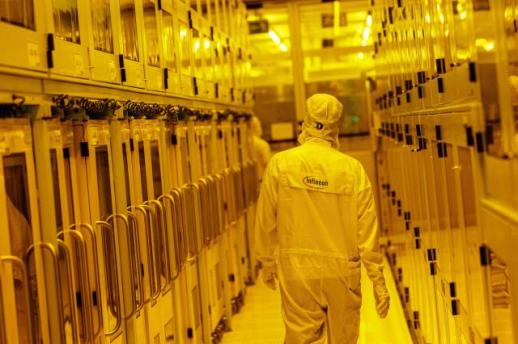 Cart before the horse: Seoul is moving SOX SEOUL, June 24 (AJP) - The cart has come before the horse. Tuesday's 12 percent crash in Korean chip bellwethers Samsung Electronics and SK hynix reverberated across the Pacific, dragging the Philadelphia Semiconductor Index (SOX) down more than 7 percent and pushing the Nasdaq more than 2 percent lower. It was a reversal of the traditional order in which Wall Street dictated sentiment in Seoul. This time, Seoul exported volatility to New York. The shift reflects how deeply South Korea has become embedded in the global artificial intelligence supply chain. With SK hynix preparing a U.S. ADR listing in the second half of the year, Korea's influence on global semiconductor benchmarks could become even more pronounced. The SOX, once a niche gauge for chip investors, has evolved into one of the world's most important economic barometers. Launched in 1993, the index tracks the 30 largest U.S.-listed semiconductor companies. While it was historically anchored by industrial giants such as Intel and Texas Instruments, the AI era has reshaped its composition. Today, Nvidia, Advanced Micro Devices, Broadcom, Taiwan Semiconductor Manufacturing Co. and ASML dominate the benchmark. Its structure also reveals how the semiconductor ecosystem has changed. The index captures nearly every layer of modern AI infrastructure — chip designers such as Nvidia and AMD, software providers like Synopsys and Cadence, equipment makers including ASML and Applied Materials, and foundational manufacturers such as TSMC. Every dollar spent building AI data centers eventually flows through this supply chain and is reflected in SOX performance. Analysts increasingly view the SOX as a leading indicator for the broader technology sector, often moving ahead of the Nasdaq itself. Its influence extends well beyond the United States. Samsung Electronics and SK hynix are absent from the index because they are not listed in the U.S., yet their fortunes are tightly intertwined with it. As dominant suppliers of High Bandwidth Memory, or HBM, essential for AI accelerators and hyperscale data centers, Korean memory makers have become indispensable players in the same ecosystem that SOX measures. That dependence also amplifies risk. Wall Street is growing uneasy that AI infrastructure spending may be running ahead of eventual profits. Higher interest rates, concerns over monetizing AI models and questions about hyperscalers' capital spending have all resurfaced. The Federal Reserve's renewed hawkishness has added another layer of pressure by increasing the cost of financing the enormous data-center buildout. Yet others argue the market is witnessing something larger than a typical boom-and-bust cycle. Ned Davis Research recently proposed that semiconductors should increasingly be discussed like commodities rather than technology products. Their argument is that computing power is becoming foundational infrastructure akin to railroads, electricity or the internet itself. Demand is no longer driven primarily by smartphones and PCs but by AI models, robotics, humanoids, autonomous vehicles, smart grids and defense systems. Still, warning signs are flashing. The SOX has recorded an extraordinary cluster of single-day gains exceeding 5 percent over the past two months — a level of volatility last seen during the aftermath of the dot-com bubble and the 2008 financial crisis. Historically, such swings have either occurred near major market peaks or deep inside bear markets. The difference today is that semiconductor stocks remain at record highs. That paradox leaves investors confronting an uncomfortable possibility: this may be both a bubble and a supercycle at the same time. The immediate danger may not be excessive optimism itself, but the concentration of risk. Global equity markets have become extraordinarily dependent on a handful of semiconductor names, while South Korea has become unusually dependent on a handful of AI beneficiaries. The lesson from Tuesday's selloff is therefore larger than a single bad trading day. For decades, investors watched SOX to understand where technology was heading. They may now have to watch Seoul first. The bigger insight is that semiconductors are no longer merely another sector of the economy. They are becoming the economy's operating system. When oil prices rise, nations worry about inflation. When chips stumble, nations now worry about growth itself. The question is no longer whether semiconductors are cyclical. It is whether they have become too systemically important to fail — and whether countries such as South Korea, sitting at the center of the AI supply chain, have unknowingly become global macro variables rather than local stock markets. 2026-06-24 08:58:32
-
 Samsung, SK hynix to unveil new facility investment in southern Korea SEOUL, June 23 (AJP) - South Korea's memory giants Samsung Electronics and SK hynix, both based in the capital region, are moving south to build new fabs as their semiconductor campuses in Gyeonggi Province have little room left for expansion to meet explosive demand in the AI era. The southward pivot by the Korean chipmakers coincides with the government's push to ease concentration around Seoul and cultivate the southern coast, rich in renewable energy resources, into a new hub for AI, semiconductors and data centers. The vision is expected to be unveiled at a conference hosted by President Lee Jae Myung on June 29, attended by senior cabinet ministers and business leaders including Samsung Electronics Vice Chairman Jun Young-hyun and SK hynix CEO Kwak Noh-jung. Samsung and SK Group are expected to hold separate briefings to outline their new investment plans. SK Group Chairman Chey Tae-won is expected to announce a detailed blueprint on June 30 for a semiconductor cluster in Gwangju that will include large-scale front-end fabrication facilities. Samsung Electronics is also preparing a mid- to long-term fab construction plan in the region. On July 2, Samsung Electronics Chairman Lee Jae-yong is expected to unveil plans for what would become the country's largest AI data center in Asan, South Chungcheong Province, with SK Group joining the project to build a comprehensive AI ecosystem. The massive capacity expansion comes amid a severe memory shortage driven by the artificial intelligence boom. Global memory market revenue is projected to surge 163.1 percent from a year earlier to $594.7 billion this year, prompting technology giants and hyperscalers to secure long-term supply contracts. The strategic shift to the southern regions comes as existing semiconductor hubs in the Gyeonggi Province—namely Yongin, Pyeongtaek, and Icheon—are rapidly approaching their maximum operational capacity. Expanding these capital-area facilities faces mounting challenges, including astronomical land acquisition costs, stringent regional regulations, and severe bottlenecks in securing additional power grids and industrial water supply. To circumvent these logistical hurdles and manage soaring overhead costs, the chipmakers are heavily decentralizing their operations. Cheonan, located just south of the capital area, is being strategically fortified as a specialized hub for advanced packaging. This process is increasingly critical for producing next-generation AI components, such as high-bandwidth memory (HBM) chips, which require complex vertical stacking of multiple DRAM layers. Meanwhile, Gwangju is being spotlighted as the ultimate greenfield destination. It offers a direct solution to the capital region's capacity crunch by providing relatively lower infrastructure costs and a vast availability of industrial land. Furthermore, its access to abundant renewable energy resources is essential for the tech giants' RE100 commitments, aligning perfectly with the government's broader strategy to build a southern semiconductor packaging belt. The initiative also reflects a growing convergence between semiconductor manufacturing and AI infrastructure, as both advanced fabs and data centers require vast amounts of electricity and stable energy supplies. Still, the ambitious regional strategy faces significant hurdles. Industry insiders have voiced concerns that government-led site selection could compromise operational efficiency in an increasingly fierce global chip race. Building a fab on a greenfield site also requires extensive supporting infrastructure, including power transmission networks, industrial water systems and a deep talent pool. Experts note that it took six years for the Yongin semiconductor cluster in Gyeonggi Province to prepare for its first fab, which is scheduled to begin operations next year, underscoring the lengthy and complex process of establishing a new semiconductor ecosystem. Despite the challenges, the projects would mark a significant shift in South Korea's industrial geography, expanding the country's semiconductor footprint beyond the capital region for the first time on a large scale in response to the demands of the AI era. 2026-06-23 14:57:47
-
 Samsung develops industry's fastest UFS 5.0 storage chip for on-device AI SEOUL, June 23 (AJP) - Samsung Electronics has engineered the industry's fastest UFS 5.0 memory chip designed to power next-generation on-device artificial intelligence applications, the company said on Tuesday. As generative AI rapidly shifts from the cloud to local devices, the new memory chip is designed to significantly reduce latency and accelerate response times when running large language models (LLMs) in on-device AI environments. Built on Samsung's ninth-generation V-NAND technology, the chip complies with the latest embedded memory interface standard from JEDEC. It delivers sequential read speeds of up to 10.8 gigabytes per second (GB/s) and write speeds of up to 9.5 GB/s—more than double the performance of the previous UFS 4.1 standard. To address the stringent power constraints of mobile devices, the UFS 5.0 incorporates clock gating and multi-voltage technologies, boosting power efficiency by over 40 percent to significantly extend battery life. It also features an ultra-compact package measuring 7.5 millimeters by 13 millimeters by 0.9 millimeters, which is 16.7 percent smaller than its predecessor. This form factor provides up to 1 terabyte of storage capacity while boosting design flexibility for smartphones, wearables, and extended reality (XR) headsets. Samsung plans to begin mass production of the UFS 5.0 in the fourth quarter of this year. "In the era of on-device AI, storage devices are evolving into a key driver defining AI experiences," said Jangseok Choi, head of Memory Product Planning at Samsung Electronics. "Samsung is setting a new standard for storage on the go and will continue to drive innovation for the next-generation mobile platform market." 2026-06-23 10:36:33
-
 Samsung Elec HBM4 chip sales surpass $1 bln in first four months SEOUL, June 23 (AJP) - Samsung Electronics, vying to leapfrog in the high-bandwidth memory (HBM) race, has shipped out $1 billion worth of the sixth-generation HBM4 over the last four months since mass production, according to sources close to the matter. The news come as the long-standing No.1 stock surrendered its place to SK hynix, the frontrunner in HBM essential to power AI accelerators of Nvidia and other major chip designers as well as hyperscale datacenters. SK hynix on Monday commanded KOSPI's largest market cap, edging out Samsung Electronics from the top title for the first time in more than a quarter of a century. The two chipmakers both shipped out HBM4 from February. Samsung began mass shipments of HBM4 on Feb. 12 as it bolstered the next-generation HBM customer base to AMD, Nvidia, Google, and Broadcom. It previously said its supply capacity for the sixth-generation chips are fully booked for the year and is making long-term arrangements with some. The rapid expansion into Application-Specific Integrated Circuit (ASIC) clients is seen as a key driver for this growth. "Samsung is expected to see a sharp increase in its HBM shipments next year, driven by a diversified customer base centered on ASIC companies such as Broadcom, Google, Amazon, Microsoft, and Meta," said Kim Dong-won, an analyst at KB Securities. Park Yu-ak, an analyst at Kiwoom Securities, echoed the positive outlook, noting that rising demand for customized ASIC chips will broaden Samsung's HBM profile. Park projected that Samsung’s HBM shipments in 2026 could surge by more than 200 percent year-on-year as global research firms forecast the HBM market to expand 58 percent to $54.6 billion next year. Revenue for HBM4 series is expected to exceed $1.2 billion by the end of June and will likely bump up second-quarter bottom and top line. Samsung Electronics will release guidance for second-quarter earnings in early July. According to latest FnGuide consensus, its second-quarter operating profit is estimated at 86.77 trillion won, sharpy higher than 57.2 trillion won in the first quarter and also higher than 62.46 trillion won estimated for SK hynix during the same period. Samsung Electronics shares plunged 9.9 percent to close at 318,500 won on Tuesday. 2026-06-23 09:49:56
-
 LG Electronics' micro LED signage wins Best of Show award at InfoComm 2026 SEOUL, June 22 (AJP) - LG Electronics' micro LED signage product, LG MAGNIT, has won a Best of Show award in the installation and digital signage categories at InfoComm 2026, a display industry trade show held in Las Vegas, the company said on Monday. The company presented a range of commercial display solutions at the three-day event, which ran from June 17 under the theme "Solutions Beyond Displays." LG MAGNIT was also named "Most Innovative Digital Signage Product" by Systems Contractor News, a North American audio-visual industry publication. LG Electronics said the product is designed for use in venues such as exhibition halls, large auditoriums, conference rooms, premium retail stores, broadcasting studios and control rooms, citing its image quality, screen scalability and ease of installation. LG Electronics said it also showcased customizable display solutions for meeting rooms, retail spaces and outdoor settings, along with a display lineup compliant with the U.S. Trade Agreements Act for government customers. The company added that it presented software solutions built on its LG Business Cloud platform, an integrated system for managing commercial displays. "We will continue to expand our influence in the commercial display market by combining our hardware capabilities with software and AI technology," said Min Dong-sun, head of LG Electronics' Information Display business unit. 2026-06-22 17:14:43
-
 LG's Koo making quiet strides on Nvidia AI front SEOUL, June 22 (AJP) - A full AI ecosystem from data centers to robotics is what a 30-member Team LG delegation is pitching at Nvidia headquarters in Santa Clara, California, led by Koo Kwang-mo, chairman of South Korea's fourth-largest conglomerate, who recently made headlines as the youngest of Korea's top chaebol chiefs to host an unusually casual samgyeopsal-and-soju dinner with Jensen Huang during the Nvidia chief's visit to Seoul earlier this month. The large-scale dispatch comes just two weeks after Koo and Huang, accompanied by his eldest daughter Madison Huang, Nvidia's senior director of product marketing for robotics, held a strategic summit in Seoul on June 8. Market observers say the rapid follow-up signals a swift transition from relationship-building to an actionable business roadmap, just days ahead of Koo's eighth anniversary at the helm on June 29. LG, which has quietly slipped out of the business spotlight while much of the AI frenzy centered on memory chips and Hyundai Motor's humanoid robots, has been staging a comeback both in the stock market and corporate circles. The task force includes senior executives driving LG's AI, mobility and component businesses, including LG CNS President Hyun Shin-gyun, LG Sciencepark President Jeong Soo-heon, LG Electronics Chief Technology Officer Kim Byoung-hoon and LG Innotek Chief Technology Officer Moon Hyuk-soo. The duration of the visit has not been disclosed, underscoring the strategic weight the conglomerate has placed on its Nvidia partnership. At the heart of the agenda is LG's "One LG" strategy, which seeks to combine the group's manufacturing capabilities with Nvidia's AI platforms. The working group will evaluate the commercial viability of integrating Nvidia's humanoid robot development platform, Project GR00T, into LG's hardware ecosystem. The proposed physical AI alliance would combine LG Electronics' robotics technologies, LG Innotek's precision components, LG Energy Solution's batteries and LG CNS's software capabilities. If Samsung's AI ambitions are centered on semiconductors and SK Group's on high-bandwidth memory, LG's competitive edge lies in what engineers often describe as the less glamorous but indispensable layers of AI infrastructure, where the devil is in the details. LG has been aggressively expanding its heating, ventilation and air-conditioning business, specifically targeting AI data centers with advanced thermal management solutions such as coolant distribution units and cold plates — critical components for high-performance server racks, chip clusters and next-generation AI facilities. The strategic pivot toward high-value B2B and AI infrastructure businesses is supported by strong financial momentum. According to FnGuide, LG's three electronics affiliates — LG Electronics, LG Display and LG Innotek — are projected to post a record combined annual revenue of 119.08 trillion won ($85.5 billion) this year, with operating profit exceeding 5 trillion won. In the first quarter, the three affiliates generated a combined operating profit of 1.82 trillion won, a 4.5-fold increase from three years ago. LG Electronics' Vehicle Solutions business and LG Innotek's FC-BGA semiconductor substrate operations posted record performances, providing both the financial muscle and technical leverage needed to deepen partnerships with global technology giants. An LG Group official said the delegation is a direct follow-up to Koo's recent meeting with Huang and is aimed at materializing specific areas of cooperation. "The delegation, which includes key figures such as the CEO of LG CNS and the CTOs of LG Electronics and LG Innotek, is focusing on solidifying partnerships in three representative areas: physical AI, AI data centers and mobility," the official said. Analysts say LG's extensive hardware supply chain and rapidly growing B2B profitability are helping reposition the traditional home appliance giant as an indispensable infrastructure partner in the Nvidia-led AI era. For Koo, whose leadership style has long been described as understated and methodical, the symbolic samgyeopsal dinner may prove more consequential than it appeared. What began over grilled pork belly and soju is quickly evolving into a blueprint to transform LG from a consumer electronics powerhouse into one of the foundational builders of the physical AI era. 2026-06-22 16:29:49
-
 SK hynix premium eclipses Samsung in AI stock hierarchy SEOUL, June 22 (AJP) - Investors are willing to pay more than twice as much for each won of SK hynix's assets than Samsung Electronics', a premium that pushed the pure-play chipmaker past the country's corporate titan on Monday. SK hynix's market capitalization reached 2,080.4 trillion won ($1.4 trillion) at Monday's record closing of 2,925,000 won, up 5.8 percent, edging past Samsung Electronics' 2,066.7 trillion won. It was the first time Samsung had relinquished the top spot since November 2000, ending one of the longest periods of uninterrupted corporate dominance in modern stock market history. The significance of the crossover cuts deeper upon closer look. SK hynix trades at 12.29 times book value, compared with Samsung's 4.92 times, a disparity suggesting investors are assigning an extraordinary premium to companies occupying critical positions in the artificial-intelligence supply chain. The market is no longer asking which company is bigger. It is asking which company occupies the most indispensable bottleneck in the AI supply chain. For decades, Samsung represented a proxy for South Korea's economy itself. Its sprawling empire — spanning semiconductors, smartphones, televisions, displays and home appliances — made it a diversified and resilient bet on global manufacturing. Today, investors are rewarding specialization over diversification. SK hynix has emerged as one of the world's purest bets on AI infrastructure through its dominance in high-bandwidth memory, or HBM, a critical component powering Nvidia's AI accelerators and hyperscale data centers. The company built an early lead by evolving its products alongside Nvidia's rapid AI chip upgrades. Samsung, a late entrant in HBM, has been narrowing the gap with its HBM4 products this year, but investors continue to reward SK hynix's first-mover advantage. That concentration has translated into exceptional profitability. SK hynix posted 37.6 trillion won in operating profit on 52.6 trillion won in revenue in the first quarter ended March, representing an operating margin of 72 percent. The divergence has been stark this year. SK hynix has surged more than 320 percent since January, far outpacing Samsung's roughly 195 percent gain. Overseas investors now hold 51.25 percent of SK hynix, compared with 47.56 percent of Samsung Electronics, signaling stronger international conviction in SK hynix's AI-led growth story. Yet the numbers also reveal a paradox. On a forward earnings basis, SK hynix trades at 9.54 times expected profits, only modestly above Samsung's eight times. That suggests investors are not abandoning Samsung altogether. Rather, they are paying a premium for certainty. SK hynix's earnings trajectory is increasingly tied to long-term investments by global hyperscalers, while Samsung's growth outlook remains spread across multiple businesses facing different competitive pressures. In effect, investors are no longer choosing between two semiconductor companies. They are choosing between two business models. Samsung is being treated as a diversified industrial conglomerate. SK hynix is being priced as an AI infrastructure provider. Another catalyst behind SK hynix's ascent is growing anticipation surrounding its planned U.S. American Depositary Receipt listing. The company submitted a Form F-1 registration statement to the U.S. Securities and Exchange Commission in March and is expected to pursue a Nasdaq debut as early as next month or during the second half. The move could fundamentally broaden SK hynix's investor base. Today, many overseas investors gain exposure to the company through Korea-focused funds such as the iShares MSCI South Korea ETF, which faces concentration limits on individual holdings. An ADR listing would allow SK hynix to be purchased directly by a much broader pool of investors, including semiconductor exchange-traded funds, AI-focused portfolios and global growth funds that currently have limited access to Korean equities. Analysts have also raised the possibility of eventual inclusion in the Philadelphia Semiconductor Index, one of the world's most closely watched chip benchmarks. If HBM established SK hynix's AI credentials, ADR could globalize its shareholder base. The company would no longer compete merely as a Korean stock but increasingly alongside Micron Technology and other semiconductor leaders for international capital. Samsung's standing however cannot be simply overlooked. When Samsung Electronics' preferred shares are included, its combined market capitalization still stands at 2,268 trillion won, roughly 9 percent larger than SK hynix. Still, the symbolism may prove particularly painful for Samsung. Last year, Samsung briefly surrendered its long-held title as the world's largest DRAM maker to SK hynix. Monday's market-cap crossover delivers a second blow, this time at home. 2026-06-22 13:59:27