

Journalist

Kim Hee-su김희수
khs@ajupress.com
ReporterMinistry of Foreign Affairs, Seoul City Hall & Defense, Foreign Affairs
Kim Hee-su is a bilingual reporter at AJU Press, covering defense and foreign affairs. Before joining AJP in 2025, she worked at The Korea Times, where she wrote interview stories, including a profile of North Korean defector Kim Gum-hyok, and produced digital content. She also previously worked as a researcher for KBS News 9’s International News Department, supporting correspondents in 10 countries around the world. She graduated from the University of Toronto in Canada with a double major in Book and Media Studies and East Asian Studies.
"I'm driven by storytelling."
Latest by Kim Hee-su
-
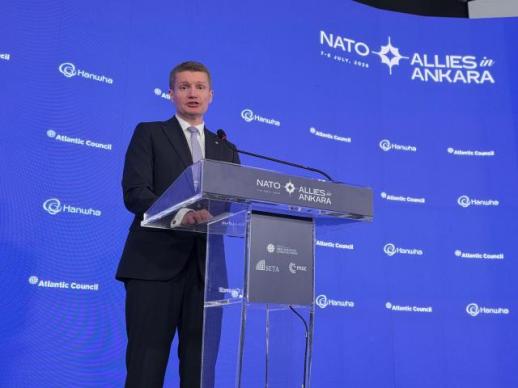 Hanwha Aerospace pledges stronger role in NATO defense supply chains SEOUL, July 08 (AJP) - Hanwha Aerospace has reaffirmed its commitment to expanding defense industrial cooperation in Europe as NATO allies seek to strengthen their defense production capacity and supply chain resilience, the company said Wednesday. The pledge was made during the NATO Defence Industry Forum in Ankara, held on the sidelines of the NATO Summit. Jacek Cyrek, president and CEO of Hanwha Aerospace Europe, said at a panel session that the company will continue to support Europe’s defense industrial base through long-term partnerships, local production and technology cooperation. “The security environment is evolving at an unprecedented speed,” Cyrek said. “New technologies, emerging threats and shifting geopolitical realities are reshaping the way we think about defense, deterrence and resilience.” He said Hanwha’s vision goes beyond supplying weapons platforms and systems, stressing the need to strengthen sovereign capabilities and industrial cooperation within NATO. Hanwha Aerospace said it is expanding its European industrial network through localization, investment and long-term partnerships. The company said the strategy is already being carried out through localized manufacturing and technology transfer in Poland and Romania, while partnerships are also being expanded across the Nordic region and Western Europe. The company said participants at the forum also highlighted the growing importance of cooperation between NATO allies and Indo-Pacific partners, known as IP4, as security challenges in Europe and the Indo-Pacific become increasingly connected. South Korea also called for a new phase of defense industrial cooperation with NATO. In his keynote address at the forum, President Lee Jae Myung proposed a “Korea-NATO Defence Industry Partnership 2.0,” focused on joint research, co-development, co-production and long-term industrial cooperation. Lee said combining NATO’s operational experience with South Korea’s technology and production capacity would help strengthen security in both Europe and the Indo-Pacific, according to the release. Separately, Hanwha Aerospace co-hosted a networking reception with the Munich Security Conference and the Atlantic Council on the sidelines of the NATO Summit. Hanwha Aerospace said it will continue to pursue its “Built with Europe, for Europe” strategy by expanding local partnerships and contributing to Europe’s long-term defense industrial resilience. 2026-07-08 12:35:43
-
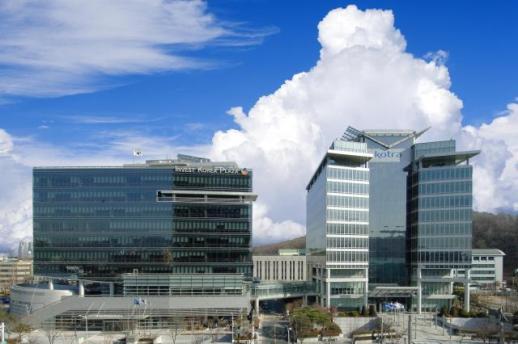 KOTRA sees UAE defense openings for Korean firms after Middle East war SEOUL, July 08 (AJP) - The Korea Trade-Investment Promotion Agency has published a new guide for Korean defense companies seeking to enter the United Arab Emirates market, as demand in the Middle East shifts from arms purchases to broader defense-industrial cooperation. The report, titled “From Arms Exports to Full-Cycle Cooperation: Strategy for Entering the UAE Defense Market,” is aimed at helping Korean firms expand in the UAE after the recent U.S.-Iran war. The UAE is the world’s 15th-largest defense spender, and its defense spending is expected to account for 5.5 percent of gross domestic product in 2026, according to KOTRA, citing Fitch Solutions. KOTRA said the war has highlighted the UAE’s need for additional troops and interceptor missiles, likely increasing defense demand further. The UAE’s defense procurement system is centered on three main players: the Ministry of Defense; Tawazun Council, which oversees procurement and offset programs; and EDGE Group, the state-owned defense conglomerate. EDGE, ranked 37th among global arms-producing and military services companies, has 35 subsidiaries in six areas, including drones, missiles and electronic warfare. Its 2025 revenue reached about $5 billion, according to the report. The group has also pursued joint ventures with foreign defense firms such as Anduril of the United States, Leonardo of Italy and Indra of Spain. The report said drones became a major threat during the war, driving demand for drone detection and counter-drone systems in the UAE. In air defense, KOTRA said the UAE’s multilayered defense system had been tested in combat, creating demand for additional interceptors, early delivery of the remaining seven Cheongung-II batteries and a possible package involving South Korea’s L-SAM long-range interceptor system. The report also said aerospace and naval cooperation could focus on the KF-21 project and partnerships in combat systems, sensors and propulsion equipment. KOTRA said defense cooperation between South Korea and the UAE has gained momentum, citing a memorandum of understanding signed by the two countries in February, the combat-proven performance of Cheongung-II interceptors and cooperation agreements between EDGE and Korean companies such as Korea Aerospace Industries and Hanwha Aerospace. “UAE defense demand is shifting from finished weapons sales to building a defense ecosystem with local firms,” said Kim Joon-kyu, head of KOTRA’s Middle East regional headquarters. “KOTRA will support Korean companies in responding to urgent demand and entering the region’s defense supply chain through local investment and technology cooperation.” 2026-07-08 10:32:53
-
 Canada picked Germany. Korea still made its point SEOUL, July 07 (AJP) - South Korea may have lost the multi-decade, multi-billion-dollar submarine contract in Canada, but it did not come away empty-handed. In Korea, there is a saying, jeot-jal-ssa — literally "lost, but fought well." It best captures Hanwha Ocean's narrow defeat to Germany's TKMS in what Canada itself described as a "difficult, close decision." To impress Canadian officials, South Korea dispatched the operational KSS-III submarine across the Pacific, met the Royal Canadian Navy's demanding requirements and earned praise from Canadian officials for offering a "comprehensive and thoughtful package" in what they called a highly competitive contest. The result leaves Hanwha Ocean with something almost as valuable as a contract: a globally validated reference as other navies prepare to replace or expand their submarine fleets. "It was a loss, but one that built a valuable foundation," said Moon Geun-sik, a submarine expert and professor at Hanyang University's Graduate School of Public Policy. "In submarine performance, South Korea showed the world that it is on par with, or even ahead of, the world's leading builders," he told AJP. Canada on Monday selected TKMS's Type 212CD as the preferred platform for its program to acquire up to 12 conventionally powered submarines. Hanwha Ocean's KSS-III Batch-II was designated the reserve option should Ottawa fail to reach a final agreement with the German company. The outcome was clearly a setback. But Canada did not reject the Korean submarine on technical grounds. Prime Minister Mark Carney said both proposals satisfied the Royal Canadian Navy's demanding operational requirements and described the competition as a close contest between two highly qualified suppliers. The deciding factor, he said, was which proposal better advanced Canada's broader security, strategic and economic interests and fit more naturally into its alliance framework and long-term defense strategy. Carney also noted that Canadian personnel had observed the Korean Navy operating alongside Canadian forces during joint exercises in early June. Yet the decision came as NATO members were placing unprecedented emphasis on strengthening their own defense industrial base. Analysts said growing uncertainty over Washington's long-term commitment to the alliance has encouraged NATO members to tighten defense cooperation within Europe. For Canada, the choice became not simply one between two submarines, but between purchasing a capable Korean platform and joining an established European industrial ecosystem linking Germany and Norway. Moon said the timing reinforced that interpretation. Ottawa announced its decision just before Carney departed for the NATO summit in Ankara. That mattered because the July 7-8 summit is centered on the very priorities Canada cited in explaining its choice. NATO leaders are focusing on defense investment, industrial capacity and joint procurement as members seek to translate last year's pledge to spend 5 percent of gross domestic product on defense and related sectors into actual production capacity and weapons programs. The urgency has intensified after U.S. President Donald Trump again questioned Washington's commitment to the alliance while accusing European members of relying excessively on American protection. There is no formal process for a U.S. withdrawal from NATO. But Trump's rhetoric, coupled with reductions in the U.S. military presence in Europe, has increased pressure on European allies and Canada to demonstrate they can shoulder more of the alliance's defense burden while keeping Washington committed to Article 5. Against that backdrop, selecting a European-designed submarine carried significance beyond procurement. It aligned with NATO's broader push to deepen European and Canadian defense integration through shared production lines, supply chains and long-term industrial cooperation. The announcement immediately sparked divided reactions online in Canada. Some commenters welcomed the choice as strategically sound and economically beneficial. One called it "an excellent decision," while another said Germany was the expected winner given Carney announced the selection immediately before leaving for the NATO summit. Others questioned why Canada was again relying on a foreign builder, doubted whether TKMS could meet its delivery schedule and criticized Ottawa for choosing a submarine that has yet to enter service over Hanwha's operational KSS-III. The same divide appeared on an online forum frequented by members of the Canadian military community. Some users argued the outcome reflected alliance politics more than technical evaluation, with one summarizing the decision as: "EU ties. Politics not procurement." Others lamented that Canada had passed over the Korean submarine's longer range, greater weapons capacity and earlier delivery timeline. The comments were anecdotal and do not necessarily reflect broader Canadian public opinion. South Korea's campaign nevertheless left a lasting impression. The ROKS Dosan Ahn Chang-ho completed a nearly two-month, 14,000-kilometer Pacific voyage to Canada, with Royal Canadian Navy submariners joining the crew in Hawaii for the final leg before the two navies conducted joint exercises. Petty Officer 2nd Class Jake Dixon compared the experience to "buying a brand-new Tesla and then coming out of a '99 Honda Civic," while Lt. Cmdr. Brittany Bourgeois said stepping aboard the modern submarine had "opened our eyes to the possibilities ahead of us." South Korea's Defense Acquisition Program Administration stressed that the result did not mark the end of Seoul's defense ambitions in Canada. "Although the submarine project produced a disappointing result, there are several other defense projects between the two countries that remain at an early stage," a DAPA spokesperson said. "We will continue to cooperate and expand our defense ties." The spokesperson declined to identify the projects. For South Korea, the more immediate question is whether the Canadian campaign can be converted into future export victories. Moon identified Saudi Arabia, Greece and the Philippines as markets where submarine procurement could create new opportunities for Hanwha Ocean. "South Korea was not behind Germany in submarine performance," he said. "This will have a positive effect in competitions with other countries." The Canadian campaign gave prospective buyers something few defense competitions ever provide: a public demonstration under real-world conditions. South Korea sailed an operational submarine across the Pacific, proved it could sustain long-distance deployments and remained in contention until the final stage against the world's most established conventional submarine builder. The campaign did not produce a contract, but it may impress the next customer. 2026-07-07 17:27:45
-
 NATO family proves too tight for South Korea in Canadian bid SEOUL, July 07 (AJP) - South Korea's campaign to break into NATO's inner circle of submarine suppliers fell short as Canada chose Germany's TKMS over Hanwha Ocean, underscoring that alliance politics can outweigh technology and industrial advantages in major defense contracts. Ottawa on Monday designated TKMS as the preferred supplier for a program to procure up to 12 conventionally powered submarines. The acquisition is expected to cost at least $20 billion, while lifetime spending on maintenance, infrastructure and support could reach about C$80 billion over coming decades. Hanwha Ocean's KSS-III Batch-II was named the reserve supplier, meaning South Korea could still enter negotiations if talks with the German company collapse. Prime Minister Mark Carney announced the decision in Halifax, Nova Scotia, calling it "a difficult, close decision between two highly qualified suppliers." He did not disclose the contract value but said it would be the largest procurement in Canadian history and involve "tens of billions of dollars" in investment. "Both suppliers met the Royal Canadian Navy's demanding capability requirements and presented strong industrial proposals," Carney said. "In the end, this decision was about choosing the absolute best platform and partnership to meet Canada's combined strategic, security and economic interests." Canada's choice highlighted the weight Ottawa placed on the Type 212CD's Arctic capabilities, NATO interoperability and integration into the existing German-Norwegian submarine program. TKMS already supplies submarines to more than one-third of NATO members. Ottawa said the Type 212CD's low acoustic and magnetic signatures, under-ice operating capability and seamless interoperability with NATO forces would strengthen Canada's ability to defend its three coasts while deepening cooperation with key allies. TKMS also offered to reshuffle production slots from existing German and Norwegian orders, allowing Canada to receive its first four submarines in 2034 before the retirement of its aging Victoria-class fleet. Hanwha had pitched its KSS-III Batch-II offered longer range, greater weapons capacity and a faster production schedule, proposing delivery of the first submarine in 2032 and four boats by 2035. The South Korean company nevertheless acknowledged that superior technology and delivery speed had not been enough to overcome the alliance factor. "We made every effort based on the government's full support, the outstanding performance of our submarine and the Navy's successful operational experience, but we were unable to overcome the wall of the NATO alliance," Hanwha Ocean said. The company said it would review shortcomings exposed during the competition to strengthen its global competitiveness and support further expansion of South Korea's naval defense industry. Presidential chief of staff Kang Hoon-sik, who twice visited Canada as President Lee Jae Myung's special envoy, echoed that assessment. Kang said South Korean submarine technology had demonstrated that it was comparable to, and in some respects ahead of, Germany's, but acknowledged that decades of military integration among NATO members could not be overcome in a single competition. He added that Seoul respected Canada's decision, saying it reflected a combination of security, industrial cooperation, economic considerations and cost. President Lee Jae Myung also struck a measured tone. "Although we did not achieve the result we had hoped for, I believe we once again clearly demonstrated our capabilities to the international community," he said. The Canadian decision does not yet constitute a final contract award. Ottawa and TKMS must still negotiate pricing, the final number of submarines, delivery schedules, Canadian industrial participation, infrastructure, training and long-term maintenance. Canada aims to conclude the contract by the end of 2027. Carney also emphasized that Hanwha remains in reserve. "If negotiations with TKMS are unsuccessful, Canada retains the right to designate Hanwha Ocean, currently the reserve supplier, as the preferred supplier and enter into negotiations with them," he said. Still, Ottawa made clear it expects to reach a final agreement with TKMS, leaving Hanwha as a fallback option only if negotiations break down over price, delivery or industrial commitments. Investors also abandoned ship. Hanwha Ocean shares plunged more than 24 percent Tuesday to 88,000 won, extending their decline to nearly 40 percent from the June 17 peak of 141,900 won when expectations for the Canadian bid were running high. For Seoul, the setback carries a broader lesson. Winning future multibillion-dollar defense contracts will require not only competitive technology and rapid delivery but also a strategy that addresses alliance structures, industrial partnerships and the geopolitical priorities that increasingly shape procurement decisions. 2026-07-07 14:18:38
-
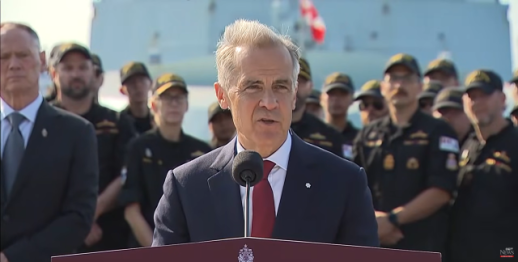 Canada names TKMS preferred bidder and Hanwha as reserve bidder for sub deal SEOUL, July 07 (AJP) - Canada on Monday named Germany’s TKMS as the preferred supplier for its "largest-ever" procurement to acquire up to 12 new submarines, selecting the Type 212CD over South Korea’s KSS-III Batch-II in what had been a "difficult and close decision," according to its state head. Prime Minister Mark Carney announced the choice that involved heavily government-backed competition between Germany and South Korea in Halifax, Nova Scotia, shortly before departing for a NATO leaders’ summit in Türkiye. “I’m pleased to announce that Canada has selected TKMS as the preferred supplier for Canada’s patrol submarines,” Carney said. South Korea’s Hanwha Ocean was designated as the reserve supplier and could be invited into negotiations if Canada fails to reach an agreement with TKMS. “We don’t expect that, but if they are unsuccessful, Canada retains the right to designate Hanwha Ocean, currently the reserve supplier, as the preferred supplier and enter into negotiations with them,” Carney said. He described the selection as a “difficult, close decision between two highly qualified suppliers,” saying both proposed submarines met the Royal Canadian Navy’s demanding capability requirements and were backed by strong industrial packages. He had a long discussion with South Korean President Lee Jae Myung over the weekend including the decision as he "understood the disappointment" of Seoul, but the two agreed to pick up other technologically complimentary areas when they meet at the NATO summit as Canada maintains Korea as a critical strategic partner. “In the end, this decision was about choosing the absolute best platform and partnership to meet Canada’s combined strategic, security and economic interests,” he said. The announcement does not immediately award TKMS a final contract. Ottawa will now enter detailed negotiations with the German shipbuilder over pricing, delivery, Canadian industrial participation, infrastructure, training and long-term maintenance that could take six to 18 months if not longer, Carney said, declining to specify the amount of the deal as not to "prejudice" the negotiations. He said the negotiations would remain commercially sensitive and that the government would not conduct them publicly in order to preserve Canada’s bargaining position. He said funding for the submarines had already been included in Canada’s fiscal framework and described the acquisition as the largest procurement in Canadian history. Canada has said it aims to award the final contract by 2028 and receive the first replacement submarine no later than 2035 to avoid a gap in its underwater capabilities. The Canadian Patrol Submarine Project is intended to replace the Royal Canadian Navy’s four aging Victoria-class boats with up to 12 conventionally powered submarines capable of operating across the Arctic, Atlantic and Pacific oceans. Canada identified TKMS and Hanwha Ocean as the project’s two qualified suppliers in August 2025 after assessing their designs, construction capacity and proposed delivery schedules. TKMS has offered to adjust delivery slots within existing German and Norwegian orders, allowing the first four Canadian submarines to be delivered by 2034, according to Carney. The outcome marks a major setback for Hanwha Ocean, which had mounted an extensive campaign emphasizing the KSS-III Batch-II’s long range, weapons capacity and faster delivery schedule. Despite the decision, Carney stressed that South Korea remained an important strategic partner and thanked both bidders and their governments for what he called thoughtful, comprehensive and cooperative proposals. 2026-07-07 05:28:15
-
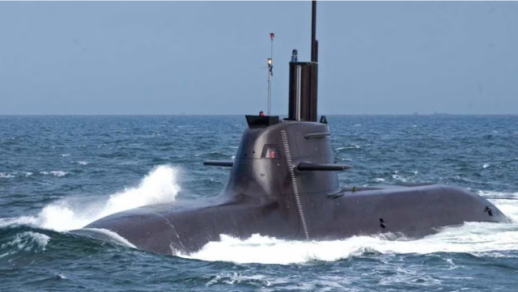 Germany's TKMS reportedly picked for Canada submarine program SEOUL, July 06 (AJP) - Canada has selected Germany’s TKMS as the preferred bidder for its program to acquire up to 12 new submarines, The Globe and Mail reported Monday, citing unnamed government sources ahead of an expected official announcement. The reported decision would see TKMS’s Type 212CD chosen over South Korea’s KSS-III Batch-II, dealing a setback to Hanwha Ocean after an intense, nearly yearlong competition for one of Canada’s largest-ever military procurement programs. Canadian Prime Minister Mark Carney is expected to formally announce the preferred bidder in Halifax, Nova Scotia, later Monday before departing for a NATO summit in Türkiye. His office had not publicly confirmed the reported selection as of publication. The selection, if confirmed, would open exclusive negotiations with TKMS rather than immediately result in a final contract. Canada has said it aims to sign a contract for the new fleet by 2028 and receive the first submarine by 2035. The Canadian Patrol Submarine Project is aimed at replacing the Royal Canadian Navy’s aging Victoria-class fleet with up to 12 conventionally powered submarines capable of operating across the Arctic, Atlantic and Pacific. Canada identified TKMS and Hanwha Ocean as the project’s two qualified suppliers in August 2025 after assessing their capabilities, construction capacity and delivery schedules. TKMS offered the Type 212CD, which is being developed for the German and Norwegian naval forces. Germany and Norway promoted the proposal as an opportunity for Canada to join a common submarine program with two NATO allies and Arctic partners. The outcome marks a setback for Hanwha Ocean, which had mounted an extensive campaign highlighting the KSS-III Batch-II’s long-range capabilities, delivery schedule and proposed investments in Canadian industry. 2026-07-06 21:16:22
-
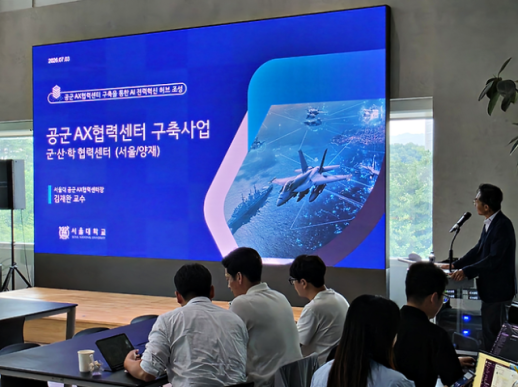 Korea's Air Force, SNU launch AI initiative to reshape aerospace warfare SEOUL, July 06 (AJP) - Seeking to accelerate its digital frontline transformation, the South Korean Air Force has partnered with Seoul National University (SNU) to develop three key AI technologies that can be directly deployed in military operations. The projects will focus on tracking mobile missile launchers, automatically identifying targets and generating combat plans for aerospace operations. Each project will be carried out by a joint team consisting of SNU researchers and a participating private company. The initiative is part of efforts to establish the Air Force AX Cooperation Center, a joint military-academic-industry hub designed to accelerate the Air Force’s adoption of artificial intelligence. AX refers to AI transformation. The Air Force plans to establish an AX base at the Industrial AX Innovation Center within the Seoul AI Hub in August, with support from the Ministry of National Defense. SNU will oversee the cooperation center, while Air Force personnel will be stationed there to identify operational requirements, conduct security reviews and help connect research results to military acquisition and deployment programs. The Artificial Intelligence Research Institute has also been commissioned to provide specialized AI education and support the operation of the SNU-Air Force AX Cooperation Center. “The Air Force AX center is not simply a research space,” said Zhang Byong-tak, head of SNU’s defense AI talent development program. “It is a hub for practical civil-military cooperation where technologies the Air Force actually needs are developed with companies and then directly applied and fielded in military operations.” A project led by Zhang will focus on tracking mobile missile launchers. His team is developing an AI system that combines various data sources with maps to predict where these launcher vehicles will go after firing a missile. By showing these paths on a digital map in real time, the system will help analysts find moving targets much faster. To identify targets automatically, Kwak No-jun’s team is building a system that analyzes both military photos and written text together. It will compare new images with older data to spot similar activities, while also checking past reports and records. This will help analysts pinpoint targets with greater speed and accuracy. Another project, led by Yu Young-jae, applies AI to planning air and space combat. The team is creating a tool that helps assign troops, select targets, and recommend the best weapons based on official guidelines. This system aims to cut down planning time and help commanders make smarter, more accurate decisions. Companies with AI capabilities, including startups, small and medium-sized enterprises and defense contractors, may apply to participate from July 6 to 17. Applicants will first undergo a document review, with a shortlist of up to three candidates for each project. A committee led by SNU will then select the participating companies. The selection and partnership agreements are expected to be completed in late July, with research scheduled to begin in early August. 2026-07-06 17:39:19
-
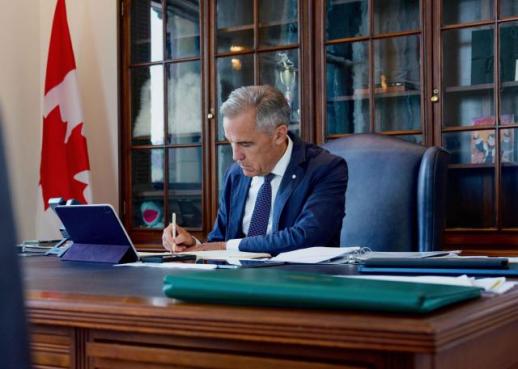 Hanwha Ocean stock flies ahead of imminent Canada announcement SEOUL, July 06 (AJP) - From Hanwha Ocean's share price, investors appear to believe its victory—or at least a sizable share—in Canada's multibillion-dollar submarine program is all but assured. Hanwha Ocean ended Monday up 7.3 percent at 114,700 won after surging as much as 15 percent earlier while the benchmark KOSPI remained in negative territory, on expectations that its name will be called out by Canadian Prime Minister Mark Carney when he announces the preferred bidder later Monday local time, or early Tuesday in Korea. As of Monday afternoon in Seoul, Hanwha Ocean said it had yet to receive any formal notification and was awaiting the government's announcement. Canada is expected to name the preferred bidder for its 12-submarine procurement program on Monday local time, bringing nearly a year of competition between South Korea's Hanwha Ocean and Germany's Thyssenkrupp Marine Systems (TKMS) to a decisive stage. The Canadian Patrol Submarine Project, estimated by South Korean industry officials to be worth up to 60 trillion won ($40 billion) including long-term maintenance and operational support, would rank among the largest conventional submarine contracts ever awarded. Carney is scheduled to make the announcement during a stop in Halifax before departing for the NATO summit in Türkiye. He is expected to identify a preferred bidder rather than immediately award the contract, with detailed negotiations likely to continue afterward. Canada launched the acquisition process in July 2024 and narrowed the competition in August 2025 to Hanwha Ocean's KSS-III Batch-II submarine and TKMS's Type 212CD, jointly backed by Germany and Norway. Despite months of public campaigning by both sides, the outcome remained closely guarded through the final weekend, with officials in Seoul and Berlin offering sharply contrasting signals. Germany mounted an aggressive final push. During a visit to TKMS's Wismar shipyard on Friday, German Vice Chancellor and Finance Minister Lars Klingbeil said the entire federal government was campaigning for closer defense cooperation with Canada. "The arguments are really on our side," Klingbeil said, citing Germany's production quality, industrial capacity and NATO interoperability. TKMS Chief Executive Oliver Burkhard also said the company remained confident of winning the contract. While Klingbeil stopped short of claiming the Type 212CD was technically superior to Hanwha Ocean's submarine, his remarks underscored Berlin's confidence that Germany's status as a core NATO ally and its longstanding defense relationship with Canada could strengthen TKMS's bid. Seoul, by contrast, remained measured. Kang Hoon-sik, South Korea's presidential chief of staff, last week described the race as "about 50-50," saying both contenders had clear strengths. He said Canada would have to weigh Germany's NATO ties and submarine expertise against South Korea's faster delivery schedule and broader industrial cooperation package. Kang added that South Korea had submitted a realistic proposal it was fully confident it could deliver. One major uncertainty remains: whether Ottawa could split the 12-submarine order between Hanwha Ocean and TKMS. A column published Sunday by the Toronto Sun raised the possibility of a divided award, although Carney has previously argued that the operational efficiencies of maintaining a single submarine class would be "overwhelming." A split fleet could ease production risks but would also require separate training, maintenance, spare-parts inventories and logistics systems. It would also complicate the industrial benefits pledged by both bidders. Hanwha Ocean has proposed more than C$70 billion in trade and investment in Canada, while the German-Norwegian consortium has said its proposal would contribute C$86 billion to the Canadian economy and create more than 650,000 job-years. Because those economic packages were designed around securing the broader submarine program, a split award would likely require Ottawa to renegotiate which investments, jobs and Canadian partnerships remain attached to each supplier. Many of those commitments are currently contained in memorandums of understanding and would need to be converted into binding contractual obligations during the next stage of negotiations. Monday’s announcement should reveal which side will enter the next stage of negotiations. But even for the nominal winner, it will mark the beginning of a lengthy contracting process rather than the final award. 2026-07-06 16:32:12
-
 Canada to announce preferred bidder for 12 submarines Monday SEOUL, July 06 (AJP) -Canadian Prime Minister Mark Carney will make a major defense announcement in Halifax, home to the country's largest naval base, on Monday before departing for the NATO summit in Türkiye, with South Korea and Germany awaiting a decision on Canada's multibillion-dollar submarine procurement program. Canadian daily The Globe and Mail reported Sunday, citing two government sources, that Carney is expected to formally announce whether South Korea or Germany has emerged as the preferred bidder for the Canadian Patrol Submarine Project (CPSP). According to the Prime Minister's Office, Carney will unveil "new measures to make Canada more secure, resilient and prosperous" during an announcement scheduled for 5:10 p.m. on Monday local time in Halifax, the Atlantic port city that hosts one of Canada's largest naval bases. The announcement is expected to identify a preferred bidder rather than finalize a contract. Negotiations on pricing, industrial participation and other detailed terms could continue for several years, The Globe and Mail reported. The CPSP aims to replace Canada's aging Victoria-class submarines with a fleet of up to 12 diesel-electric submarines. The program is estimated to be worth as much as C$40 billion, including construction as well as 30 years of maintenance, repair and operational support. South Korea's Hanwha Ocean and Germany's Thyssenkrupp Marine Systems have been shortlisted for the project. According to The Globe and Mail, selecting Hanwha Ocean would mark the first time Canada has procured a major weapons platform from a non-Western supplier, representing a significant shift in Ottawa's defense procurement policy. 2026-07-06 10:02:13
-
 Canada Moves Towards Selecting South Korea for Submarine Project Multiple sources indicate that Canada is leaning towards selecting South Korea as the preferred bidder for its $60 billion next-generation submarine project. However, final negotiations are ongoing regarding whether to award the entire contract to South Korea or to split it with Germany. According to officials, the Canadian government is seriously considering South Korea's proposal, but the final contracting method has not yet been confirmed. A representative from South Korea's Ministry of Trade, Industry and Energy refrained from commenting on the negotiations but stated that the government is expecting "positive news." A German submarine expert familiar with the negotiations noted, "Even if a split order is made, I understand that South Korea is likely to secure a larger share," adding that the announcement is being delayed due to ongoing detailed negotiations. Another source told Aju Business Daily, "The current atmosphere is leaning towards South Korea, with the last issue being whether to award the entire contract to South Korea or to share it with Germany." A different insider mentioned, "There is already talk of congratulatory messages circulating in the industry, indicating that South Korea's victory is seen as a foregone conclusion." Canada was initially expected to announce its preferred bidder by the end of June, but the decision has now been pushed to early July. Discussions continue on whether to award up to 12 submarines included in the Canadian Patrol Submarine Project (CPSP) to a single company or to split the order between South Korea's Hanwha Ocean and Germany's ThyssenKrupp Marine Systems (TKMS). The CPSP aims to replace Canada's aging Victoria-class submarines while enhancing underwater surveillance and deterrence capabilities in the Arctic, Atlantic, and Pacific regions in response to increased underwater military activities from Russia and China. Canada plans to acquire up to 12 conventional submarines, with the final candidates narrowed down to Hanwha Ocean's Changbogo-III Batch-II and TKMS's Type 212CD. The Victoria-class submarines are expected to retire in the mid-2030s, necessitating the delivery of the first new submarines by 2035 to avoid a capability gap. The German submarine expert highlighted the main differences between the two submarine types as their size and operational concepts. Both models are conventional submarines equipped with diesel-electric propulsion systems and air-independent propulsion (AIP) systems. The Type 212CD is relatively smaller, has fewer crew members, and is optimized for long-duration submerged operations and stealth missions, excelling in detection avoidance and stealth capabilities. In contrast, the Changbogo-III Batch-II is evaluated as having a longer operational range and a greater variety and scale of armaments, making it suitable for long-range patrol and strike missions. The expert explained that the Type 212CD is designed with NATO interoperability in mind, resulting in differences in maintenance methods and operational systems between the two platforms. Canada has reiterated its intention to evaluate not only the performance of the submarines but also job creation, industrial investment, and extensive economic cooperation. As a result, this project has evolved beyond a simple bidding war between companies into a competition supported by the respective governments of South Korea and Germany. During his visit to Hanwha Ocean's Geoje facility in February, Steven Pure identified the automotive industry as a potential area for collaboration that bidding countries could propose. He stated, "Both South Korea and Germany are automobile manufacturing countries, and if there are possibilities for cooperation in this area, we want to expand it beyond defense to larger economic cooperation." South Korea's main proposal involves Project Beaver, a $3.1 billion initiative utilizing Hyundai Motor's hydrogen vehicle technology. This plan includes constructing a liquefied hydrogen production facility in British Columbia, a hydrogen vehicle manufacturing plant in Ontario, and hydrogen refueling stations in British Columbia and Alberta, with the South Korean government estimating the project could create approximately 9,000 jobs. Germany is emphasizing its advantage in NATO interoperability and the existing joint production system of the Type 212CD with Norway, which Canada could participate in. Initially, Canada mentioned Volkswagen's $7 billion battery plant project in Ontario, suggesting that South Korea should make a corresponding automotive investment. However, Volkswagen later clarified that the battery investment was an independent project unrelated to defense procurement and denied any connection with TKMS. The timing of the decision coincides with President Lee Jae-myung's first attendance at a NATO summit. President Lee is expected to emphasize South Korea's role in the global defense supply chain and its rapid weapons production and supply capabilities at the NATO summit in Ankara, Turkey, on July 7-8. An official from the Ministry of Trade, Industry and Energy drew a line between the president's attendance at the NATO summit and the Canadian submarine project, stating, "There are various reasons for attending the NATO summit, and it is too early to say that the submarine project is favorable for South Korea because of the president's attendance." However, he noted that as NATO member countries seek to replenish depleted weapon stockpiles and reduce supply chain vulnerabilities, South Korea's defense production capabilities are becoming increasingly important. He remarked, "While NATO must strengthen its own defense capabilities, the defense supply chain cannot be restored in a matter of months or even one to two years." He added, "South Korea is emerging as an alternative due to its quick delivery, price competitiveness, and operational production lines, and recently has been referred to as the 'arsenal of the free world.'" Canada's initiative to establish a multilateral Defence, Security and Resilience Bank (DSRB) is also emerging as a new variable in this competition. Previously, Canada became the first non-European country to participate in the EU's €150 billion defense financing program, SAFE (Security Action for Europe), which has been interpreted as a favorable signal for Germany. Observers suggest that as Canada expands its defense cooperation with Europe, TKMS's Type 212CD may have a relative advantage. However, as the deadline for announcing the preferred bidder approaches, Canada is accelerating its own multilateral defense financing system. The DSRB, led by Canada, aims to provide up to £100 billion in low-interest funds to strengthen defense production and supply chains and security-related industries. Canada plans to reveal about ten founding participant countries at the NATO summit, with South Korea's potential participation also being discussed. The chief negotiator from Canada described the negotiations with South Korea as "productive," estimating a "50-50" chance of South Korea participating as a founding member. In contrast, Germany is currently participating in discussions as an observer. If South Korea secures the submarine contract, it could position itself as a long-term partner in Canada's defense manufacturing and financing network, encompassing shipbuilding, maintenance, supply chains, and advanced industrial cooperation, rather than merely a supplier of vessels. This decision will shape not only what submarines Canada purchases but also the industrial and defense cooperation framework that will support the operation and maintenance of future submarine capabilities for decades to come. David McGuinty, Canada's Minister of Defence, recently warned that operating two different types of submarines would require establishing separate maintenance, logistics, and training systems, increasing costs and complexity. However, he did not officially rule out the possibility of a split order. Currently, the key issue is not whether South Korea will win the competition, but whether Canada will award the entire contract to South Korea or divide the order between South Korea and Germany, considering political and industrial balance.* This article has been translated by AI. 2026-07-03 19:56:00