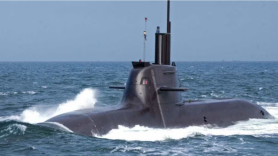
Ottawa on Monday designated TKMS as the preferred supplier for a program to procure up to 12 conventionally powered submarines. The acquisition is expected to cost at least $20 billion, while lifetime spending on maintenance, infrastructure and support could reach about C$80 billion over coming decades.
Hanwha Ocean's KSS-III Batch-II was named the reserve supplier, meaning South Korea could still enter negotiations if talks with the German company collapse.
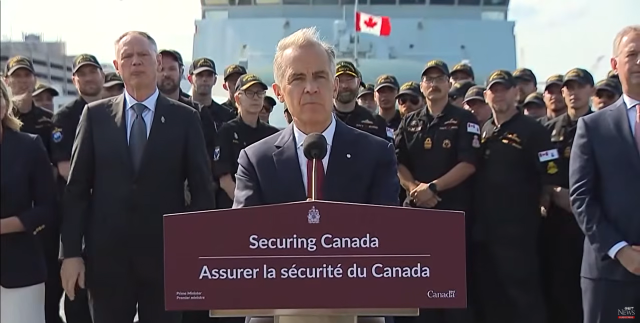
Prime Minister Mark Carney announced the decision in Halifax, Nova Scotia, calling it "a difficult, close decision between two highly qualified suppliers."
He did not disclose the contract value but said it would be the largest procurement in Canadian history and involve "tens of billions of dollars" in investment.
"Both suppliers met the Royal Canadian Navy's demanding capability requirements and presented strong industrial proposals," Carney said.
"In the end, this decision was about choosing the absolute best platform and partnership to meet Canada's combined strategic, security and economic interests."
Canada's choice highlighted the weight Ottawa placed on the Type 212CD's Arctic capabilities, NATO interoperability and integration into the existing German-Norwegian submarine program. TKMS already supplies submarines to more than one-third of NATO members.
Ottawa said the Type 212CD's low acoustic and magnetic signatures, under-ice operating capability and seamless interoperability with NATO forces would strengthen Canada's ability to defend its three coasts while deepening cooperation with key allies.
TKMS also offered to reshuffle production slots from existing German and Norwegian orders, allowing Canada to receive its first four submarines in 2034 before the retirement of its aging Victoria-class fleet.
Hanwha had pitched its KSS-III Batch-II offered longer range, greater weapons capacity and a faster production schedule, proposing delivery of the first submarine in 2032 and four boats by 2035.
The South Korean company nevertheless acknowledged that superior technology and delivery speed had not been enough to overcome the alliance factor.
"We made every effort based on the government's full support, the outstanding performance of our submarine and the Navy's successful operational experience, but we were unable to overcome the wall of the NATO alliance," Hanwha Ocean said.
The company said it would review shortcomings exposed during the competition to strengthen its global competitiveness and support further expansion of South Korea's naval defense industry.
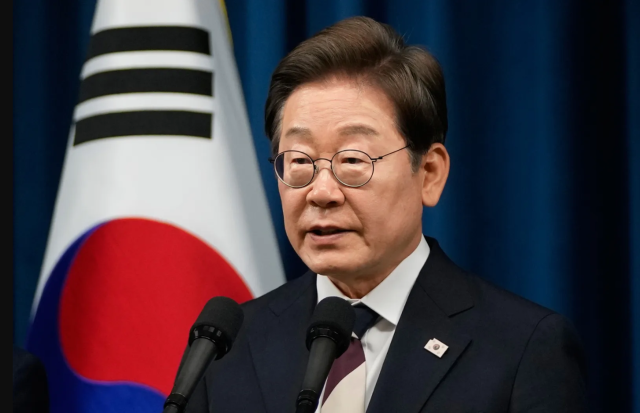
Kang said South Korean submarine technology had demonstrated that it was comparable to, and in some respects ahead of, Germany's, but acknowledged that decades of military integration among NATO members could not be overcome in a single competition.
He added that Seoul respected Canada's decision, saying it reflected a combination of security, industrial cooperation, economic considerations and cost.
President Lee Jae Myung also struck a measured tone.
"Although we did not achieve the result we had hoped for, I believe we once again clearly demonstrated our capabilities to the international community," he said.
The Canadian decision does not yet constitute a final contract award. Ottawa and TKMS must still negotiate pricing, the final number of submarines, delivery schedules, Canadian industrial participation, infrastructure, training and long-term maintenance. Canada aims to conclude the contract by the end of 2027.
Carney also emphasized that Hanwha remains in reserve.
"If negotiations with TKMS are unsuccessful, Canada retains the right to designate Hanwha Ocean, currently the reserve supplier, as the preferred supplier and enter into negotiations with them," he said.
Still, Ottawa made clear it expects to reach a final agreement with TKMS, leaving Hanwha as a fallback option only if negotiations break down over price, delivery or industrial commitments.
Investors also abandoned ship. Hanwha Ocean shares plunged more than 24 percent Tuesday to 88,000 won, extending their decline to nearly 40 percent from the June 17 peak of 141,900 won when expectations for the Canadian bid were running high.
For Seoul, the setback carries a broader lesson. Winning future multibillion-dollar defense contracts will require not only competitive technology and rapid delivery but also a strategy that addresses alliance structures, industrial partnerships and the geopolitical priorities that increasingly shape procurement decisions.

Copyright ⓒ Aju Press All rights reserved.