

Journalist
Kim Yeon-jae김연재
duswogmlwo77@ajupress.com
ReporterBank of Korea & Market, Macroeconomics
Kim Yeon-jae is a journalist at AJU Press (AJP's English platform),
covering macroeconomics, international finance, and geopolitics.
He closely tracks central bank monetary policies, global energy supply chains,
and the Korean defense industry. "Peering into the risks behind the euphoria."
covering macroeconomics, international finance, and geopolitics.
He closely tracks central bank monetary policies, global energy supply chains,
and the Korean defense industry. "Peering into the risks behind the euphoria."
Latest by Kim Yeon-jae
-
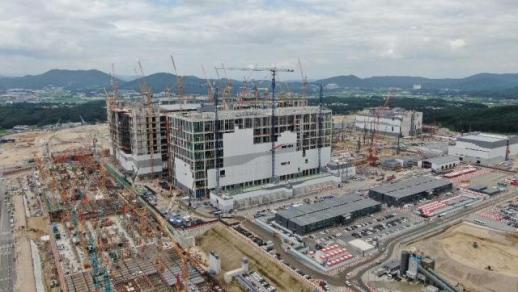 Korea's Q2 GDP slows, but annual growth stays above 3% on chip demand SEOUL, July 23 (AJP) -South Korea’s economy grew 0.6 percent in the second quarter, with quarter-on-quarter growth nearly halving from a surprising 1.8 percent jump in the first three months of the year, but maintaining a robust annual pace and staying on track to meet the government's 3.0 percent growth target on strong semiconductor demand, preliminary data showed Thursday. According to the Bank of Korea, gross domestic product expanded 3.7 percent from a year earlier, little changed from the 3.8 percent growth recorded in the first quarter. The moderation in quarterly growth largely reflected weaker capital spending and construction investment amid persistently sluggish domestic demand. Facilities investment rose just 0.2 percent after surging 6.6 percent in the first quarter, although spending on semiconductor manufacturing equipment continued to increase. Construction investment slipped 0.2 percent, compared with a 1.4 percent gain in the previous quarter. Private consumption increased 0.4 percent as spending on household appliances and other goods rose alongside expenditure on restaurants, accommodation and other services, while government consumption edged up 0.2 percent on higher health insurance benefit payments. Services contributed 0.6 percentage point to quarterly growth, double the 0.3 percentage-point contribution from manufacturing, while construction shaved 0.1 percentage point off overall growth. Services output rose 1.1 percent, led by wholesale and retail trade, accommodation and food services, finance and insurance, and information and communications. Manufacturing expanded 1.2 percent as production of computers, electronic and optical products, along with machinery and equipment, increased. The gain was substantially weaker than the 3.9 percent manufacturing expansion recorded in the first quarter, when surging demand for artificial intelligence-related chips powered one of Korea's strongest quarterly performances in years. Construction output fell 1.9 percent as civil engineering activity declined, reversing part of the sector's 2.2 percent rebound in the previous quarter. Agriculture, forestry and fishing contracted 7.1 percent, reflecting weaker crop production and fishing activity. Exports rose 1.4 percent from the previous quarter, supported by semiconductors and machinery and equipment, while imports increased 0.8 percent on stronger purchases of automobiles and machinery. Net exports contributed 0.3 percentage point to quarterly growth, matching the contribution from domestic demand. Investment in intellectual property products climbed 3.3 percent, driven by research and development and software. 2026-07-23 08:25:39
-
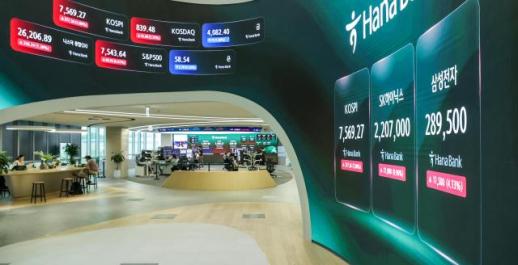 Foreign holdings blunt Korea's wealth gains SEOUL, July 22 (AJP) - South Korea's national wealth grew at less than half the previous year's pace in 2025, as a record rally in domestic stocks produced an accounting paradox: rising share prices boosted household wealth but simultaneously eroded the country's net financial position by 326 trillion won ($229 billion) as the value of Korean equities owned by foreign investors surged. National net worth rose 2.2 percent, or 531 trillion won, to 24.56 quadrillion won at the end of 2025, slowing sharply from a 5.0 percent increase, or 1.14 quadrillion won, a year earlier, according to preliminary national balance sheet data jointly released Wednesday by the Bank of Korea and the Ministry of Data and Statistics. The slowdown came despite robust gains in real assets. Non-financial assets climbed 857 trillion won, or 3.8 percent, to 23.29 quadrillion won as land and housing prices continued to rise. But net financial assets fell 20.4 percent to 1.27 quadrillion won after financial liabilities expanded by 3.12 quadrillion won, outpacing the 2.79 quadrillion won increase in financial assets. The main driver was South Korea's surging equity market. The benchmark KOSPI advanced 75.6 percent during 2025, far outperforming the S&P 500's 16.4 percent gain and the Euro Stoxx 50's 18.3 percent rise. Because Korean shares owned by overseas investors are recorded as external financial liabilities under the national accounts, the rally sharply increased the country's liabilities to non-residents. The appreciation of those holdings exceeded gains on overseas equities owned by Korean investors, generating a 505 trillion won negative valuation effect on equity and investment fund positions and turning overall financial valuation gains from a positive 440 trillion won in 2024 to a negative 486 trillion won in 2025. Real assets continued to underpin wealth creation. Land values rose 554 trillion won, or 4.6 percent, to 12.66 quadrillion won, while the market value of housing increased 571 trillion won, or 8.0 percent, to 7.71 quadrillion won, the fastest increase since 2021. Nearly 93 percent of the increase in housing values came from the Seoul metropolitan area, underscoring how concentrated the property recovery remained. The asset rally substantially strengthened household balance sheets. Net wealth held by households and nonprofit institutions jumped 9.0 percent, or 1.17 quadrillion won, to 14.20 quadrillion won, the strongest increase in four years. Household net financial assets increased by 674 trillion won and non-financial assets by 494 trillion won, helped by a 534 trillion won increase in housing values and a 525 trillion won gain in equity and investment fund holdings. The same market rally had the opposite effect on non-financial corporations. Their net worth fell 21.6 percent, or 1.01 quadrillion won, as the higher market value of listed shares they had issued was recorded as an increase in financial liabilities under national accounting rules, outweighing gains in their real assets. Officials said 60 percent of last year's increase in national wealth came from transactions such as asset accumulation, while the remaining 40 percent reflected valuation and other changes. Holding gains on non-financial assets totaled 610 trillion won, but these were largely offset by the deterioration in the country's net financial position caused by the revaluation of foreign-owned Korean equities. 2026-07-22 14:28:51
-
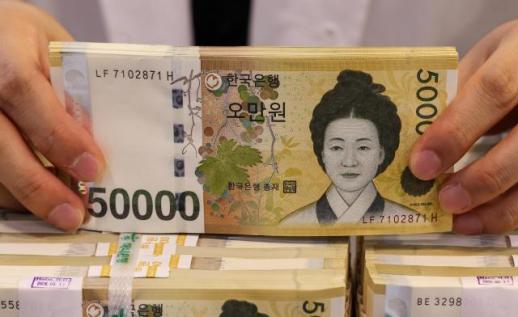 Richest income rise while the rest 80% Korean families see fall Q1 SEOUL, July 22 (AJP) - South Korea’s top-income urban households gained purchasing power in the first quarter as public and private transfers increased, while real incomes fell across the remaining 80 percent amid weaker employment and business earnings. Real income, which adjusts household income for inflation, declined from a year earlier in each of the bottom four income quintiles, according to Ministry of Data and Statistics figures available through the Korean Statistical Information Service, or KOSIS. Only the highest-income 20 percent recorded an increase. It was the first time since the second quarter of 2023 that real income had fallen simultaneously across the bottom 80 percent of urban households. The top quintile also recorded a decline during the earlier period. Average monthly real income for the top quintile rose 1.6 percent, or 163,368 won, from a year earlier. The fourth quintile, immediately below the top-income group, suffered the steepest decline at 2.3 percent, or 130,585 won a month. Real income fell 1.7 percent in the second quintile, 1.5 percent in the third and 1.3 percent among the lowest-income fifth. Weaker employment and business earnings weighed on the four lower groups. Employment income dropped 8.2 percent in the bottom quintile, 6.8 percent in the second and 7.3 percent in the fourth. The middle quintile recorded a 0.3 percent increase in employment income, but business income fell 12.5 percent, leaving its overall real income lower. Income earned from work, businesses and assets also remained weak among the top quintile. Its employment income rose just 0.8 percent, while business income fell 6.3 percent and property income declined 11.8 percent. Transfer income instead rose 24.6 percent to an average of 1.12 million won a month. Public transfers increased 9.4 percent. The category includes contributory pensions such as the national and private-school pension schemes, which are not limited to low-income households, as well as government benefits. Private transfers surged 69.1 percent and include money received from relatives or other households, such as living expenses, allowances and family support. The ministry said transfers often rise during the first quarter as families exchange money around the Lunar New Year holiday. Among top-income households, the increase reflected larger amounts being transferred rather than a sharp rise in the number of recipient households, according to the ministry. The pattern was different for the bottom quintile, where transfer income accounted for 63.6 percent of total income but fell 1.1 percent as public transfers declined 3.2 percent. Employment income for the group also dropped 8.2 percent. The urban breakdown contrasted with the nationwide average released in May. Average monthly income among all households rose 2.4 percent from a year earlier to 5.48 million won, while real income increased 0.4 percent. Four of the five urban income groups nevertheless recorded lower real income, while the gain among the top quintile came mainly from public and private transfers rather than stronger employment, business or property income. Income inequality also widened. After adjusting for household size, disposable income among the top 20 percent was 6.59 times that of the bottom 20 percent, up from 6.32 times a year earlier. The ministry cautioned that quarterly household income can fluctuate because of seasonal factors such as holiday transfers and corporate bonuses, and said longer-term changes should be assessed alongside annual household surveys. 2026-07-22 12:52:01
-
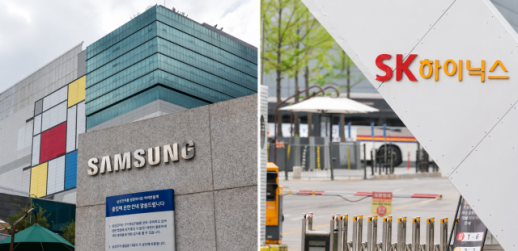 Korea's manufacturing share hits 10-year high on chip power SEOUL, July 22 (AJP) - Manufacturing accounted for 27.2 percent of South Korea’s real gross domestic product last year, the highest share in a decade, as the country’s industrial growth became increasingly concentrated in semiconductors and other electronics. Real value added generated by manufacturers rose 2.3 percent, or 14.5 trillion won, ($10 billion) from a year earlier to 632.4 trillion won in 2025, according to the National Assembly Budget Office’s Economic Overview of the Republic of Korea 2026. The sector expanded for a third consecutive year, although the annual increase slowed to about half of the 28.6 trillion won recorded in 2024. Manufacturing’s share of real GDP also rose for a third year to 27.2 percent, the highest in data reviewed by the budget office covering the period since 2016. Manufacturing value added has increased from 498.4 trillion won in 2016, producing average annual growth of about 2.7 percent through last year. That outpaced the roughly 2.3 percent annual expansion in real GDP over the same period, lifting manufacturing’s weight in Asia’s fourth-largest economy. The headline increase, however, masked a growing concentration of industrial activity in a narrow section of the economy. Computers, electronic and optical products accounted for 37.4 percent of manufacturing value added last year, up 14.7 percentage points from 22.7 percent in 2016. The budget office said the sector’s share had risen over the past three years, reflecting a structural shift towards semiconductor-led electronics production. By contrast, the relative contributions of transport equipment, machinery and chemicals have either declined or remained broadly stagnant, pointing to a widening gap between electronics and more traditional manufacturers. South Korea’s reliance on manufacturing is also pronounced by international standards. Manufacturing accounted for 27.4 percent of Korean GDP in 2024 on an OECD-comparable basis, the second-highest share among member countries after Ireland’s 31.1 percent. The figure was well above Germany’s 19.9 percent and Japan’s 19.0 percent, and exceeded the OECD average of 15.2 percent by 12.2 percentage points. The budget office said high-technology industries, including semiconductors and displays, remained particularly important to South Korea because of the economy’s heavy reliance on manufactured exports. Maintaining the country’s existing technological lead while strengthening the competitiveness of those industries would therefore remain a central economic challenge, it said. The broader report said the Korean economy was gradually emerging from last year’s weakness on the back of semiconductor exports and a recovery in domestic demand, while warning that external uncertainty, demographic change and entrenched low growth continued to pose risks. 2026-07-22 10:05:31
-
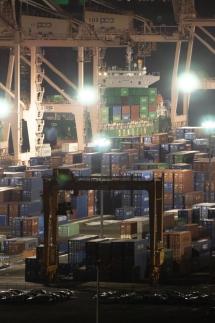 Korea's June producer prices plateau as pipeline inflation mounts SEOUL, July 22 (AJP) - South Korea's producer prices plateaued in June after nine consecutive monthly increases, but broader price gauges tracking costs through the domestic supply chain surged at their fastest pace in nearly four years, signaling mounting inflationary pressure still working its way through the economy. The producer price index stood at 130.03 in June, unchanged from May but 8.6 percent higher than a year earlier, according to data released by the Bank of Korea on Wednesday. May's increase was revised up to 1.0 percent from a preliminary 0.8 percent, while the annual gain was raised to 8.6 percent from 8.5 percent. The domestic supply price index, which includes imported and domestically produced goods and services supplied within Korea, rose 0.7 percent from May and 13.2 percent from a year earlier. The annual increase was the steepest since July 2022, when the index rose 14.7 percent. Prices rose across all stages of production, with raw materials gaining 2.1 percent from May and intermediate and final goods each advancing 0.5 percent. Imported raw material prices jumped 45.5 percent from a year earlier, compared with increases of 31.4 percent for imported intermediate goods and 10.9 percent for imported final goods. The widening gap suggested cost pressures remained concentrated at the upstream end of the supply chain and have yet to be fully passed on to consumers. The BOK said the sharp rise in import prices also reflected the weaker won, changes in international oil prices during May and the time lag between import contracts and customs clearance. The headline producer price index remained flat because manufactured goods prices fell 0.3 percent from May as declines in petroleum and chemical products offset higher prices for semiconductors and other electronics. Coal and petroleum products fell 5.3 percent from May and chemical products declined 1.8 percent, with naphtha down 23.5 percent, jet fuel 23.4 percent and ethylene 18.9 percent. Even so, petroleum product prices remained 65.8 percent higher than a year earlier. The total output price index, which covers exports as well as products sold domestically, rose 0.4 percent from May and 17.6 percent from a year earlier. The annual increase was the largest since the BOK began compiling the series in 2010. The record rise was driven overwhelmingly by exports. Export prices climbed 1.3 percent from May and 50.5 percent from a year earlier, while prices for goods sold domestically were unchanged on the month and rose 8.6 percent from a year earlier. Prices for computers, electronic and optical equipment advanced 2.4 percent from May and 24.6 percent from a year earlier, while semiconductor prices rose 3.6 percent on the month and 145.9 percent on the year. DRAM prices soared 476.4 percent from a year earlier, while computer memory devices gained 300.4 percent and computers and peripheral equipment rose 141.7 percent. Price pressures extended beyond chips. Primary metal products rose 16.0 percent from a year earlier, nonferrous metal ingots and primary products climbed 36.9 percent and refined copper products increased 55.3 percent. Service prices rose 0.2 percent from May, led by a 2.5 percent increase in financial and insurance services. Financial and insurance service prices jumped 35.2 percent from a year earlier as stock brokerage commissions surged 143.6 percent, underscoring the retail trading boom. Among prices affecting households and businesses more directly, pork rose 4.3 percent from May, beef prices were up 24.1 percent from a year earlier and industrial city gas climbed 10.6 percent on the month. International passenger airfares and air cargo rates, however, fell 6.5 percent and 3.4 percent, respectively. The plateau in producer prices offers little room for comfort as upstream cost pressures have yet to fully feed through to consumer prices, while lingering tensions in the Middle East continue to pose upside risks to energy costs and inflation. 2026-07-22 07:51:20
-
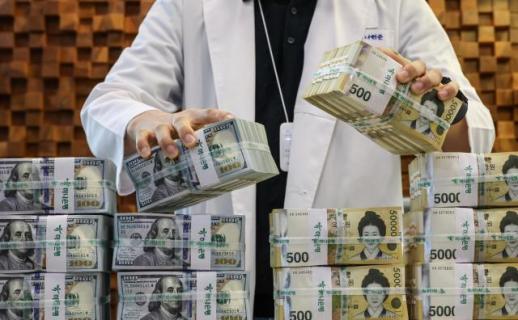 BOK to plug 24-hour won settlement gap in latest MSCI push SEOUL, July 21 (AJP) - South Korea will pilot a round-the-clock international won payment network in September, seeking to fill a key settlement gap in its newly opened 24-hour foreign exchange market and strengthen its bid for developed-market status from MSCI. The Bank of Korea said Tuesday it had formally named the planned offshore settlement system the Bank of Korea Won International Wire Network, or BOK-WireInt. The network will allow foreign investors and financial institutions to complete won payments during their own business hours, regardless of the time difference with Seoul. KB Kookmin Bank, Woori Bank, Hana Bank and Shinhan Bank will participate in the initial trial, with the central bank and the four lenders currently conducting system tests. The BOK plans to complete the introduction and revision of related payment-system regulations by August. BOK-WireInt will run for 24 hours on business days, from 9 a.m. to 9 a.m. the following day, excluding weekends and public holidays. The system is intended to give overseas investors continuous access not only to won trading but also to the infrastructure needed to settle and manage the funds. South Korea moved its domestic foreign exchange market to 24-hour trading on July 6 as part of a broader drive to improve overseas access to the won. The change enabled investors to trade spot won-dollar and foreign exchange swap products during London and New York hours, but the expansion also increased the need for a payment network capable of supporting transactions beyond conventional domestic operating hours. The new network is designed to provide that missing link, allowing foreign institutions to complete won settlements during their local market hours rather than waiting for systems in Seoul to reopen. The BOK said the change should improve the convenience of using and managing won funds and widen foreign access to the country’s settlement infrastructure. The central bank also expects the project to contribute positively to South Korea’s efforts to join MSCI’s developed-market index. Restrictions surrounding offshore won trading and settlement have long been among the market-access issues facing South Korea, which remains classified as an emerging market by the global index provider. The September pilot will test whether the new network can support stable 24-hour settlements before participation is expanded more broadly. The won strengthened 5.0 won to close at 1,473.4 per dollar at 3:30 p.m. Tuesday - supported by the Bank of Korea’s July 16 rate increase and expectations that proceeds from SK Hynix’s U.S. ADR offering will add to dollar supply in the domestic foreign exchange market. 2026-07-21 16:23:21
-
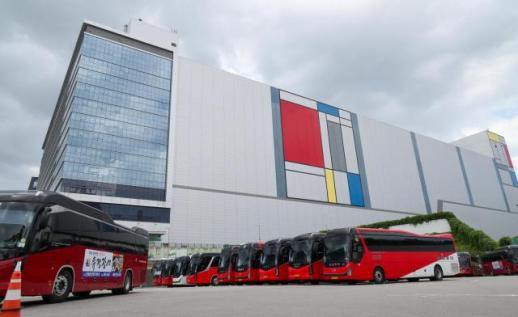 Chip boom puts BOK on tightening path, but spillover debate clouds outlook SEOUL, July 21 (AJP) - South Korea's bond market is increasingly pricing in another interest-rate increase this year after the Bank of Korea's July hike, as Governor Shin Hyun-song argues that the country's chip-driven income boom is beginning to generate demand-side inflation despite a still-sluggish domestic economy. Investors now widely expect the benchmark policy rate to reach 3.0 percent by year-end after the central bank last week raised it by 25 basis points to 2.75 percent, its first increase since January 2023. Some analysts see the next move coming as early as the Aug. 28 policy meeting. "We are seeing an exceptional condition. The gross domestic product has grown 3.8 percent (from a year earlier) in the first quarter whereas the gross domestic income grew much greater at 13.2 percent," Shin said after the July 16 monetary policy meeting. "We have to see if this is a temporary phenomenon or one that could have a big impact on the economy." Shin said the divergence suggested the economy may be entering a new phase in which income growth, fueled by soaring export prices, begins to feed domestic demand. "If income improvement continues at this kind of strength, we may have to be wary of inflationary pressure from the demand side," he said. Markets have already begun positioning for that possibility. The benchmark 10-year Korean government bond yield climbed to an annual high of 4.365 percent by midday Tuesday, up from an average of 4.252 percent in June and 3.612 percent in February before the outbreak of the Iran conflict. Shin has also indicated that the latest rate increase marks the beginning of a broader tightening cycle. Alongside imported inflation stemming from elevated energy prices and a weaker won, he has increasingly pointed to domestic pressures, including faster wage gains linked to the AI boom. The government's recent decision to raise its 2026 economic growth forecast to 3.0 percent — the strongest pace since 2021 — has reinforced that narrative. Semiconductor exports have powered much of the recovery, with outbound shipments reaching $551.3 billion as of July 20, keeping the country on course to touch the $1 trillion mark for the first time. Government officials and the central bank argue that the current semiconductor cycle differs fundamentally from previous booms. Unlike earlier upcycles, they contend, the AI-driven surge is generating unprecedented corporate earnings that are flowing into wages, shareholder income, investment and tax revenues, creating a broader economic impact. The BOK maintains that stronger semiconductor earnings will gradually spread through investment, household income and consumption while lifting corporate and earned-income tax receipts. Shin has rejected the view that the benefits will remain confined to a handful of chipmakers, although he acknowledged much of the fiscal windfall will become visible next year. The central bank strengthened that argument in an Issue Note released Sunday, saying the latest improvement in Korea's terms of trade could have a more durable effect on domestic demand because it stems from structural AI-related semiconductor demand and higher export prices rather than temporary declines in oil prices. According to the report, previous improvements in the terms of trade often reflected cheaper imported energy, which boosted purchasing power but faded as commodity prices recovered. This time, however, higher export prices driven by AI memory chips may sustain income gains for longer, encouraging consumption and business investment. Yet evidence that the semiconductor windfall is spreading across the broader economy remains mixed. Retail sales, construction activity and many service industries have recovered only gradually despite record exports and surging corporate earnings. Corporate data also point to a disconnect between profits and employment. Employment at 282 of Korea's 500 largest companies rose just 0.2 percent over the past three years even as sales increased 10.9 percent and operating profit jumped 81.0 percent, according to corporate tracker Leaders Index. The contrast is even sharper in the semiconductor-heavy IT, electrical and electronics sector. Sales climbed 34.4 percent and operating profit surged 2,740.5 percent, yet employment increased by only 1,727 workers, or 0.6 percent. The BOK itself acknowledges many of those limitations. Its report noted that IT manufacturing accounts for only 2.6 percent of business-sector employment, limiting the direct transmission of semiconductor gains into household income. It also said most wage increases and equity gains accrue to high-income households with relatively low propensities to consume. Investment spillovers may also prove weaker than headline figures suggest. Roughly 60 percent of semiconductor manufacturing equipment is imported, while Korean chipmakers have increasingly expanded production overseas, reducing the domestic impact of capital spending. Persistent weakness in construction, retail, smaller manufacturers and other non-IT industries could further dilute the benefits from the export boom. By contrast, the pressures supporting tighter monetary policy are already visible. The won remains one of Asia's weakest major currencies. Shin has repeatedly argued that the Korea-U.S. interest-rate gap deserves close attention because cheaper won funding can encourage carry trades into dollar assets and increase hedging costs for overseas investments, reinforcing depreciation pressure. Following last week's policy meeting, he said the BOK is closely monitoring offshore non-deliverable forward markets and is preparing additional research on how changes in the interest-rate differential affect currency flows. Even after the July rate increase, Korea's benchmark rate remains 1 percentage point below the upper end of the U.S. Federal Reserve's 3.50-3.75 percent target range. Currency weakness has also offset part of the income gains generated by stronger exports. While Taiwan has benefited from the same AI-driven semiconductor cycle, the Korean won has fallen about 13 percent against the U.S. dollar since the end of 2023, compared with roughly 5 percent for the Taiwan dollar. That depreciation has continued to raise import costs for energy, food and raw materials, with Shin noting that import prices remain around 20 percent higher than a year earlier. Meanwhile, financial stability concerns continue to build. Housing prices have accelerated across Seoul and much of Gyeonggi Province, while household lending has continued expanding by roughly 8 trillion won to 9 trillion won a month despite tighter lending regulations. Those pressures complicate the policy outlook. The immediate beneficiaries of the semiconductor boom remain concentrated among large exporters, shareholders and highly paid technology workers, while higher borrowing costs are felt much more broadly by indebted households, small-business owners, builders and smaller manufacturers. Shin has argued that such distributional issues should be addressed through targeted fiscal and financial policies rather than monetary policy, allowing interest rates to focus primarily on inflation and financial stability. For markets, the debate is no longer whether semiconductors are lifting Korea's national income — they clearly are. The more important question is whether those gains will spread widely enough through wages, consumption and investment to justify a sustained tightening cycle before the broader domestic economy fully recovers. That question is likely to shape not only the Bank of Korea's next rate decision, but also how investors judge the durability of Korea's AI-driven economic resurgence in the months ahead. 2026-07-21 15:13:57
-
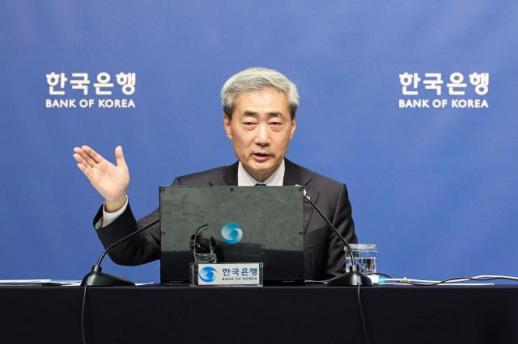 BOK governor joins Asia-Pacific policymakers amid AI and inflation risks SEOUL, July 21 (AJP) -Bank of Korea Governor Shin Hyun-song will join Asia-Pacific central bankers and financial regulators in Singapore this week for talks on inflation, financial stability and the economic risks posed by intensifying artificial intelligence competition and escalating tensions in the Gulf. Shin will attend the 31st Executives' Meeting of East Asia-Pacific Central Banks (EMEAP) Governors and a separate gathering of central bank governors and financial supervisory chiefs from Wednesday through Friday, the BOK said Tuesday. The discussions come as policymakers assess how the rapid adoption of AI is reshaping economic structures while creating new challenges for financial stability, regulation and monetary policy. Shin and fellow EMEAP governors will exchange views on recent economic developments and examine the implications of AI for regional economies and financial systems. They will also review the work of the group's committees on monetary and financial stability, financial markets, payment and settlement systems, banking supervision, information technology and financial institution resolution. At the separate meeting with financial supervisors, participants will focus on how banks and other financial institutions are deploying AI and the regulatory challenges arising from its broader adoption. Officials will also discuss the macroeconomic and financial implications of supply chain disruptions and possible policy responses. Founded in 1991, EMEAP comprises the central banks and monetary authorities of 11 East Asia-Pacific economies, including South Korea, China, Japan, Australia, Singapore and Hong Kong. Financial regulators from South Korea, China, Japan, Australia and Indonesia will also participate in the joint meeting of central bank governors and supervisory authorities. Shin is scheduled to depart for Singapore on Wednesday and return to South Korea on Saturday. 2026-07-21 13:00:38
-
 Korea's July exports set 20-day record on chip strength SEOUL, July 21 (AJP) -South Korea is set to extend its record-setting export streak in July, with chip-led outbound shipments surging 52.3 percent in the first 20 days to a record $54.93 billion for the period, preliminary customs data showed Tuesday. Exports totaled $54.93 billion from July 1 to 20, while imports increased 20.0 percent from a year earlier to $42.72 billion, generating a trade surplus of $12.22 billion. Final monthly trade data will be released by the Ministry of Trade, Industry and Resources on Aug. 1. The export figure was the highest ever recorded for the first 20 days of July, surpassing the previous record of $36.9 billion set in 2024. Growth moderated from the first 20 days of June, when exports rose 60.2 percent to $61.92 billion. On a nominal basis, early July exports were 11.3 percent lower than during the comparable June period. July had 14.5 working days, one fewer than a year earlier. Adjusted for the calendar effect, average daily exports climbed 62.9 percent to $3.79 billion, accelerating from June's 49.7 percent increase. Semiconductor exports surged 180.6 percent from a year earlier to $22.11 billion. Chips accounted for 40.3 percent of total exports, slightly down from June's 41.2 percent share when semiconductor shipments reached $25.51 billion, but remained by far the country's largest export engine. Computer peripheral exports more than tripled to $2.04 billion. Shipments of ships, wireless communication devices and petroleum products rose 70.8 percent, 65.9 percent and 33.4 percent, respectively. Automobile exports fell 10.6 percent to $3.24 billion, while auto parts shipments declined 9.6 percent. Exports to China nearly doubled to $13.36 billion. Shipments to the United States rose 39.6 percent to $8.96 billion, while those to Vietnam climbed 82.4 percent to $6.21 billion. Exports to the European Union increased 30.3 percent, while shipments to Taiwan gained 41.8 percent. China, the United States and Vietnam together accounted for 51.9 percent of total exports. Imports reflected continued strength in the semiconductor sector. Semiconductor imports rose 54.9 percent to $6.50 billion, while imports of chipmaking equipment increased 56.9 percent to $2.15 billion. Crude oil imports climbed 27.5 percent, while imports of natural gas and coal rose 27.9 percent and 25.7 percent, respectively. Combined energy imports increased 27.4 percent. The trade surplus narrowed from $17.44 billion in the first 20 days of June as energy imports grew and exports eased from the previous month's exceptionally strong pace. Cumulative exports from Jan. 1 through July 20 rose 48.7 percent from a year earlier to $551.28 billion, while imports increased 17.1 percent to $401.37 billion. The cumulative trade surplus reached $149.91 billion. The Korea Customs Service said the preliminary figures may be affected by changes in the number of working days and remain subject to revision when the final monthly data are released. 2026-07-21 11:21:24
-
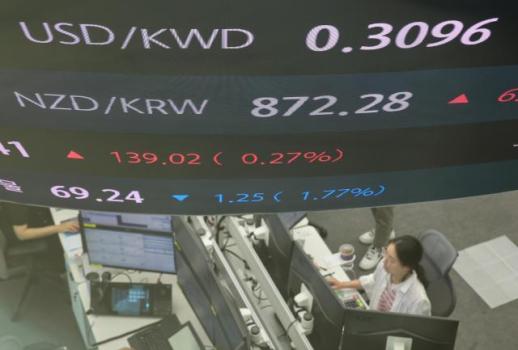 Won holds at 1,478 as strong dollar offsets BOK hike; bond yields climb SEOUL, July 20 (AJP) - The South Korean won ended nearly unchanged Monday as a strong dollar and renewed U.S.-Iran tensions offset support from the Bank of Korea’s interest-rate increase last week. Government bond yields rose as investors continued to price in the possibility of further monetary tightening. The won closed the daytime trading session at 1,478.4 per dollar, up 0.1 won from the previous session. The currency showed little reaction to the BOK’s decision Thursday to raise its benchmark interest rate by 25 basis points to 2.75 percent from 2.50 percent. The central bank cited stronger export- and investment-led growth, above-target inflation and persistent financial stability risks, while Gov. Shin Hyun-song left the door open to further rate increases depending on incoming data. The dollar index, which measures the greenback against a basket of six major currencies, remained above 100, limiting the won’s gains. Renewed military tensions between the United States and Iran also sustained safe-haven demand for the dollar. U.S. service members were killed in separate incidents involving Iranian missile and drone attacks in Jordan and Iraq, raising concerns that the conflict could spread across the region. The developments kept the won’s recovery limited even after the BOK delivered its first rate increase since November 2022. In the bond market, the yield on the three-year government bond rose 4.7 basis points to 3.895 percent, while the 10-year yield gained 3.9 basis points to 4.336 percent. The larger rise in the three-year yield, which is more sensitive to the policy outlook, reflected expectations that the BOK could raise rates again. The U.S. 10-year Treasury yield traded at around 4.57 percent Monday, roughly 23 basis points above the comparable Korean yield. Korean government bonds therefore continued to offer no nominal yield premium over U.S. Treasuries, potentially limiting their appeal to yield-seeking investors. The yield gap persisted despite foreign inflows linked to South Korea’s phased inclusion in the FTSE Russell World Government Bond Index. The country’s inclusion began in April and is scheduled to proceed in monthly stages through November. Foreign purchases linked to the index have so far failed to fully offset upward pressure on yields from expectations of further BOK tightening and renewed inflation risks stemming from the Middle East conflict. 2026-07-20 17:33:53