

Journalist
Kim Yeon-jae김연재
duswogmlwo77@ajupress.com
ReporterBank of Korea & Market, Macroeconomics
Kim Yeon-jae is a journalist at AJU Press (AJP's English platform),
covering macroeconomics, international finance, and geopolitics.
He closely tracks central bank monetary policies, global energy supply chains,
and the Korean defense industry. "Peering into the risks behind the euphoria."
covering macroeconomics, international finance, and geopolitics.
He closely tracks central bank monetary policies, global energy supply chains,
and the Korean defense industry. "Peering into the risks behind the euphoria."
Latest by Kim Yeon-jae
-
 Korea's consumer confidence upbeat, home price outlook hits 5-year high SEOUL, July 28 (AJP) -South Korean consumer confidence remained comfortably above its long-term average in July, as a chip-fueled economic recovery and rising income expectations outweighed inflation concerns, while expectations for home prices climbed to their highest level in nearly five years despite tighter monetary policy. The Bank of Korea's Composite Consumer Sentiment Index (CCSI) edged up to 106.8 in July from 106.6 in June, extending gains for a third straight month after plunging to 99.2 in April following the Middle East conflict. A reading above 100 indicates optimism exceeding the long-term average. The survey adds to signs that domestic confidence is improving alongside South Korea's AI-driven export boom. Preliminary data released last week showed the economy expanded 0.6 percent quarter on quarter in the second quarter, bringing first-half growth to 2.4 percent as record semiconductor exports and resilient private consumption offset lingering weakness in construction. Consumers also benefited from one of Asia's strongest equity rallies this year, with the benchmark KOSPI surging about 60 percent year to date, boosting household wealth even as the Bank of Korea resumed monetary tightening with a 25-basis-point interest rate hike in July to contain inflationary pressures and asset prices. The July survey showed households grew more optimistic about future income, with the household income outlook index rising one point to 101, while expectations for living standards also improved. Consumer spending plans remained unchanged at 110, suggesting resilient domestic demand despite elevated borrowing costs. Current living conditions, however, slipped one point to 93, reflecting the continued burden of elevated consumer prices and tighter financial conditions. Respondents' assessment of current economic conditions also eased to 84 from 86, although the outlook for the economy six months ahead held steady at 92, supported by stronger growth prospects tied to the semiconductor industry. The most notable shift came in the housing market. The housing price outlook index jumped seven points to 127, the highest reading since September 2021, extending a four-month surge as apartment prices continued climbing across Seoul and neighboring Gyeonggi Province. The index has rebounded sharply from 96 in March, indicating a growing majority of consumers now expect home prices to rise over the coming year. According to KB Real Estate, Seoul apartment prices rose 1.05 percent in July, marking a second consecutive month of gains, while prices in Gyeonggi Province accelerated 0.87 percent, led by the Dongtan district of Hwaseong, where apartment values jumped 6.25 percent, the strongest increase nationwide. The area mostly houses employees of chip facilities of Samsung Electronics enjoying red-hot earnings streak and compensations. The rebound in housing sentiment came despite the central bank's tightening campaign and commercial banks' moves to curb mortgage lending, underscoring expectations that limited housing supply and persistent demand will continue supporting prices. Reflecting renewed borrowing for home purchases, the current household debt index rose one point to 100, its highest level since April last year. Meanwhile, the interest-rate outlook index remained elevated at 126, unchanged from June after jumping sharply following the Bank of Korea's July rate increase. Inflation expectations moderated. Consumers' one-year inflation expectation eased to 2.7 percent from 2.8 percent, while three-year expectations fell to 2.6 percent, as lower domestic fuel prices and a firmer won helped offset concerns over recent consumer price increases. For the time being, inflation is perceived to hover around 3 percent in line with the central bank expectations. Oil products remained the biggest perceived source of inflation, although their influence declined markedly from the previous month. 2026-07-28 08:52:46
-
 How AI redrew the chip map and put Korea at its center SEOUL, July 27 (AJP) -The generative artificial intelligence boom has not simply created another semiconductor supercycle. It has redrawn the geography of the global chip industry. Three years after ChatGPT triggered an unprecedented race to build AI infrastructure, South Korea's semiconductor trade map looks markedly different. Taiwan has become Korea's second-largest chip export destination. The Netherlands has overtaken Japan as largest supplier of semiconductor manufacturing equipment. And what was once a diversified electronics supply chain has evolved into an increasingly concentrated AI ecosystem anchored by four companies: Nvidia, TSMC, Samsung Electronics and SK hynix. The transformation is captured in the Bank of Korea's Manufacturing Production and Supply Chain Map released on Monday, which explains that AI, alongside geopolitical fragmentation and China's industrial rise, has become one of the principal forces reshaping Korean manufacturing. Rather than merely recording trade flows, the report illustrates how the country's production, exports and imports have been reorganized around new technological bottlenecks. The most striking change appears on the export map. For years, China overwhelmingly dominated Korea's semiconductor exports because it assembled much of the world's smartphones, PCs and consumer electronics. The AI era has created a different destination. According to the Bank of Korea's map, Taiwan's share of Korea's semiconductor exports more than doubled between 2022 and 2025, making it the country's second-largest export market after China. The shift reflects the emergence of Taiwan not as a consumer of chips but as the world's AI manufacturing hub. The reason lies in the new AI production chain. High-bandwidth memory produced by Samsung Electronics and SK hynix is shipped to Taiwan, where TSMC combines it with Nvidia-designed AI processors using advanced packaging before the finished accelerators are delivered to hyperscale cloud operators. Instead of flowing primarily toward smartphone assembly lines in China, an increasing share of Korean memory now travels directly into the world's AI data centers. The export map therefore illustrates something larger than changing trade statistics. It shows that the industry's center of gravity has shifted from consumer electronics to AI infrastructure. Four companies now anchor the AI ecosystem The BOK describes a supply chain increasingly organized around specialized technological leaders. Nvidia dominates AI processors. TSMC leads advanced foundry manufacturing and advanced packaging. Samsung Electronics and SK hynix have become the principal suppliers of high-bandwidth memory required by AI accelerators. Rather than competing directly with one another, the companies occupy complementary positions within the same production system. The report argues that expanding AI infrastructure has strengthened this ecosystem by replacing the traditional combination of CPUs and commodity DRAM with GPUs and HBM optimized for AI computing. The consequence is a much more concentrated supply chain. Instead of broad semiconductor demand spread across PCs, smartphones and conventional servers, investment is increasingly focused on a relatively small number of products whose production depends on only a handful of companies. Korea's equipment map changed as well The AI boom has also pulled Korea more deeply into another concentrated segment of the supply chain: semiconductor manufacturing equipment. Imports of chip materials, parts and equipment rose to $49.9 billion in 2025 from $27.9 billion in 2019 and $23.4 billion in 2014, according to the BOK. Manufacturing equipment made up $23.7 billion of the 2025 total. The Netherlands accounted for 26.0 percent of Korea’s chipmaking equipment imports, up from 22.8 percent in 2022. It overtook Japan, whose share stood at 23.7 percent, to become Korea’s largest equipment supplier. That dependence is largely explained by ASML. The Dutch company is the sole commercial supplier of extreme ultraviolet lithography equipment, which is required to produce the world’s most advanced logic and memory chips. Each new generation of AI processors and HBM demands denser circuits, more process steps and increasingly sophisticated lithography. As Samsung and SK hynix expanded advanced memory and foundry investment, Korea became one of ASML’s most important markets. Korean customers generated 25.0 percent of ASML’s total net sales in 2025, up from 22.7 percent a year earlier. That placed Korea fractionally behind Taiwan, at 25.5 percent, and China, at 29.1 percent — making it one of ASML’s three largest national markets rather than the single largest. The distinction is important. Korea’s rise as a major ASML customer demonstrates the scale of its investment, but it also reveals a vulnerability. Domestic chipmakers depend entirely on imported EUV systems. Korea also imports large quantities of semiconductor equipment from Japan and the United States, while its material and component supply chain remains closely tied to China, Japan and the U.S. The more Korea expands advanced chip production, the more it depends on a small number of foreign equipment and materials suppliers. Its role now lies in being an essential link in a tightly connected AI system. Korean HBM travels to Taiwan rather than directly to the ultimate customer. Dutch lithography equipment travels to Korean fabs. American-designed processors return from Taiwanese factories packaged alongside Korean memory. The finished systems then power data centers around the world. This circular flow explains why Taiwan’s share of Korea’s chip exports has soared and why the Netherlands has become Korea’s largest semiconductor-equipment supplier. It also explains the strategic stakes. Korea has secured a powerful position because advanced AI processors cannot perform effectively without high-bandwidth memory. But its position remains dependent on Nvidia’s platform, TSMC’s manufacturing capacity and ASML’s machines. The AI era has placed Korea closer to the center of the semiconductor world than ever before. It has also made that world more concentrated, more interdependent and more exposed to disruption. 2026-07-27 13:37:57
-
 Record dollar deposits lift Koreans' foreign currency holdings by $1 bn in June SEOUL, July 27 (AJP) -South Koreans increased their foreign currency deposits by more than $1 billion, or the largest in in four months in June, driven by hefty semiconductor export proceeds and rising funds parked for overseas stock investments. Resident foreign currency deposits at domestic banks reached $113.33 billion at the end of June, up $1.08 billion from a month earlier, according to data released by the Bank of Korea on Monday. The balance was the highest since February. The increase was concentrated in U.S. dollar deposits, which surged $2.25 billion to a record $97.8 billion, accounting for 86.3 percent of total foreign currency deposits. The central bank attributed the rise to larger customer deposits at securities firms, including margin collateral for exchange-traded derivatives and funds earmarked for overseas equity investments, as well as export payments received by large corporations. The gains came even as the won remained weak against the dollar during the month, underscoring continued demand for overseas investments and robust export earnings from South Korea's semiconductor sector. Corporate foreign currency deposits rose $1.58 billion to $98.99 billion, while corporate dollar deposits added $2.59 billion to an all-time high of $85.58 billion. Personal foreign currency deposits, by contrast, fell $500 million to $14.33 billion, with individual dollar deposits declining $350 million. "A high won-dollar exchange rate typically encourages individuals to sell dollars," a Bank of Korea official said, explaining the decline in household holdings. By currency, euro-denominated deposits fell $460 million to $5.84 billion as some companies repaid loans, while yen deposits declined $410 million to $7.12 billion due mainly to payments for current-account transactions. By bank type, resident foreign currency deposits at domestic banks edged up $50 million to $92.78 billion, while those held at foreign bank branches in South Korea increased by $1.03 billion to $20.55 billion. 2026-07-27 12:57:55
-
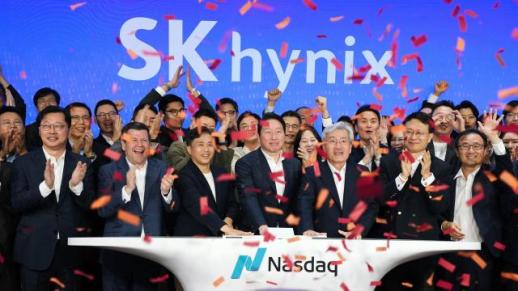 Won breaks from yen as SK hynix dollar flows reshape FX outlook SEOUL, July 24 (AJP) - "Excess volatility is undesirable." That identical message from the U.S. Treasury Department applied to both the South Korean won and Japanese yen in its latest semiannual currency report to Congress, even as it kept both countries on its monitoring list. Treasury said recent depreciation pressures were not in line with South Korea's strong economic fundamentals and reiterated that foreign-exchange intervention should be reserved only for episodes of excessive volatility or disorderly market conditions. Yet the two Asian currencies are now telling markedly different stories. Despite both remaining weaker than their economic fundamentals would suggest, the won has staged a sharp rebound while the yen continues to languish near multi-decade lows, creating one of the widest divergences between the two currencies in years. The U.S. dollar traded around 1,465 won and ¥163.4 on Friday. The won has strengthened more than 5 percent this month, while the yen has slipped about 0.5 percent. For the year, the won is still down roughly 1.9 percent against the dollar, but the yen has fallen more than 4 percent. The key difference lies not in monetary policy but in capital flows. ADR windfall changes the equation The catalyst was SK hynix's record $26.5 billion American depositary receipt offering on Nasdaq, one of the largest overseas equity offerings ever by an Asian company. The won briefly weakened into the 1,470 range in offshore non-deliverable forward trading after Houthi attacks on Saudi vessels renewed concerns over Middle East shipping risks. The move proved short-lived as expectations resurfaced that a sizeable portion of SK hynix's dollar proceeds would eventually be converted into won. The company plans to use part of the funds to finance domestic projects, including its Yongin semiconductor cluster and advanced chip-packaging facility in Cheongju. Construction costs, wages and local procurement will ultimately require won funding, creating what analysts see as a sizeable new source of dollar supply. "The actual dollar-supply effect could continue through August or September," said Kwon Ah-min, an FX analyst at NH Investment & Securities. Kwon expects conversions to begin gradually rather than all at once, as SK hynix will retain part of the proceeds in dollars to pay overseas equipment suppliers such as ASML. That suggests the ADR proceeds are more likely to cap rebounds in the dollar-won exchange rate than trigger a one-way appreciation of the Korean currency. Stronger domestic backdrop The capital-flow effect has coincided with improving domestic fundamentals. The Bank of Korea resumed monetary tightening this month, raising its benchmark interest rate for the first time since January 2023. South Korea's economy has also continued to outperform expectations, while foreign investors have returned aggressively to local equities. Overseas investors purchased a net 2.136 trillion won ($1.46 billion) of Kospi shares on July 23 alone, adding another source of dollar inflows. Park Sang-hyun, an economist at iM Securities, said the combination of stronger economic data, higher interest rates and sustained foreign equity purchases could give the won a firmer foundation than in recent months. "There is now considerably greater scope for the exchange rate to decline on a sustained basis," Park said. If expectations for further won appreciation become entrenched, exporters and shipbuilders could accelerate dollar sales and forward hedging, reinforcing downward pressure on the dollar-won rate. Breaking away from the yen The stronger won has produced an increasingly unusual divergence from the Japanese yen, which has historically moved closely alongside Korea's currency because both economies share export-driven industrial structures. The won-yen cross fell below 900 won per ¥100 on July 23 for the first time in roughly 20 months as the Korean currency appreciated while the yen remained trapped near ¥163 per dollar. Park expects the decoupling to continue in the near term because the won is benefiting from a uniquely Korean factor — SK hynix's impending dollar conversions. Over the longer run, however, he believes the traditional correlation between the two currencies is likely to re-emerge once the temporary supply effect fades. That would again make the yen's direction an important determinant of the won. Not everyone is convinced Some economists caution that markets may be overestimating the immediate impact of the ADR proceeds. "Companies are strategic actors as well," said Baek Seok-hyun, an economist at Shinhan Bank's S&T Center. He argued that SK hynix has little incentive to convert large amounts of dollars before the funds are actually needed because its domestic investment programme will unfold over several years. If conversions are spread across a longer period, additional dollar supply could be largely absorbed by import demand and continued overseas investment by Korean households. Another offsetting factor could emerge if foreign shareholders reduce their holdings of Seoul-listed SK hynix shares, convert the proceeds into dollars and shift their exposure into the newly listed U.S. ADRs. Bank of Korea officials said they are closely monitoring how the ADR proceeds could affect foreign-exchange supply and demand. For now, the inflows appear sufficient to restrain any renewed rise in the dollar-won rate through the third quarter. Beyond September, however, the won's trajectory is likely to depend less on one-off corporate flows and more on broader market drivers — the Bank of Korea's policy path, foreign demand for Korean equities, corporate dollar selling, outbound investment by Korean residents and, perhaps most importantly, whether the long-standing relationship between the won and the yen ultimately reasserts itself. 2026-07-24 15:40:27
-
 Finance chief raises growth outlook as South Korea nears $40,000 per-capita income SEOUL, July 24 (AJP) - Deputy Prime Minister and Finance Minister Koo Yun-cheol said Friday that stronger-than-expected economic growth has put South Korea on track for annual growth of around 3 percent and per-capita income of US$40,000, although many households have yet to feel the effects of the stronger economy. The finance chief said the economy had sustained its growth momentum after a robust first quarter. "The likelihood of achieving 3 percent annual growth and per-capita national income of $40,000 this year has increased significantly," Koo said at a meeting in Seoul. He then pledged to advance the government's so-called "3-4-5 vision," which targets potential growth of 3 percent, a place among the world's four largest exporters and per-capita income of $50,000. South Korea's gross domestic product expanded 0.6 percent in the second quarter from the previous three months and 3.7 percent from a year earlier, according to preliminary data released by the Bank of Korea (BOK). Growth slowed from the first quarter's 1.8 percent pace but remained firm as semiconductor-led exports and private consumption offset continued weakness in construction. Exports increased 1.4 percent from the previous quarter and private consumption rose 0.4 percent, while construction investment declined 0.2 percent. Real gross domestic income, which reflects changes in purchasing power caused by shifts in trade prices, rose 3.6 percent from the previous quarter and 15.6 percent from a year earlier. Koo also pledged to contain inflation as renewed tensions in the Middle East threaten to raise oil prices and disrupt supply chains. The government will extend fuel-tax reductions through the end of September and maintain restrictions against the hoarding of urea and urea solution through August. It will ease inventory and sales restrictions on syringes and needles as supplies improve and introduce legislation next month to strengthen penalties for hoarding and allow confiscated goods to be released into the market. Despite the stronger headline figures, annual growth of 3 percent would not necessarily indicate robust momentum through the second half. The BOK has said the economy could still grow 3 percent this year even if GDP contracted by an average of 0.1 percent in each of the third and fourth quarters, reflecting the unusually strong expansion already recorded in the first half. Construction weakness and an uneven recovery outside the semiconductor industry therefore remain potential drags even if the annual target is reached. The prospect of per-capita gross national income reaching $40,000 is also heavily dependent on the exchange rate. Per-capita GNI rose 4.6 percent in won terms last year but increased only 0.3 percent in dollar terms to $36,855 as the currency weakened. Crossing the $40,000 threshold this year would require an increase of about 8.5 percent in dollar terms, meaning continued won weakness could offset growth in domestic nominal income. The central bank said in March that, assuming no exchange-rate effect and annual GNI growth of 4.4 percent, the average since 2014, South Korea would surpass $40,000 in 2027 rather than this year. Even reaching the threshold would not necessarily translate into comparable gains for middle- and lower-income households because GNI includes income earned by companies and the government and divides the total by the population. Average monthly household income rose 2.4 percent from a year earlier in the first quarter but increased only 0.4 percent after inflation, while earned income grew just 0.3 percent in nominal terms. Disposable income increased 2.7 percent, but consumption spending climbed 5.3 percent, reducing the average household surplus by 3.1 percent. Income-distribution indicators also deteriorated in 2024, with the Gini coefficient rising to 0.325 and the income ratio between the richest and poorest fifths widening to 5.78. The relative poverty rate, which measures the share of people living on less than half the median income, rose 0.4 percentage point to 15.3 percent. Annual growth of 3 percent and per-capita GNI of $40,000 would mark significant milestones for the size of the Korean economy, but broader improvements in living standards will depend on whether export and corporate income spreads into wages and household disposable income. 2026-07-24 14:34:14
-
 Stricter cash requirements for leveraged ETFs to take effect late this month SEOUL, July 24 (AJP) - South Korea is set to introduce tougher minimum deposit requirements for single-stock leveraged exchange-traded funds (ETFs) late this month, requiring retail investors to hold at least 30 million won (US$20,300) in cash for new or additional purchases. The Financial Services Commission said Friday that it moved up the implementation date from early August to July 31 after consultations with financial authorities and the securities industry. The measure is intended to stabilize demand for high-risk leveraged products. The requirement, part of a regulatory package announced on July 16, applies to domestically and overseas-listed ETFs and exchange-traded notes that track individual stocks. Under the current framework, investors must maintain a minimum deposit of 10 million won and may use stocks, ETFs and bonds to meet the requirement at up to 70 percent of their market value. From July 31, securities posted in place of cash will no longer be recognized. Brokerages will also be barred from lowering the minimum requirement based on a client's trading experience, although they may impose a requirement above 30 million won. Proceeds from securities sales will count toward the requirement only after settlement, typically two business days after the transaction. Loans secured against unsettled sale proceeds will also be excluded from the calculation. The requirement will apply when existing investors make additional purchases, although they will be allowed to sell products they already hold regardless of their cash balance. The FSC said it would recommend that brokerages unable to complete the necessary system upgrades by the deadline restrict new transactions in the products. Separate measures aimed at narrowing gaps between market prices and underlying asset values will take effect on Aug. 19 following revisions to Korea Exchange rules. The changes will strengthen liquidity providers' pricing obligations and accelerate the designation of products as requiring investor caution. Authorities are also considering bringing forward a plan to raise the minimum order size to 20 units from one, originally scheduled for November. A suspension of new product listings and a ban on advertising took effect after the regulatory package was announced on July 16. The FSC said it would continue to monitor market conditions and consider additional measures if demand for the products fails to stabilize. 2026-07-24 10:23:45
-
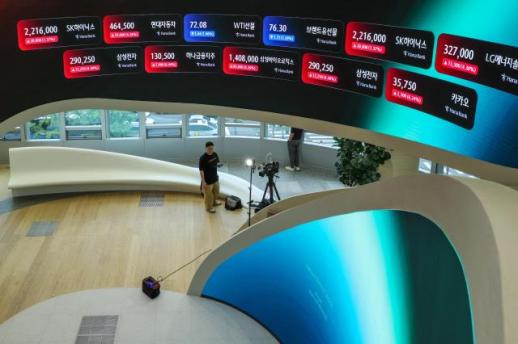 Won surges amid foreign inflows as stronger-than-expected GDP SEOUL, July 23 (AJP) - The South Korean won strengthened sharply against the dollar on Thursday as foreign investors poured more than 2 trillion won into local shares following stronger-than-expected economic growth and renewed optimism over artificial intelligence-related chip demand. Government bond yields, by contrast, ended little changed as the prospect of further monetary tightening was offset by buying interest after their recent climb. The won gained 13.3 won to close daytime trading at 1,466.8 per dollar, its strongest level in about two and a half months. The currency opened near 1,477 per dollar and briefly weakened before reversing direction and advancing into the mid-1,460s later in the session. Foreign investors purchased a net 2.136 trillion won (US$1.46 billion) of shares on the main Kospi market, adding to demand for the won and accelerating the currency's rise. The benchmark KOSPI climbed 4.40 percent to 7,096.89 as overseas investors concentrated their purchases in large-cap stocks, including semiconductor companies. The scale of foreign buying strengthened expectations of equity-related dollar selling, while exporters also sold dollars as the exchange rate extended its decline. The market rally followed data showing that South Korea's real gross domestic product expanded 0.6 percent in the second quarter from the previous three months, exceeding the 0.4 percent median forecast in a Reuters poll. The economy grew 3.7 percent from a year earlier, also beating expectations, as exports increased 1.4 percent on strong shipments of semiconductors, machinery and equipment. The figures eased concern that economic momentum would fade sharply after 1.8 percent growth in the first quarter and reinforced expectations that the Bank of Korea will raise its annual growth forecast next month. They also strengthened the case for at least one more interest-rate increase, improving the won's relative yield outlook despite continued strength in the broader dollar. Renewed optimism over global artificial intelligence (AI)-related investment provided additional support, lifting South Korean chipmakers and drawing foreign funds back into a market that had recently experienced sharp volatility. Government bonds showed a much more restrained response to the GDP surprise, with yields ending on opposite sides of their previous closes. The yield on the three-year government bond rose 0.4 basis point to 3.917 percent, while the benchmark 10-year yield declined 0.8 basis point to 4.392 percent. The stronger growth figures kept expectations for another BOK rate increase intact, but the possibility had already been largely reflected in short-term yields after their recent advance. The central bank raised its benchmark interest rate by 25 basis points to 2.75 percent on July 16, and economists broadly expect at least one additional increase to 3.00 percent by the end of the year. Buying interest emerged as the three-year yield approached 3.9 percent and the 10-year yield neared 4.4 percent, limiting further losses in bond prices despite the stronger-than-expected GDP data. The decline in the longer-dated yield slightly flattened the yield curve, indicating that investors were reluctant to extend the bond sell-off without clearer evidence that stronger growth would generate persistent inflation. Thursday's trading highlighted a divergence across South Korean financial markets, with the won and equities responding strongly to foreign inflows and the chip-led growth surprise while bonds remained caught between additional rate-hike risks and perceptions that yields were near a short-term peak. 2026-07-23 17:12:19
-
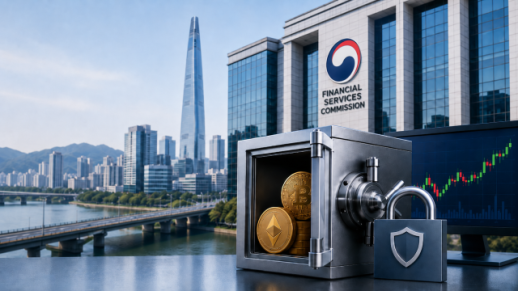 Seoul weighs separate crypto custody regime SEOUL, July 23 (AJP) - South Korea’s financial regulator is considering establishing cryptocurrency custody as a separate regulated business as it prepares to expand corporate access to the country’s digital asset market. The Financial Services Commission is reviewing licensing requirements and conduct rules for custody providers under the government’s planned second-phase digital asset legislation, Kim Sung-jin, director of the FSC’s Virtual Asset Division, said Thursday. “There is little room for disagreement over classifying custody as a separate business,” Kim told a conference at the National Assembly in Seoul. The regulator is examining several approaches to entry requirements and business conduct rules, he added. Crypto custody services hold and manage digital assets and the private keys needed to access them, while separating client holdings from a provider’s own assets. The FSC regards custody as an essential part of the financial infrastructure needed to protect customer assets and support transactions involving corporate and institutional investors. The regulator is also considering how crypto custodians should be positioned alongside traditional trust businesses, given that both safeguard client assets but custodians primarily manage private keys rather than conventional property. Kim said the commission was studying the European Union’s approach to assessing whether different regulatory systems provide functionally equivalent protections. The FSC, however, appeared cautious about requiring crypto exchanges to spin off their custody operations into separate companies. Few overseas jurisdictions have forcibly separated the two functions, Kim said, suggesting tighter conduct rules could better balance customer convenience against potential conflicts of interest within exchanges. The proposed framework comes as the government works on guidelines allowing listed companies and professional investors to buy and sell crypto assets. The FSC announced a phased roadmap in February 2025, initially opening the market to non-profit organisations and virtual asset service providers before allowing listed companies and professional investors to participate. Detailed rules for the later stages have yet to be released, with the regulator saying the timing is closely tied to legislation covering stablecoins and the broader digital asset market. Asked whether corporate trading could begin this year, Kim said he was personally positive about several aspects of the plan but stopped short of providing a timetable. The government is also preparing legislation governing stablecoins and other digital assets, although Kim said the submission schedule was still being discussed with the National Assembly and other government agencies. The FSC would seek to move “as quickly as possible,” he said, in line with the government’s economic policy agenda for the second half of the year. Kim said stablecoin regulation spanned several laws, with issuance expected to fall under the planned digital asset legislation, cross-border transfers under foreign exchange rules and payments under electronic financial transaction laws. Industry representatives urged the government to establish an independent custody framework before fully opening the market to companies, arguing that the current exchange-centred structure was insufficient to support taxation, anti-money laundering controls and external audits. Harry Ryoo, chief executive of digital asset custodian BDACS, estimated that the potential custody market involving domestic and overseas corporate clients could be worth at least 75 trillion won. Ahn Do-geol, a lawmaker from the Democratic Party of Korea, called for faster follow-up measures, saying corporate participation could improve liquidity and price discovery while supporting related industries including custody, asset management and digital payments. Ahn said the market should be opened alongside safeguards including custody systems, internal controls to prevent conflicts of interest and risk management standards. 2026-07-23 16:19:42
-
 Nearly half of jobless young Korean graduates out of work for over a year SEOUL, July 23 (AJP) -Nearly half of South Koreans aged 15 to 29 who had completed their education but were not working had remained without employment for at least a year as of May, the highest share since the global financial crisis. Nearly two in 10 — a record high — had gone at least three years without work, pointing to a widening pool of young adults left on the sidelines. The proportion of graduates unemployed for at least one year rose 2.0 percentage points from a year earlier to 48.6 percent, equivalent to 605,000 people, according to a supplementary youth survey released Thursday by the Ministry of Data and Statistics. It was the highest level since the 51.7 percent recorded in 2009 during the global financial crisis, while the share without work for at least three years rose to a record 19.4 percent, or 241,000 people. The survey’s non-employed category covers people who have graduated, withdrawn from or completed their final level of education but are not currently working, including both officially unemployed people and those outside the labor force. The number of young people who had completed their education fell by 171,000 to 4.003 million, with employment declining by 202,000 to 2.76 million and the non-employed population rising by 31,000 to 1.243 million. Job training and preparations for employment examinations were the most common activities among non-employed graduates at 39.3 percent, followed by simply passing the time at 25.3 percent and preparing for further education at 12.5 percent. The average time required to graduate from college increased by 1.3 months to four years and 5.7 months, the longest since the series began in 2007, while the share who had taken a leave of absence rose 2.5 percentage points to 48.9 percent. Kim Rak-hyun, director of the ministry’s Employment Statistics Division, attributed the increase to the growing proportion of four-year college graduates and more students taking leave to prepare for jobs or qualification examinations. The proportion of graduates who had held at least one job after completing their education fell 1.6 percentage points to 84.8 percent, the lowest since the related series began in 2004. Among young people outside the labor force, 600,000 had prepared for an employment examination during the previous week, up by 15,000 from a year earlier, although their share remained unchanged at 14.5 percent. The proportion preparing for private-sector jobs fell 2.0 percentage points to 34.0 percent, while the share studying for general civil service examinations climbed 3.9 percentage points to 22.1 percent, its first increase in five years. Kim said improved conditions for lower-ranking civil servants and companies’ growing preference for experienced workers and rolling recruitment had made private-sector entry more difficult for young applicants. For graduates whose first job was a paid position, the average time required to find work shortened by 0.1 month to 11.2 months, while average tenure at their first workplace increased by 0.4 month to one year and 6.8 months. Monthly pay of between 2 million won and less than 3 million won was the most common starting income bracket at 42.1 percent, followed by 1.5 million won to less than 2 million won at 23.3 percent and 500,000 won to less than 1 million won at 11.8 percent. Dissatisfaction with pay, working hours and other employment conditions was the leading reason for leaving a first job at 44.4 percent, followed by the completion of temporary or seasonal work at 18.0 percent and personal or family reasons at 14.5 percent. The overall number of employed people aged 15 to 29 fell by 255,000 from a year earlier to 3.427 million, lowering the youth employment rate by 2.4 percentage points to 43.8 percent. The number of unemployed young people increased by 5,000 to 266,000, pushing the unemployment rate up by 0.6 percentage point to 7.2 percent. 2026-07-23 15:57:15
-
 Korean growth runs above potential of 2% H1 on AI chip boon SEOUL, July 23 (AJP) - South Korea's economy cooled in the second quarter from the blistering pace of the previous three months, but stayed comfortably above its estimated growth potential and on track to achieve the government's annual growth target of 3.0 percent, Bank of Korea data showed Thursday. Gross domestic product expanded 0.6 percent in the April-June period after expanding 1.8 percent in the first quarter. The Bank of Korea portrayed the moderation as a healthy normalization rather than the start of a slowdown. "When growth is exceptionally strong in one quarter, it often falls sharply or even turns negative in the next, but the economy continued to expand in the second quarter," said Lee Dong-won, director general of the BOK's Economic Statistics Department II. From a year earlier, GDP grew 3.7 percent in the second quarter after a 3.8 percent increase in the January-March period, keeping the broader expansion comfortably above the economy's estimated growth potential of around 2 percent. "Even if quarter-on-quarter growth averages minus 0.1 percent in the third and fourth quarters, annual growth could still reach 3 percent," Lee said. Annual growth compares the average level of GDP over all four quarters of 2026 with the average for 2025, rather than simply adding quarterly growth rates. The strong gains already accumulated in the first half would therefore cushion modest weakness later in the year. The BOK's latest official growth forecast, released in May, remains at 2.6 percent, making Lee's 3 percent figure an arithmetic possibility rather than a revised central bank projection. The central bank will update its outlook in August. If achieved, 3 percent growth would mark South Korea's strongest annual expansion in five years. Financial markets took the stronger-than-expected GDP figures in stride. The benchmark KOSPI rose 3.2 percent to 7,012 as of 11 a.m., extending gains as investors welcomed signs of economic resilience. The three-year Korean government bond yield was little changed at 3.909 percent, hovering just below the 4.0 percent threshold, while the 10-year yield rose 2.3 basis points to 4.377 percent. The stronger growth figures reinforced expectations that the Bank of Korea could tilt toward a more aggressive pace of monetary tightening. The Korean won, which opened at around 1,476.6 won per dollar at about 9 a.m., strengthened sharply to around 1,468 after the data release. Another upside surprise was that the composition of second-quarter growth suggested momentum was not confined entirely to exports. Domestic demand and net exports each contributed 0.3 percentage point to quarterly growth, contrary to expectations that external demand would account for most of the increase. Still, stronger exports and chip-facility expansion remained the primary growth engines. Private consumption remained lackluster, hovering around zero growth. Higher oil prices weighed on passenger-car fuel consumption, but discretionary spending increased on household appliances, department-store goods, clothing, bags and travel, supported by income gains from the stock market and the AI boon. Beyond the stock market and the semiconductor sector, domestic demand remained broadly subdued, with elevated household debt continuing to weigh on consumer spending. The AI-driven chip boon, however, boosted the economy's income far more than its output. Real gross domestic income rose 15.6 percent from a year earlier, its strongest annual gain in 38 years, as semiconductor export prices increased much faster than crude oil import prices. The widening gap between GDP and GDI indicated that the purchasing power generated by the economy rose much faster than real output, reflecting a sharp improvement in South Korea's terms of trade. Officials cautioned that more evidence was needed to determine whether the income windfall would feed through to corporate investment, employment and broader household consumption. The second-quarter figures therefore suggest that while the economy likely passed its quarterly growth peak in the first three months of the year, the broader expansion has held up better than expected. Yet the figures also point to an increasingly two-speed economy, with the AI-driven chip boom generating outsized gains in national income while much of the domestic economy continues to struggle under weak consumption, sluggish private demand and elevated household debt. The second-half trajectory will depend on developments in the Middle East, energy prices and whether the semiconductor upswing broadens beyond favorable pricing into sustained gains in production, exports, investment and domestic demand. 2026-07-23 11:21:37